Orionid Meteor Shower in India: A Practical October 21–22 Night-Sky Plan
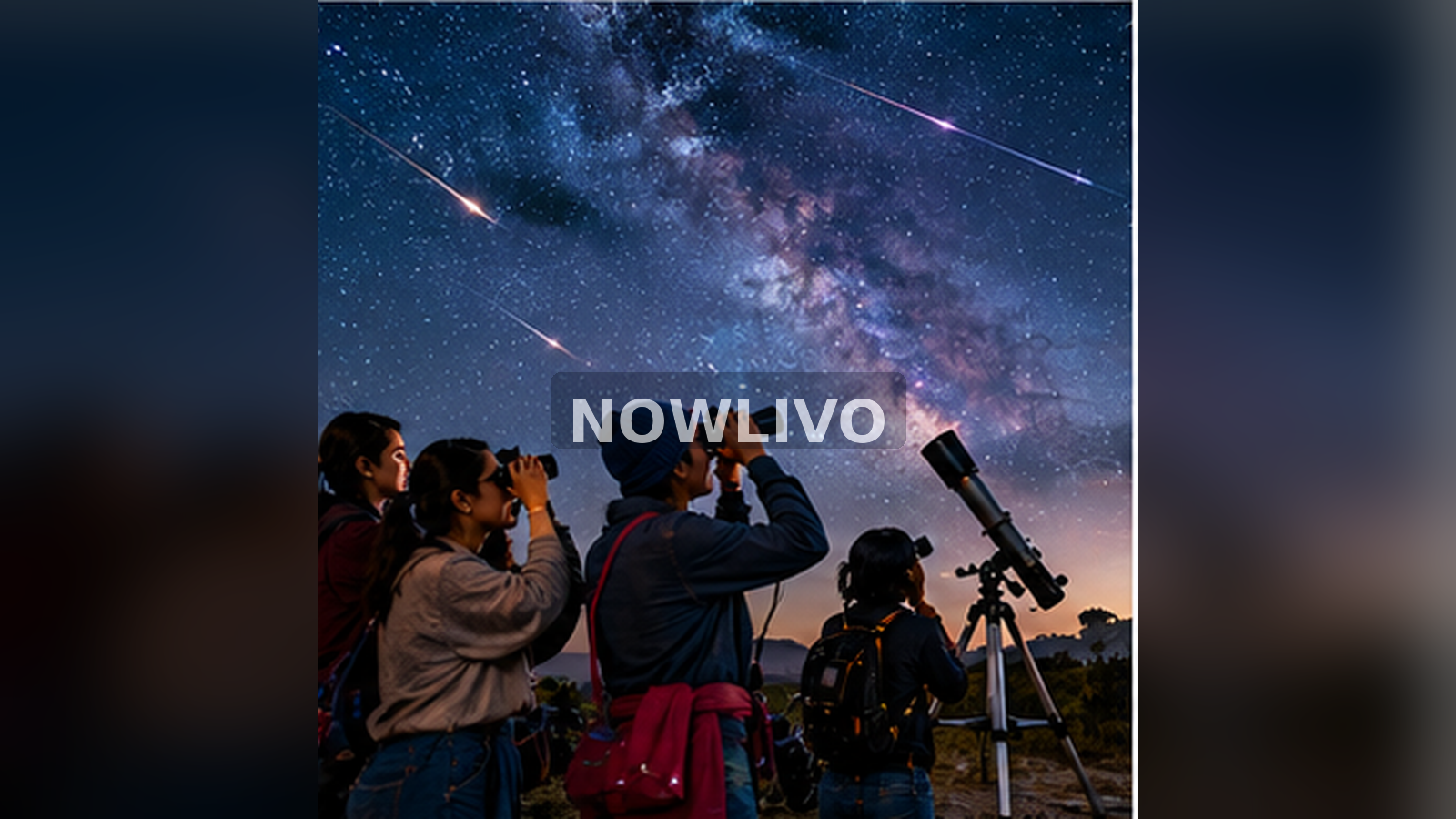
Indian skywatchers are searching for the Orionid meteor shower ahead of its October 21–22 peak. NASA says the Orionids come from Halley’s Comet debris and are easiest to observe when the sky is dark. In 2026, a bright waxing gibbous Moon will wash out some faint streaks, making the hours after moonset especially useful. India spans a broad range of latitudes and light-pollution conditions, so there is no single best city or national viewing clock. Here is how to turn the official astronomy advice into a realistic night-sky plan without needing expensive equipment.
What is expected in late October
NASA lists the shower as active from October 2 through November 7, with the peak night around October 21–22. That is a natural event spread across time, not a show beginning on the minute. In India, viewers can plan for the later part of the night and predawn period when Orion is better placed and the Moon may be less troublesome. The exact quality of the sky depends on cloud cover and artificial light. A different location can have an entirely different experience on the same night.
How the Moon affects local viewing
The bright waxing gibbous Moon creates a glowing background that hides faint meteors. For 2026 NASA advises using the window after the Moon sets, in many places closer to morning. Moonset time changes with date and location, and it should be obtained from a local sky calculator. It is not safe to publish one time as universally correct for Delhi, Kolkata, Bengaluru and Guwahati. A city with haze may lose visibility even after moonset, while a darker rural site can reveal more streaks.
Why an open field is not always the best option
An unobstructed view helps, but safety must come first. Remote roads, isolated hills and agricultural areas may be unsafe at night or restricted. A terrace with safe access, a park where night entry is permitted or a supervised campus observation area can work well. Stay clear of exposed electrical equipment and unsafe parapets. If travelling, arrange the return journey before leaving. The ideal astronomical site is not useful if it introduces avoidable personal risk.
The simplest equipment checklist
A reclining seat, a warm layer, drinking water and a dim red torch are enough for many observers. Night vision takes time to recover after looking at a bright phone screen. Binoculars are helpful for studying constellations but not for capturing the widest possible meteor view. A telescope is usually the wrong tool because it narrows the field. A basic sky-map app can help identify Orion before observing, but once settled, spend more time looking up than reading the app.
What a realistic meteor count looks like
Some general shower summaries mention ten or more meteors an hour under dark conditions. NASA’s particular October 2026 note also says suburban viewers may see a much smaller number. Moonlight, haze, viewing direction and the radiant’s height can all reduce the count. No one can promise a meteor at a specific minute. If you see only three or four across a long session, that is still a valid observation. Avoid publishing an inflated rate based on a short burst.
How to watch with children
Families may prefer an early familiarisation outing followed by a shorter predawn session rather than an exhausting all-night wait. Explain that meteors are tiny natural particles burning in the atmosphere, not stars falling to Earth. Encourage children to look broadly at the sky and describe what they see. Keep a simple notebook with time, colour and direction, without worrying about scientific precision. Make sure everyone is comfortable, supervised and able to return indoors quickly when tired.
Why city residents can still participate
Heavy city lighting reduces the number of visible faint meteors, but an exceptionally bright streak may still be visible. Move away from direct streetlights if safe, use building shade and avoid staring at illuminated windows. Observers in apartment blocks should not climb inaccessible rooftops. A cloudy night is not a failure of planning; astronomy depends on weather. City viewing teaches the practical difference between astronomical predictions and what the local environment allows.
Keeping a useful observation record
Write down the city, date, start time in IST, end time, approximate clouds and whether the Moon was visible. If you saw a streak, note its apparent direction and colour. This makes your experience more meaningful than a bare count shared without conditions. If a photograph is taken, describe the exposure or camera settings so viewers know it is not necessarily what the naked eye sees. The observation can be shared responsibly without claiming a scientific discovery from one bright meteor.
How to pick a local observing time without inventing a national one
An astronomy app or local planetarium chart can show when Orion is above the horizon and when the Moon sets at your chosen location. These two times help decide whether a predawn outing is worthwhile. But the observation plan should also account for whether a park is open, how you will travel and when sunrise makes the sky too bright. The simplest choice is a safe nearby site with a broad view. A few hours of possible activity do not justify describing a precise minute as the “best” one for every city in India.
How to distinguish meteors from aircraft and satellites
A meteor usually appears as a short-lived streak crossing part of the sky in a fraction of a second or a few seconds. Aircraft commonly show regular blinking lights, while satellites may move steadily across the sky for much longer. Bright meteors can leave a brief trail, and the Orionids are especially fast. People watching for the first time may misidentify moving lights; recording direction, duration and whether the object blinked can help. Do not announce that an unfamiliar light was a rare scientific event without observations that support the identification.
Reader questions
When should India watch?
Plan around the October 21–22 peak, favouring dark predawn hours where conditions permit.
Can people in cities see meteors?
Some bright ones may be visible, but light pollution lowers the count.
Is specialised equipment required?
No; a safe dark view and patience are more important.