Pentagon Reportedly Clears Test of “Heat Ray” Technology for Border Use
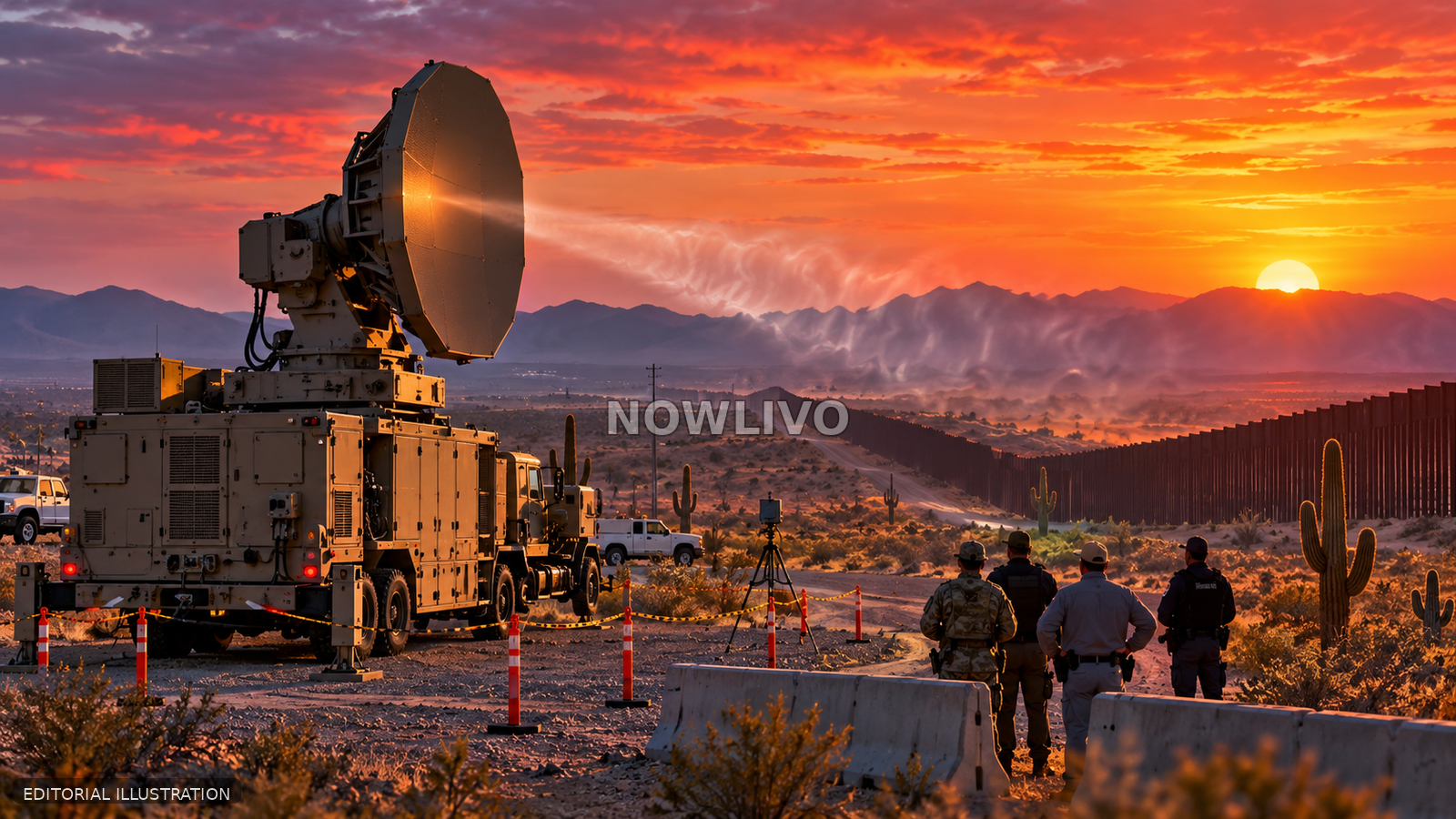
The Pentagon has reportedly authorised the Department of Homeland Security to test a military device commonly described as a “heat ray” for possible use near the U.S.-Mexico border. The Guardian reported that Defense Secretary Pete Hegseth signed a memo permitting DHS to borrow the Active Denial System for a seven-month period beginning in September, with the possibility of requesting an extension. The system directs millimeter-wave energy toward a target area and is designed to cause an intense but temporary sensation of heat on the skin. The report does not establish that the device has been deployed against migrants, and DHS has not publicly specified the planned operational purpose. The distinction between testing and field use is crucial to the debate.
What the reported memo permits
According to The Guardian’s reporting, the memo authorises DHS to test or borrow the Active Denial System for a defined period, beginning in September and lasting seven months, with an option to seek an extension. That gives the department a possible route to evaluate the technology; it does not establish that the device has been used at the border or that officials have decided on a permanent deployment. Government testing can involve equipment assessment, training and operational planning, but the exact activities depend on the authorisation and agency procedures. The public still needs clear information about the test’s scope, safeguards, metrics and what decision will follow when the authorised period ends.
How an Active Denial System works
The device is often called a heat ray because it uses a high-frequency millimeter-wave beam to create an intense heating sensation on the surface of the skin. Unlike a conventional projectile, the intended effect is to make people move away from a targeted area rather than to strike them physically. Calling a system nonlethal, however, does not mean that it is free of risk in every circumstance. Exposure, range, duration, crowd conditions and individual health can affect safety. The military explored the technology years ago and returned it from Afghanistan without using it in combat, according to reporting. Technical design and operational results should not be confused.
Why border use raises distinct questions
A border environment may involve people moving in groups, uneven terrain, fences, vehicles, children, medical emergencies and rapidly changing conditions. A directed-energy device intended for controlled demonstrations may behave differently in a crowded or confusing operational setting. Any proposed use would need clearly defined rules, trained operators, safeguards against accidental exposure and procedures for medical assessment. DHS has not specified its intended purpose in the reporting, so it would be speculative to say whether the system is meant for crowd dispersal, access control or another role. Public scrutiny is appropriate precisely because the operational plan remains unclear.
Testing is not the same as deployment
The distinction matters in public debate. Authorising a test means an agency can evaluate a capability under approved conditions; deployment means using it operationally in the field. Those are different stages, and each can require separate decisions, oversight and public explanation. Reporting that says the Pentagon has permitted a test should not be rewritten as a claim that the device is already being used on migrants. At the same time, testing can be consequential because it signals that officials are considering a capability. The public can reasonably ask what scenarios are tested, what harms are monitored and whether any results will be disclosed before a deployment decision.
The record of earlier consideration
The Active Denial System has been considered for several public-safety or military contexts over many years. The Guardian reported that earlier administrations explored potential use around the U.S. border and for crowd control, but those proposals did not result in the system being deployed in those settings. The military also took the technology to Afghanistan nearly two decades ago and brought it back without combat use. That history explains why the current authorisation attracts attention, but past consideration does not prove how the present test will be conducted. The relevant questions concern the current memo, agency oversight and any later decision to use the device operationally.
Safety, accountability and public evidence
A credible assessment should specify exposure limits, monitoring, training, incident reporting and what medical help is available if someone is affected. Independent review can be important when a technology’s intended purpose is to cause discomfort so people change their behaviour. Operational transparency is also necessary to establish whether the system works as claimed and whether safeguards are effective. Government agencies may withhold some operational details for security reasons, but that does not remove the need for legal authority and accountability. Public discussion is strongest when it asks focused questions based on documented capabilities, rather than repeating unsupported claims about what the system can or has done.
What officials have said—and what remains open
Customs and Border Protection told the Guardian that it continually evaluates technologies that could improve safety and national security. That general statement does not reveal how DHS intends to use this specific device or what standards it will apply. The report said DHS would be responsible for operating the system and developing tactics, rather than Defense Department personnel operating it. Further agency guidance would help clarify the chain of command, test locations, safety restrictions and criteria for success. Until those details are public, it is appropriate to describe the authorisation as a reported step toward testing, not evidence that an operational policy has been adopted.
What to watch next
The important follow-up questions are whether the test begins or continues, what conditions are authorised, how safety is monitored, whether any incidents occur and whether DHS seeks an extension. Any announcement of operational use would deserve separate reporting from the initial memo. It is also worth tracking congressional or inspector-general oversight if it addresses training, rights, cost or effectiveness. For now, the reported authorisation opens a policy debate without resolving it. A technology’s existence, its test permission and its use against a person are distinct facts; responsible coverage should keep those distinctions visible while the government’s plans remain incomplete.