Ramayana Director Nitesh Tiwari Says AI Adjusted Lip Movements, Not Dubbed Voices
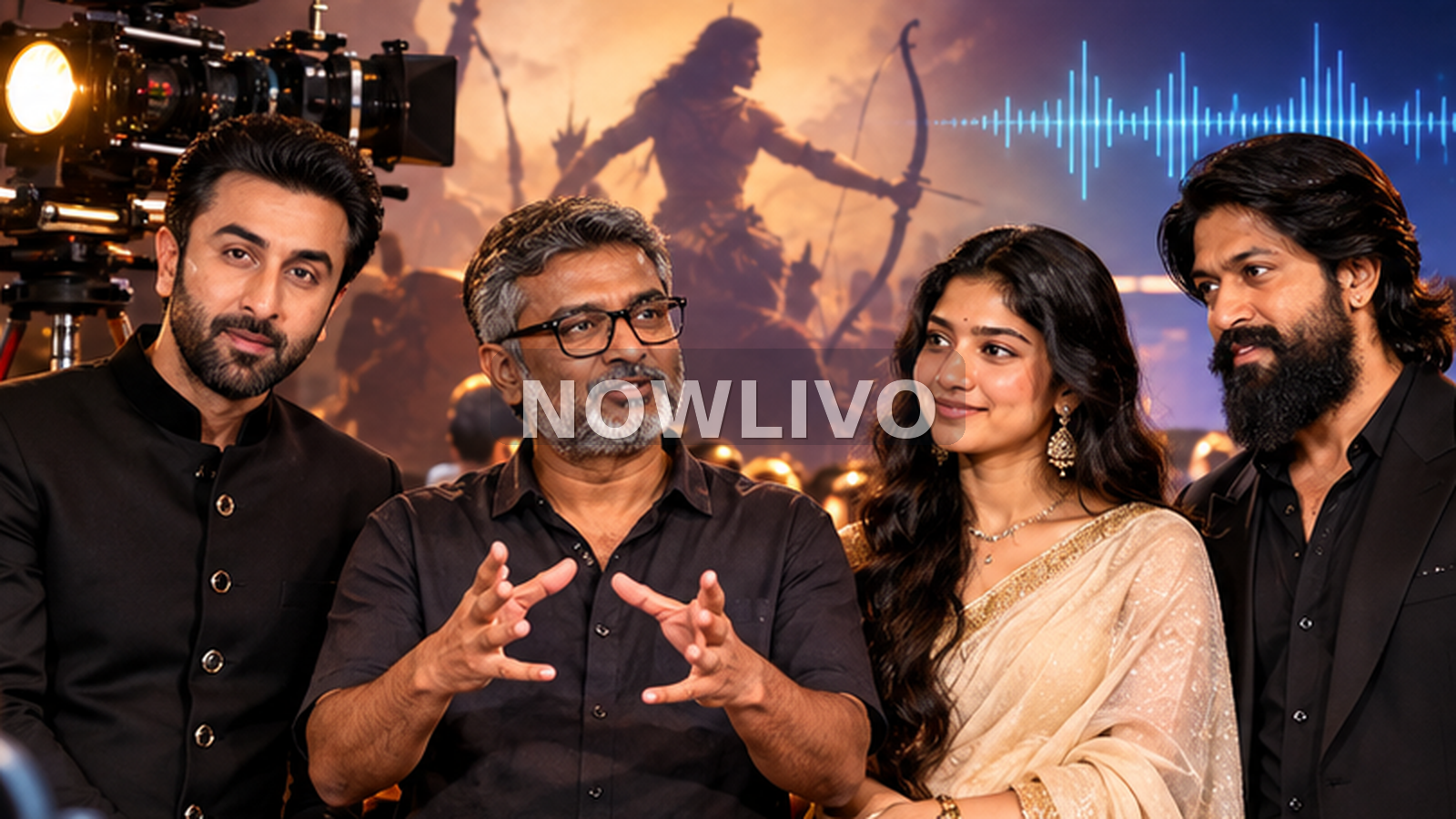
Director Nitesh Tiwari has addressed questions about artificial intelligence in the upcoming film Ramayana: Rise of a Legend, saying the technology was used to synchronise actors’ lip movements with dialogue in different languages, not to generate the dubbed voices. He made the clarification during the film’s Los Angeles premiere, according to Cinema Express and NDTV. The statement is a new, concrete response to online speculation and is separate from the film’s advance-ticket sales and promotional appearances.
Tiwari said dubbing artists recorded the voices heard in the different language versions. His explanation was that AI helped adjust lip movements so that viewers could watch the film in their preferred language without seeing obvious mismatches between speech and on-screen movement. That distinction is central to the controversy: voice generation, voice replacement and visual lip synchronisation are not the same process, and claims about one should not be treated as proof of the others.
A clarification at a high-profile premiere
The premiere took place in Los Angeles on October 27, with cast members Ranbir Kapoor, Sai Pallavi and Yash among those attending. Producer Namit Malhotra and Tiwari were also present. The film is scheduled for a worldwide theatrical release on November 5, placing the discussion in the final days of a major promotional campaign. With audiences already buying tickets and sharing clips from the premiere, even a technical question about the production can become a widely discussed entertainment story.
The director’s comments came after social-media posts and reports suggested AI might have been used to dub the film into multiple languages. Tiwari rejected that account as it relates to voices, saying the dubbed tracks were performed by artists. His statement should be reported as the filmmakers’ explanation of their production process. It does not independently document every technical step, but it directly addresses the specific claim circulating ahead of release.
Why the distinction matters to performers
Dubbing is a creative performance, not merely the mechanical transfer of words from one language to another. Actors working in a dubbing studio have to reproduce emotion, timing, tone and character while fitting dialogue into an existing scene. AI-generated voices raise questions about consent, credit and compensation, which is why rumours of voice replacement can prompt concern among performers and viewers. Lip-sync technology operates on the visual side of that process, although its use also deserves transparent explanation.
For a film intended to reach audiences across India and overseas, language versions are a major part of distribution. A viewer watching a dubbed version may find mismatched mouth movements distracting, especially in close-ups. Tiwari’s stated aim is to reduce that mismatch while keeping human voice performances. The approach is not a claim that AI wrote the screenplay, created the characters or replaced the cast, and there is no basis in the cited reports to extend his remarks to those areas.
Ramayana’s scale has raised expectations
The film features Ranbir Kapoor as Rama, Sai Pallavi as Sita and Yash as Ravana, with other major names in the ensemble. It is the first part of a two-film adaptation of the epic and has been marketed as a large-scale cinematic event. The music involves A. R. Rahman and Hans Zimmer. Such a project naturally attracts close scrutiny of visual effects, music, performances and language choices, particularly when viewers compare its ambitions with other international fantasy spectacles.
The Los Angeles event also gave the cast a platform to discuss the cultural reach of the story. Yash, who is both an actor and a co-producer, spoke about sharing an Indian narrative with a global audience. That broader promotional message explains why the filmmakers are paying attention to multilingual presentation. It should not, however, obscure the narrower factual point in Tiwari’s remarks: his clarification concerned how dialogue was synchronised and who recorded the voices.
What audiences can and cannot judge before release
Premiere reactions and advance-booking figures provide early indicators of interest, but neither can establish how a film will be received by general audiences after November 5. A technical demonstration at a press event is also different from a viewer’s experience of an entire dubbed version. The finished release will allow audiences to assess whether the lip-sync adjustments feel natural and whether the performances retain their character across languages.
There have also been separate reports about the possible timetable for the second part. Those reports should not be folded into the AI discussion as if one caused the other; the cited clarification did not announce a change to the sequel schedule. For now, the confirmed near-term date is the first film’s November 5 theatrical release.
The new development is therefore straightforward but useful: amid questions about AI dubbing, the director has said the voices remain human performances and the technology was used only to align lip movements. The distinction matters to the artists who work on language versions, to audiences deciding what to expect and to a film industry debating how far AI should enter creative production. The clarification also gives viewers a specific production claim they can evaluate once dubbed screenings begin, rather than relying on isolated clips or speculative social-media posts.
Reporting sources
Reporting consulted: www.cinemaexpress.com, www.ndtv.com.