Trump-Xi summit puts trade truce, AI risks and Taiwan under scrutiny
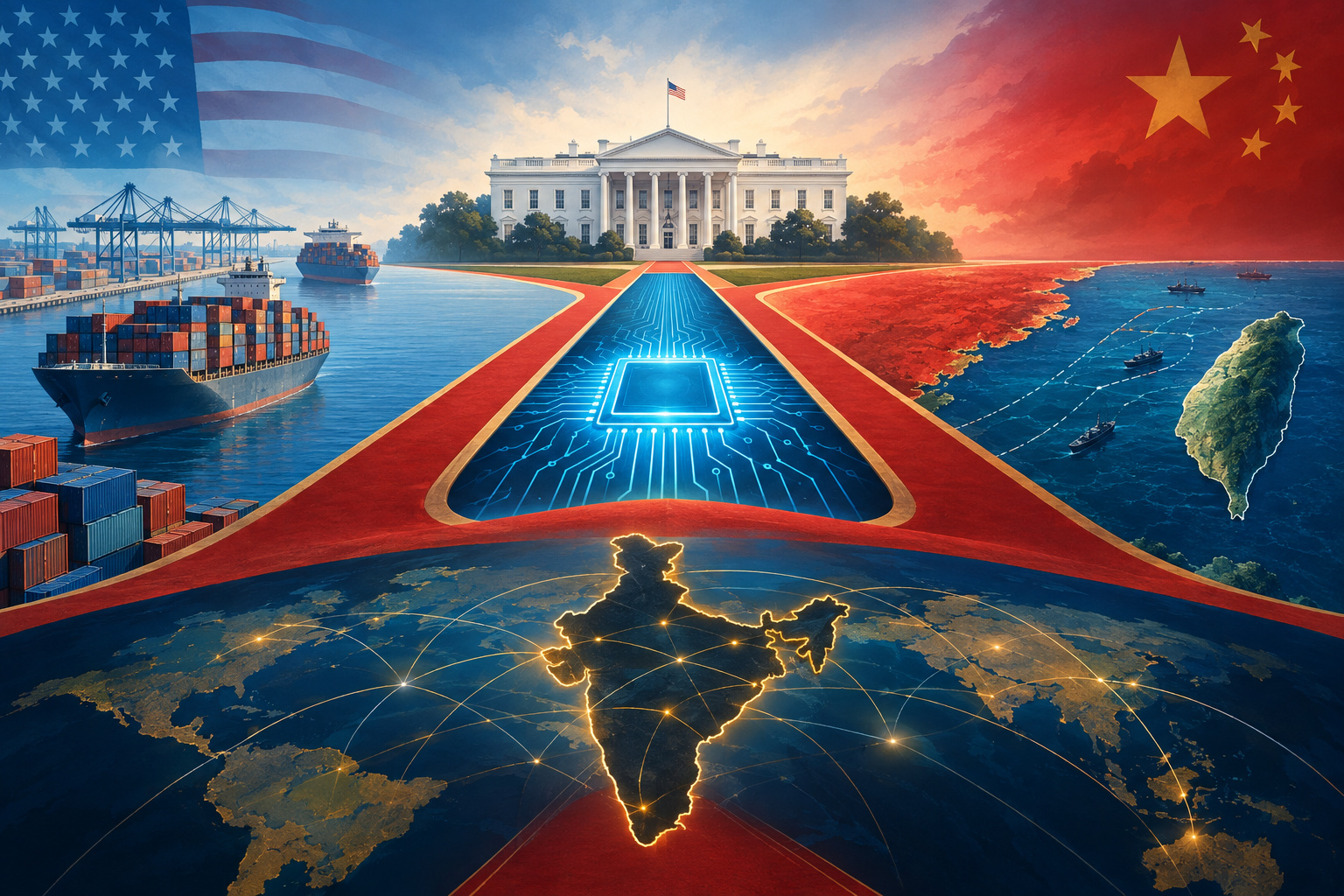
Chinese President Xi Jinping’s meeting with US President Donald Trump in Washington on September 24 placed three of the world’s most consequential issues on the same table: trade, artificial intelligence and Taiwan. The elaborate welcome projected warmth, but the publicly disclosed results pointed to a limited stabilisation effort rather than a major reset in relations.

The meeting formed part of Xi’s first US state visit in more than a decade and followed Trump’s trip to Beijing in May. Trump personally greeted Xi and his wife, Peng Liyuan, at Joint Base Andrews on September 23, an unusual planeside welcome that immediately elevated the visit above a routine diplomatic engagement.
The following day brought a full White House arrival ceremony involving hundreds of military personnel, ceremonial units and a flyover by a B-2 bomber and F-22 fighter jets. Bilateral talks were followed by a state dinner attended by prominent figures from the technology and business sectors.
What happened on trade?
The clearest economic result was an extension of the existing US-China trade truce. US Treasury Secretary Scott Bessent said the arrangement would run for two additional months, until January 10, 2027, giving negotiators more time to address tariffs, agricultural purchases, rare-earth supplies and technology restrictions.
The extension reduces the immediate risk of another sharp escalation, but it does not settle the underlying disputes. Washington has sought stronger Chinese purchases of American goods and more dependable access to rare earths and critical minerals. Beijing, meanwhile, has pressed for relief from US tariffs and restrictions affecting Chinese companies and advanced technology.
Xi said the two economic teams had reached a new joint arrangement and called for the list of cooperative areas to grow while disputes were reduced. Trump said the consultations had produced progress and argued that negotiations should continue toward a broader deal.
For businesses and investors, the short duration of the extension is important. It offers temporary predictability without providing the long-term certainty needed for major decisions on factories, sourcing and cross-border investment.
Why artificial intelligence was central
AI has moved beyond commercial competition to become a strategic and security issue. Before the talks, Trump said it would be a major subject of discussion. The Chinese foreign ministry’s account of the meeting said both leaders supported continued dialogue about AI’s benefits, risks and potential misuse.
Xi argued that AI should remain under human control and said the two countries could cooperate despite their competition. The same account said Trump supported stronger dialogue and cooperation on the technology.
That language suggests interest in basic safeguards, including communication during serious AI-related incidents. However, there was no publicly announced agreement on advanced chip controls, access to computing power or common safety standards. The US and China therefore remain competitors for leadership in semiconductors, data infrastructure and increasingly capable AI systems.
Taiwan remains the hardest fault line
According to China’s foreign ministry, Xi urged Washington to oppose Taiwanese independence and handle the issue cautiously. Beijing considers Taiwan part of China and has not ruled out using force to achieve unification. Taiwan governs itself and rejects Beijing’s sovereignty claims.
Trump did not publicly explain his response after the meeting, and no new US policy on Taiwan was announced. That absence matters because the issue combines military risk with economic exposure: Taiwan is a crucial centre for advanced semiconductor production, and any crisis in the Taiwan Strait could disrupt technology and financial markets worldwide.
Why the ceremonial welcome mattered
The scale of the reception was a diplomatic message in itself. By greeting Xi at the airport and organising extensive military honours, Trump signalled that direct engagement between the two leaders remains central to managing the relationship.
The optics also allowed both governments to demonstrate that competition need not automatically become confrontation. Yet ceremony should not be confused with agreement. The limited public outcomes indicate that the two sides are trying to control tensions while retaining sharply different positions on trade, technology and security.
What the summit could mean for India
India has interests on both sides of the US-China rivalry. A stable trade environment can support global demand and reduce sudden market volatility. More reliable Chinese exports of rare-earth materials and magnets could also ease pressure on Indian automobile, electronics, renewable-energy and defence manufacturers that depend on complex regional supply chains.
At the same time, a lasting US-China economic accommodation could reduce some of the urgency behind shifting production to India. Conversely, if the truce expires without a wider settlement, companies may accelerate efforts to diversify manufacturing away from China, creating opportunities for Indian electronics, pharmaceuticals, engineering goods and logistics.
AI and semiconductor policy will be equally significant. Tighter restrictions could divide global technology systems and complicate access to advanced hardware, while limited cooperation between Washington and Beijing could reduce the risk of abrupt controls. India will need to strengthen domestic manufacturing, critical-mineral processing and AI capacity regardless of which direction the relationship takes.
For global markets, the Washington encounter delivered reassurance but not resolution. The immediate danger of renewed tariff escalation has been postponed, while the most difficult questions remain open. Investors will now watch whether the warm presidential diplomacy produces detailed agreements before the extended trade truce expires in January.