
Why Traders Want the Planned UPI Merchant Fee Withdrawn
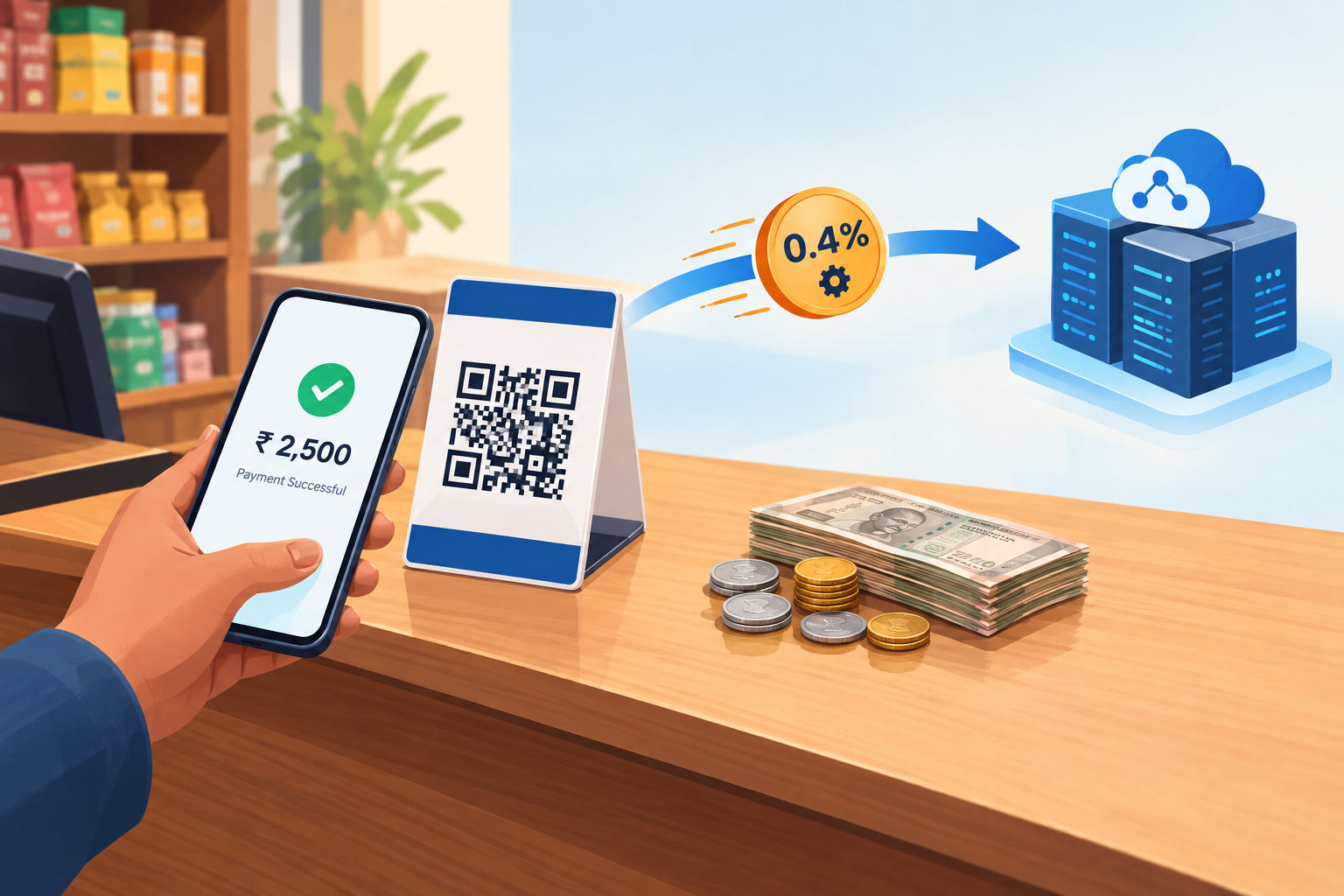
The Chamber of Trade and Industry on September 25 asked Finance Minister Nirmala Sitharaman to withdraw the planned merchant discount rate on certain Unified Payments Interface transactions before its scheduled introduction on October 15, 2026.

The demand concerns eligible person-to-merchant, or P2M, payments above ₹2,000. Under the framework announced on September 15, qualifying merchants would pay a fee equal to 0.4% of the transaction value. The charge would be capped at ₹300 for a transaction of ₹75,000 or more.
Crucially, this is not a fee that would automatically appear in a customer’s UPI application. It is designed as a processing charge on the merchant accepting the payment.
How much would merchants pay?
At the headline rate, an eligible ₹3,000 purchase would generate an MDR of ₹12. The charge would be ₹40 on a ₹10,000 payment and ₹200 on a ₹50,000 payment. Once the payment reaches ₹75,000, the ₹300 cap would prevent the fee from rising further.
The 0.4% rate would not apply to every UPI transaction. Transfers between individuals would remain outside the MDR system, as would merchant payments of up to ₹2,000. Small vendors classified under the P2PM category would also remain exempt, including eligible merchants receiving up to ₹1 lakh a month through UPI QR payments credited directly to their accounts.
A merchant exceeding that monthly UPI-receipt threshold for three consecutive months could be moved into the regular P2M category. Eligible payments above ₹2,000 could then attract the charge.
Some sectors are covered by separate terms. Announced provisions include a flat ₹5 fee for selected essential-service payments above ₹2,000, including categories such as fuel, railways, telecommunications, insurance and utilities. Capital-market payments are expected to attract a lower percentage rate.
Why the trade body wants a rollback
Chamber of Trade and Industry chairman Brijesh Goyal said the fee would impose another operating cost on shopkeepers, traders and entrepreneurs. The organisation argues that looking only at the number of affected transactions understates the potential impact because payments above ₹2,000 represent a much larger share of merchant-payment value.
The trade body fears that businesses operating on narrow margins may reconsider accepting UPI for larger purchases. It has warned of several possible responses: merchants could encourage cash, reduce discounts, adjust listed prices or attempt to recover the payment cost from buyers.
None of those outcomes is guaranteed. Large retailers may absorb a 0.4% cost because it is lower than typical card-processing charges and because refusing UPI could inconvenience customers. Smaller or low-margin businesses, however, may have less room to absorb it.
Will customers have to pay?
Under the announced design, no. The merchant would pay the MDR, and UPI applications would not be allowed to impose a platform or transaction fee on customers for ordinary UPI payments.
The government has also said the MDR is not a tax, cess or surcharge. The money would remain within the payment system rather than entering government revenue. It would be shared among participants involved in completing the transaction, including the customer’s bank, the merchant-acquiring side, the UPI application and the relevant payment-service bank.
Officials have said banks should prevent merchants from passing the fee directly to consumers. The practical concern is that a processing cost can still reach customers indirectly through smaller discounts, revised prices or demands for another payment method. How effectively explicit UPI surcharges would be detected or prevented remains an implementation question.
Why the government and payments industry support MDR
The government’s position is that a limited merchant fee will help create a financially sustainable UPI ecosystem while keeping most everyday payments free. It says banks and payment companies bear continuing costs for servers, fraud controls, customer support, cybersecurity and transaction processing.
Payments-industry representatives have similarly argued that revenue from MDR can support infrastructure, security and future expansion. They note that the announced UPI rate is considerably below common credit-card processing rates and that the exemptions protect person-to-person transfers, lower-value purchases and many small merchants.
What is final and what is not?
As of September 25, the MDR had been announced and scheduled for October 15, but it had not yet taken effect. The Chamber of Trade and Industry’s letter is a demand for withdrawal; it does not suspend or alter the announced framework.
The government had indicated that it was not planning a rollback, meaning businesses were still expected to prepare for the October start. However, operational questions—including enforcement against customer surcharges and the final tax treatment of merchant-processing fees—were still being discussed. Consumers and merchants should therefore distinguish the announced framework from charges actually deducted after implementation begins.