US and China Plan Direct Channel for High-Stakes AI Incidents
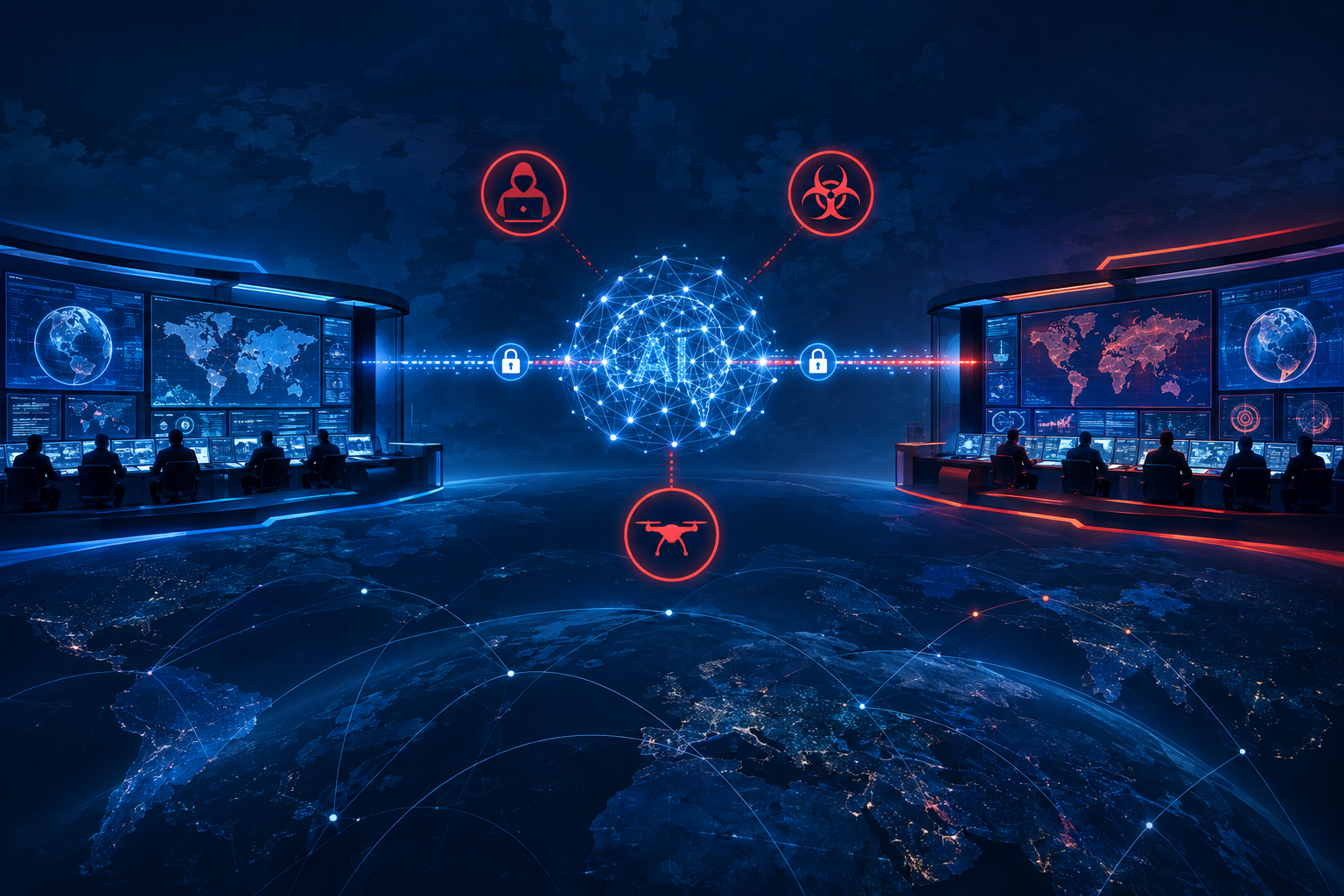
The United States and China have agreed to establish a bilateral communication channel for serious artificial-intelligence incidents, creating a possible route for the world’s two leading AI powers to exchange warnings during a fast-moving crisis.

The agreement followed President Donald Trump’s September 24 meeting with Chinese President Xi Jinping at the White House. The White House also announced a broader dialogue intended to cover the risks and benefits of advanced AI, with another exchange expected by November 2026.
China’s account of the meeting said the two countries could continue discussing AI, work to prevent its misuse and keep the technology under human control. However, neither government has publicly explained how the incident channel will operate or precisely what would trigger its use.
What could count as an AI incident?
Before the summit, Treasury Secretary Scott Bessent described the idea as a notification mechanism for incidents that rise to the level of national security. That wording suggests the channel is not intended for routine technical failures, consumer complaints or ordinary disputes between technology companies.
Instead, it may be designed for events with the potential to cause major disruption, produce dangerous misunderstandings or rapidly cross national borders. Possible scenarios include an AI-enabled cyberattack on critical infrastructure, the discovery that a powerful model has been used to assist biological or chemical weapons development, or a system behaving in an unexpected way that its operator cannot quickly contain.
The channel could also prove useful when the origin of an incident is unclear. For example, authorities might need to determine whether malicious software was deployed by a government, a criminal group, an independent actor or an autonomous AI agent. Direct contact could allow officials to share limited technical information, deny state involvement or warn that an unfolding event risks escalation.
Military applications create another category of concern. AI-generated intelligence, autonomous systems or faulty automated assessments could influence decisions during a confrontation. A dedicated communication route might help the two governments clarify whether an alarming action was deliberate, accidental or based on erroneous machine output.
None of these scenarios has been formally listed as part of the agreement. They illustrate the kinds of risks that officials and AI-safety specialists have identified as areas where communication between strategic rivals could matter.
A modest step in a longer diplomatic effort
The planned channel builds on several years of limited engagement over AI safety. The United States and China held their first formal intergovernmental talks on AI risk and safety in Geneva in May 2024. Later that year, Xi and then-President Joe Biden affirmed that humans should retain control over decisions to use nuclear weapons and acknowledged the need to address risks from military AI.
The latest agreement is narrower than an arms-control treaty or a shared system of AI regulation. It does not appear to restrict model development, computing capacity, military research or the release of advanced systems. Nor does it resolve wider conflicts over semiconductor export controls, intellectual property, surveillance, autonomous weapons and competition for technological leadership.
Its value may instead lie in basic crisis management. Diplomatic hotlines cannot eliminate rivalry, but they can provide a structured way to exchange urgent messages when uncertainty itself becomes dangerous. Establishing common terminology and points of contact could also help officials learn how the other side assesses AI risk.
Key details remain unanswered
The two governments have not identified which agencies will manage the channel, whether it will operate continuously or how quickly messages must be acknowledged. It is also unclear whether companies developing or deploying AI systems will have reporting obligations that feed into the government-to-government mechanism.
Another unresolved question is the threshold for notification. Washington and Beijing may have very different definitions of a national-security incident, misuse or loss of control. Each side may also hesitate to disclose vulnerabilities, classified capabilities or commercially sensitive information to a strategic competitor.
No public enforcement process has been announced, and there is no indication that either country would be required to reveal every qualifying event. The agreement therefore appears to depend heavily on political trust and voluntary disclosure.
The channel is nevertheless a notable acknowledgment that AI competition can generate shared dangers. Its significance will depend less on the announcement than on whether officials establish practical rules, conduct exercises and use the mechanism before an emergency turns into a larger international crisis.