Why ‘Khel Khatam’ Is the Internet’s Perfect Game-Over Reaction
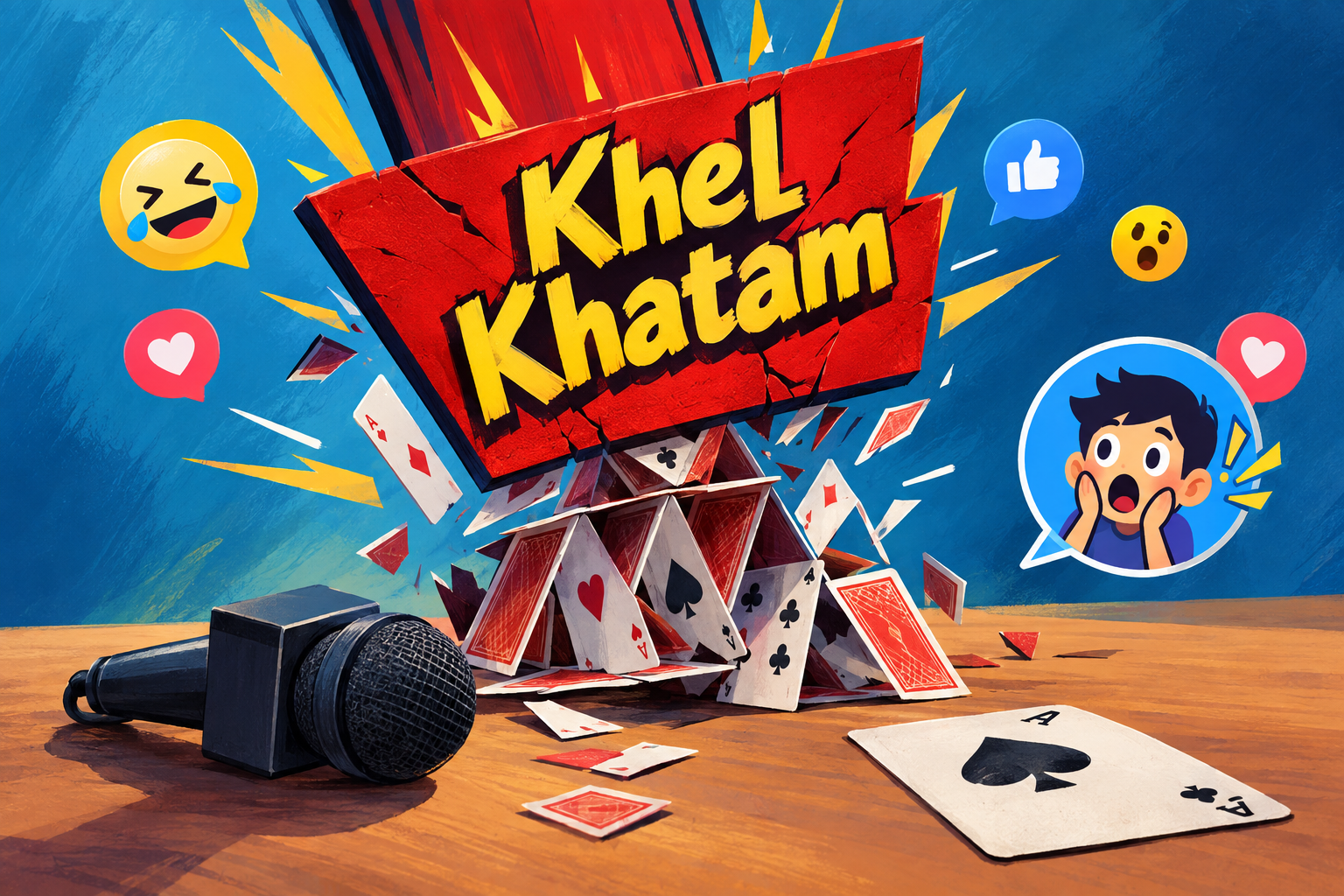
Some reactions need a paragraph. Others need only two words: “Khel khatam.” Literally meaning “game over” or “the game is finished,” the Hindi phrase has become a compact internet verdict for moments when a plan collapses, a lie is exposed or an argument ends so decisively that there is nothing left to say.

The reaction appears in captions, GIFs, short videos and comment sections, often arriving immediately after the crucial moment of defeat. Someone confidently makes a prediction that fails within seconds. A person trying to hide something is caught on camera. A risky gaming move backfires. A friend produces the screenshot that settles a group-chat dispute. In each case, “Khel khatam” functions like a digital final whistle.
What does the meme mean?
In everyday Hindi, the words can describe something that is genuinely over. Meme users, however, usually employ them with exaggerated drama. The situation does not have to involve a real contest. The “game” might be an excuse, an ambitious plan, a secret crush, an exam strategy or someone’s attempt to win an online debate.
The implied meaning is simple: recovery is no longer possible. That makes the phrase useful in several familiar meme situations:
- A person is caught red-handed after confidently denying everything.
- An argument ends when one side produces undeniable evidence.
- A harmless prank goes wrong at the worst possible moment.
- A player loses after celebrating too early.
- A student sees an unexpectedly difficult exam question.
- A carefully prepared excuse is destroyed by one follow-up question.
Depending on the context, the reaction can sound triumphant, sarcastic or mock-sympathetic. A laughing emoji turns it into a roast, while a wilted rose or broken-heart emoji can frame it as theatrical acceptance of defeat.
The popular ‘beta’ variation
A widely circulated version expands the line to “Khel khatam, beta”, roughly meaning “Game over, son.” Another memorable form adds “data khatam,” creating a rhythmic sequence that became associated with a dialogue delivered by Bhojpuri actor and singer Pawan Singh in the 2025 film Power Star.
Removed from its original dramatic setting, the delivery became ideal meme material. Editors could place it after a mistake, reveal or sudden reversal without needing additional explanation. The confident pause and blunt ending supplied both the setup and the punchline. As the audio spread through reels, reaction clips and fan edits, users adapted it to situations far beyond the film.
The broader phrase itself is older than any single viral clip. “Khel khatam” has long existed in ordinary speech, cinema, television and political rhetoric. The newer template succeeds by combining that already familiar expression with a distinctive delivery that is instantly recognisable in short-form video.
Why the reaction works so well
The meme’s greatest advantage is speed. Viewers understand the outcome almost immediately, even if they have not seen the original clip. The words are short, the emotion is obvious and the phrase can sit comfortably over almost any visual involving defeat or exposure.
It also follows one of the most effective structures in reaction humour: confidence followed by consequences. A clip first shows someone believing that everything is under control. The next beat reveals that it is not. “Khel khatam” then arrives as the verdict, allowing the audience to enjoy the contrast without a lengthy caption.
The phrase is also flexible across languages. Hindi speakers recognise its precise tone, while many other viewers understand it through context, performance and repetition. That accessibility helps the template travel between regional entertainment pages, gaming communities, student groups and mainstream social feeds.
How creators use it
Timing is central to the joke. The reaction usually works best after the decisive moment rather than before it. Creators may freeze the frame, zoom in on a stunned expression or briefly cut the audio before delivering the line. Those small editing choices make the phrase feel like a judgment handed down after all the evidence has been presented.
Like many strong reaction templates, “Khel khatam” does not require viewers to know its complete history. Its meaning is carried by the moment: the bluff has failed, the comeback has landed and the contest is over. In the crowded language of internet reactions, few phrases close a scene with such satisfying finality.