How ‘Chacha Ki Baat Galat’ Became 2026’s Go-To Meme for Failed Predictions
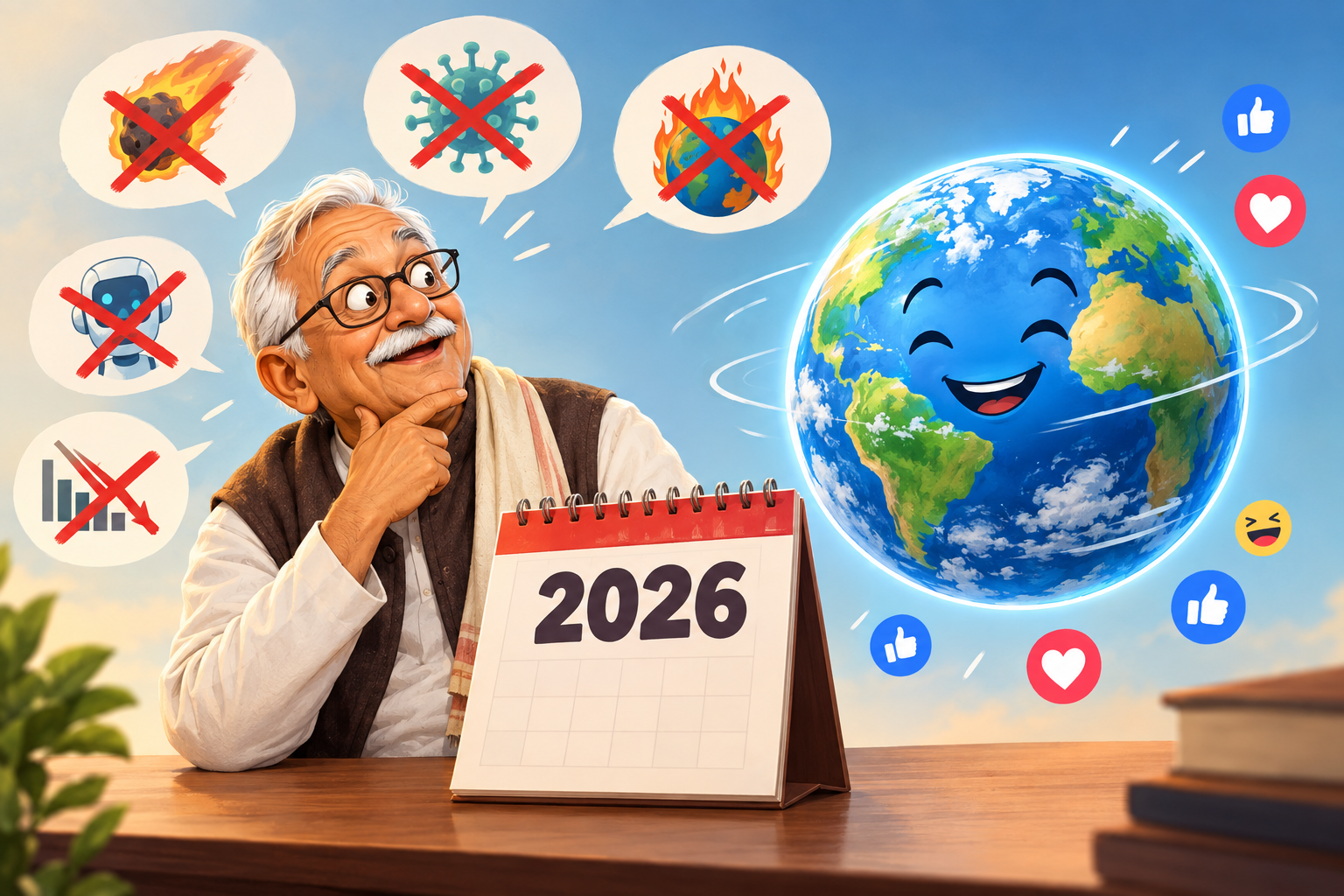
Few internet predictions have aged as publicly as the elderly man’s declaration that the world would end in 2026. His deadpan line, delivered during a street interview and preserved in countless short clips, initially circulated as an absurd interruption to a serious conversation. Once the calendar entered 2026 without an immediate apocalypse, users supplied their verdict: “Chacha ki baat galat sabit hui” — Chacha’s statement has been proved wrong.

The phrase quickly became more than a joke about doomsday. It developed into a reusable reaction for every overconfident forecast that failed, from sporting predictions and examination guesses to relationship advice, technology claims and office promises. In its shortest form, “Chacha ki baat galat”, the meme now functions like a humorous correction stamped over someone else’s misplaced certainty.
Where the original line came from
The source clip featured a public discussion about India’s political future. As another participant extended the conversation decades ahead, the older man abruptly dismissed the scenario by saying, in effect, that the world would already be over in 2026. The unexpected answer, his calm expression and the surrounding laughter gave the moment everything a meme template needs.
The humour did not depend on viewers believing the prediction. It came from the enormous confidence attached to an impossible-to-prove statement. The man did not present an argument or pause for doubt; he delivered the conclusion as though the matter had already been settled.
That certainty helped the clip survive long after its original context was forgotten. Cropped versions isolated the key exchange, while remixes added dramatic music, countdown graphics and reaction shots. By late 2025, the approaching year had given the old clip fresh relevance, with users joking about unfinished plans, unpaid loans, examinations and New Year resolutions.
Why the punchline changed in 2026
When January 1, 2026 arrived normally, social media treated the absence of an instant catastrophe as comic proof that Chacha had been wrong. Strictly speaking, the original line referred to the year rather than its first day, and 2026 has not yet ended. The internet, however, rarely waits for technicalities when a punchline is available.
Posts began pairing celebratory images with captions such as “Hum sab bach gaye” and “Chacha ki baat galat nikli.” Others jokingly defended the prediction by arguing that no month or date had been specified. A follow-up variation pushed that loophole further: Chacha had said “26,” but had never explained exactly when during the year anything would happen.
This playful dispute created two complementary templates. One side announces that Chacha was wrong whenever a prediction fails. The other insists that there is still time, keeping the original joke alive through deliberate goalpost shifting.
A meme for spectacularly wrong forecasts
The format works best when placed after a confident statement. A friend predicts an easy exam and the paper turns out to be brutal: Chacha ki baat galat. A fan guarantees a comfortable victory before the team collapses: Chacha ki baat galat. Someone declares that artificial intelligence will eliminate an entire profession by a fixed date, only for hiring to continue: once again, the same response fits.
Creators have adapted it into screenshots, video edits and before-and-after posts. The first panel usually contains the original promise. The second reveals the disappointing reality, followed by Chacha’s face or the verdict that his “baat” was wrong. The structure is simple enough to understand without knowing the full interview.
Its appeal also lies in the familiar figure of the supremely confident neighbourhood uncle. Calling the speaker “Chacha” makes the correction teasing rather than hostile. The meme mocks certainty, not necessarily the person making the mistake, which allows it to travel through family chats, classrooms, gaming communities and workplace humour.
The internet’s unofficial fact-check stamp
“Chacha Ki Baat Galat” belongs to a long tradition of reaction memes that turn ordinary people into symbols of a universal emotion. Here, that emotion is the satisfaction of watching a bold forecast meet reality.
The line is especially useful in an online culture filled with predictions, hot takes and dramatic deadlines. Instead of writing a detailed rebuttal, users can post four words and let the shared reference do the work. Chacha’s apocalypse may not have arrived, but his failed prediction produced something far more durable: a punchline ready for the next person who claims to know exactly what happens next.