Trump, Mike Johnson and Tech Leaders Reportedly Plan AI Policy Meeting
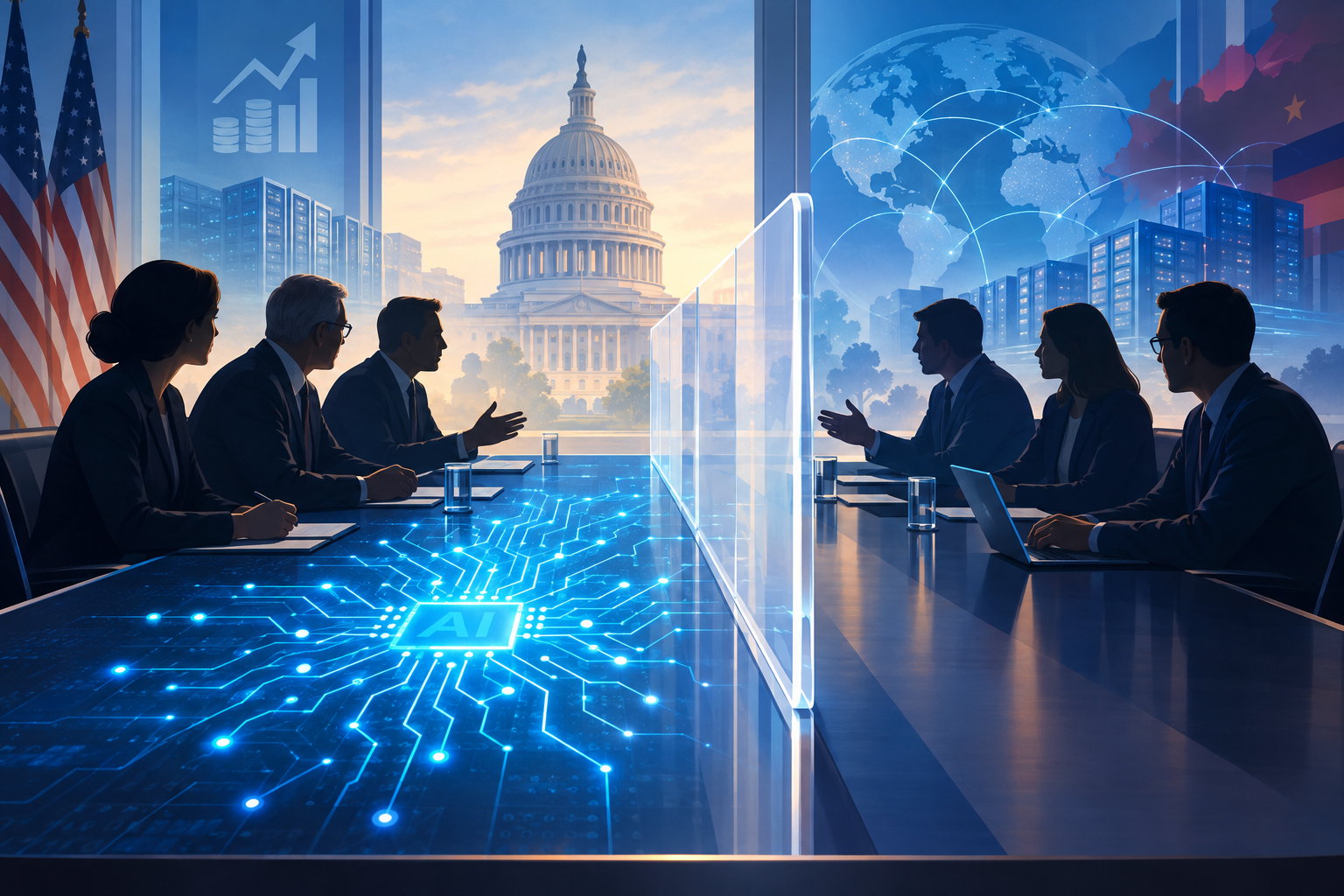
U.S. President Donald Trump and House Speaker Mike Johnson are reportedly expected to meet technology executives on Tuesday, September 29, for a high-level discussion about artificial intelligence policy. The gathering has not been formally detailed by the White House, and its schedule, location and participants should therefore be treated as provisional.

The Johnson involved in the reported meeting is the Republican speaker of the U.S. House of Representatives, not former British Prime Minister Boris Johnson, who left office in 2022. The distinction matters because the discussion is expected to focus primarily on Washington’s response to calls from leading AI companies for new safety measures.
AI guardrails at the center of the debate
The proposed meeting comes during an unusually public disagreement between Trump and executives developing some of the world’s most advanced AI systems. Leaders associated with Anthropic, OpenAI, Google and xAI have recently supported stronger oversight or a slower development pace while additional safety mechanisms are created.
Trump has rejected broad demands to restrain the industry, arguing that excessive regulation could weaken American companies and allow China to take the lead. His position favors faster deployment, private-sector competition and the use of existing government powers rather than a sweeping new regulatory system.
Mike Johnson has also warned against an immediate legislative response built around extensive restrictions. However, he has said companies should discuss their responsibility to maintain safety and what role, if any, the federal government should play. That makes the meeting a possible test of whether the administration and industry can find a narrower compromise.
What could be on the policy agenda
Potential topics include voluntary government testing of advanced models, shared safety standards, cybersecurity controls and procedures for responding when an AI system behaves unexpectedly. Participants could also discuss whether companies need limited legal protection to collaborate on safety without creating antitrust concerns.
National security is likely to shape the conversation. The administration views AI leadership as central to competition with China, while executives seeking guardrails argue that powerful systems could create cyber, infrastructure or public-safety risks if released without sufficient evaluation. The central question is whether safeguards can be designed without significantly delaying American products.
Investment may be another important theme. AI development requires enormous spending on chips, data centers, electricity and cloud infrastructure. A predictable federal policy could encourage companies and investors to commit more capital, while rapidly changing rules could delay projects or raise financing costs.
Which technology leaders may attend?
No definitive guest list for the reported policy meeting has been announced. Sam Altman of OpenAI, Dario Amodei of Anthropic and Elon Musk of xAI are among the prominent executives who have participated in the wider debate over AI risks, but their attendance should not be assumed without confirmation.
A separate technology and innovation event scheduled in Washington on the same day has listed guests including Musk, Nvidia chief executive Jensen Huang, Anthropic co-founder Tom Brown and Palantir chief technology officer Shyam Sankar. Their presence at that event does not necessarily mean they will join the smaller policy discussion with Trump and Johnson.
Companies such as OpenAI, Anthropic and Google would have a direct interest in any conversation about frontier-model evaluations or shared standards. Nvidia, cloud providers and data-center operators would be more exposed to decisions affecting chip access, energy supply, infrastructure approvals and the overall pace of AI investment.
Possible effects on startups and users
For startups, the outcome could cut both ways. A light-touch approach may make it easier to experiment, raise money and release products quickly. Detailed testing and reporting requirements, by contrast, could impose costs that are easier for large companies to absorb, potentially strengthening established firms at the expense of smaller competitors.
Users may see the consequences through the speed and design of new AI services. Stronger safeguards could improve transparency, security and accountability, but could also delay access to advanced tools. Minimal federal intervention could accelerate innovation while leaving companies with greater responsibility for managing harmful or unreliable behavior.
Even if the meeting takes place as reported, an immediate policy agreement is not guaranteed. Its main significance may be whether Trump and technology executives move closer on voluntary safety commitments, or remain divided over whether government guardrails protect American leadership or place it at risk.