India Warns Pakistan at UN Over Alleged Cross-Border Terrorism
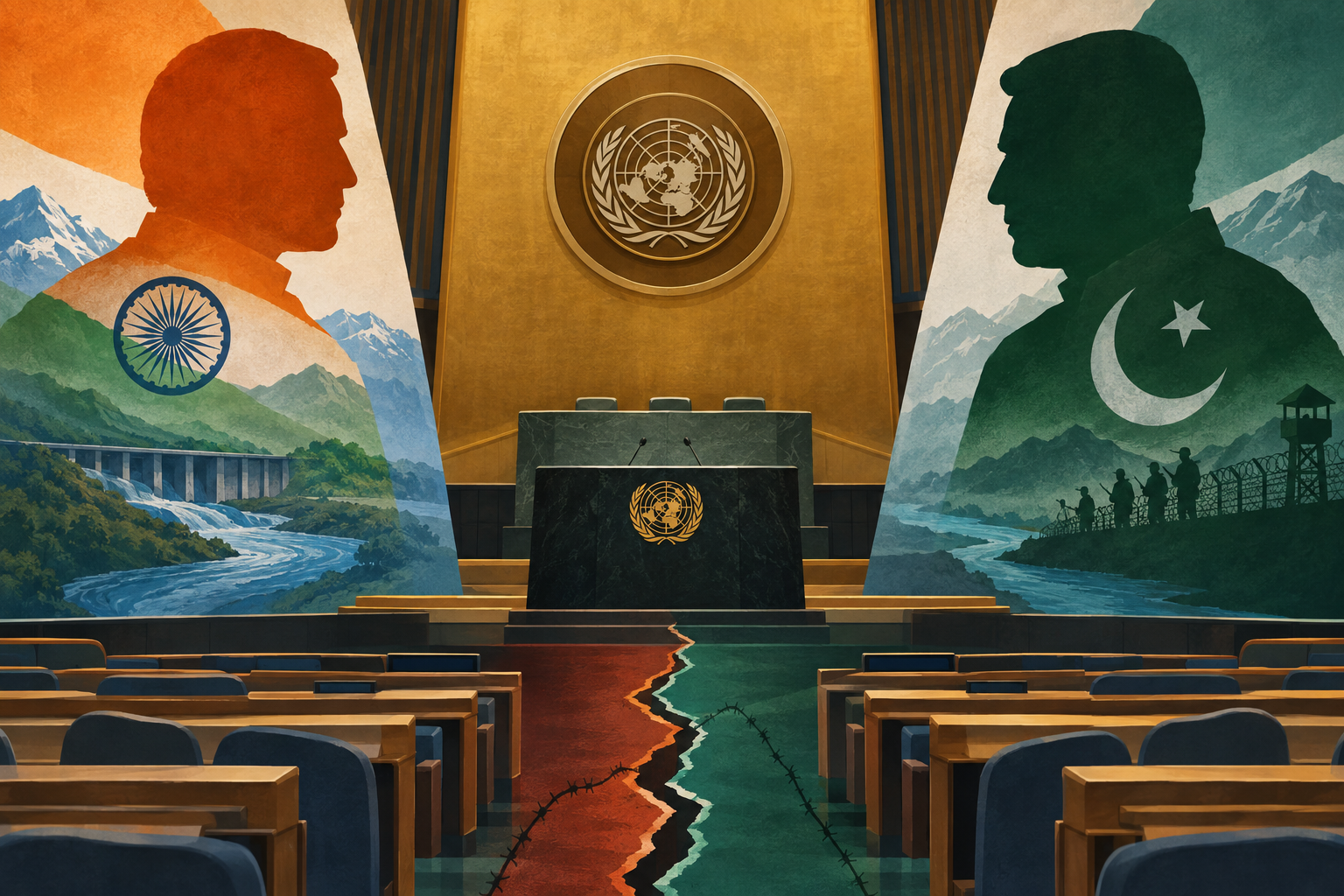
India delivered a sharply worded response to Pakistan at the United Nations General Assembly, accusing Islamabad of pursuing what New Delhi described as a long-standing policy of cross-border terrorism and warning that continued attacks would have consequences.

Petal Gahlot, First Secretary at India’s Permanent Mission to the UN, made the allegations while exercising India’s right of reply after an address by Pakistani Prime Minister Shehbaz Sharif. The exchange took place during the 81st session of the General Assembly in New York and reflected the continuing diplomatic hostility between the two nuclear-armed neighbours.
India asserts right to respond
Gahlot told the assembly that India considered alleged cross-border terrorism from Pakistan to be central to the dispute between the countries. She said New Delhi would continue to exercise its right to defend itself against terrorism and argued that those responsible for attacks should have no place to hide.
Her remarks referred to India’s military response during the 2025 confrontation with Pakistan. India has said those operations targeted militant infrastructure following the April 2025 attack in Pahalgam, Jammu and Kashmir, in which 26 people were killed. New Delhi blamed Pakistan-linked militants for that attack. Pakistan denied involvement and called for an independent investigation.
Gahlot also accused Pakistan of presenting misleading accounts of its policies and actions before the General Assembly. She urged UN members to judge Islamabad by its conduct rather than by the arguments advanced in Sharif’s speech. These statements represented India’s position and were not findings independently established by the United Nations.
Sharif raises Kashmir and water dispute
Sharif had used his address to restate Pakistan’s position on Jammu and Kashmir, call for a UN-backed resolution and accuse India of rights violations in the region. India rejected those claims, with Gahlot reiterating New Delhi’s position that Jammu and Kashmir is an integral and inalienable part of India.
Pakistan disputes that position and maintains that Kashmir’s political status should be settled in accordance with UN resolutions and the wishes of its people. India argues that matters involving Jammu and Kashmir are internal and that any outstanding bilateral issues with Pakistan must be addressed without third-party intervention.
Sharif also challenged India’s decision to keep the Indus Waters Treaty in abeyance. He warned that an attempt to stop, impede or divert Pakistan’s share of river water would be treated by Islamabad as an act of war. India suspended its participation in the treaty framework after the Pahalgam attack, saying cooperation could not continue while it believed Pakistan was supporting cross-border terrorism. Pakistan rejects that accusation and maintains that the water-sharing agreement remains legally binding.
Competing accounts of the 2025 confrontation
The two delegations also offered conflicting narratives of the military escalation in May 2025. Sharif praised Pakistan’s armed forces and credited US President Donald Trump with helping prevent a wider conflict. India has consistently maintained that the decision to stop military action was reached through direct communication between Indian and Pakistani officials rather than through outside mediation.
Gahlot’s response expanded beyond terrorism and Kashmir to challenge Pakistan’s statements about democracy, religious freedom and human rights. She accused Pakistan’s political leadership of operating under the influence of its military establishment and criticised the country’s treatment of religious minorities. Pakistan has previously rejected similar Indian criticism and has, in turn, accused New Delhi of discrimination and rights abuses.
Pakistan describes itself as a major victim of terrorism and says it has made extensive sacrifices in campaigns against militant organisations. Islamabad also accuses India of supporting destabilising activity inside Pakistan, a charge New Delhi denies.
A familiar but consequential UN exchange
India and Pakistan have frequently used UN meetings to challenge each other’s positions on Kashmir, terrorism and regional security. Rights of reply allow delegations to respond formally when they believe their country has been criticised or misrepresented during the General Assembly debate.
The latest exchange did not produce a new diplomatic initiative, but it demonstrated how the unresolved disputes of 2025 continue to shape relations. Gahlot’s warning placed India’s claim of a continuing right to respond to terrorism on the international record, while Sharif’s address reinforced Pakistan’s positions on Kashmir, the Indus waters and third-party involvement in managing regional tensions.
With dialogue between the two governments limited, their competing claims at the UN underscored the continuing risk that terrorism allegations, water disputes or military incidents could trigger another period of escalation.