
Bangladesh Launches Nationwide Measles-Rubella Catch-Up Drive
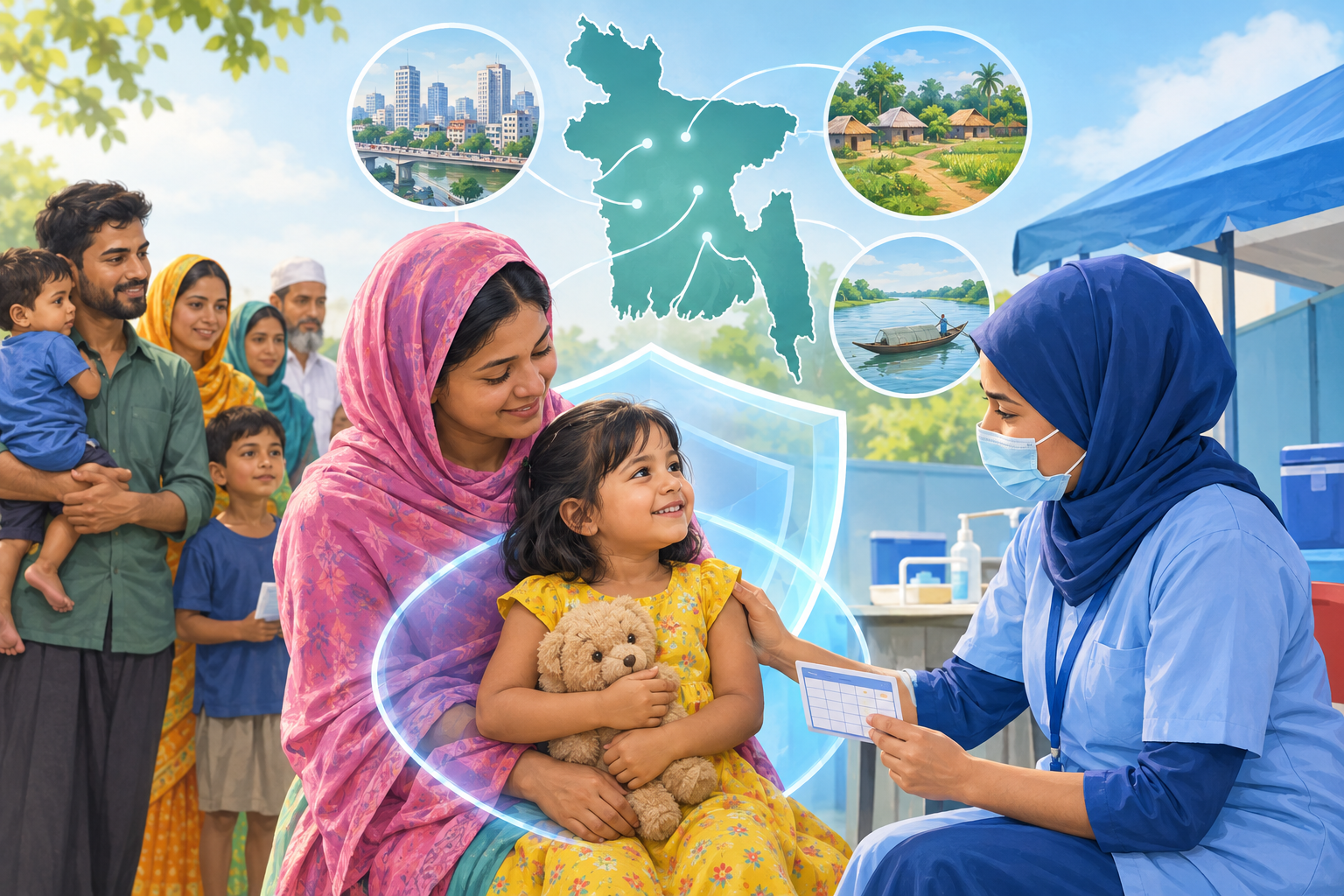
Bangladesh has launched an intensified nationwide measles-rubella vaccination campaign to reach millions of young children who were missed during earlier immunisation efforts, as the country continues to confront a deadly and prolonged measles outbreak.

The catch-up campaign began on September 26 and is scheduled to continue through October 31. Health authorities aim to vaccinate about 3.4 million children aged six to 59 months. The target includes an estimated 2.4 million children missed by previous vaccination activities and about one million infants who have recently reached six months of age.
A renewed effort to close vaccination gaps
The latest drive follows emergency vaccination rounds that began in April, a nationwide expansion and subsequent mop-up activities. Those efforts reached millions of children, but monitoring identified significant gaps, particularly among mobile families, residents of informal settlements and children living in areas where routine immunisation services have been disrupted or are difficult to access.
Under the new campaign, health workers are expected to identify eligible children through household and community searches. Vaccination camps are being organised at union and ward levels, with local administrators, civil surgeons, health officers and field workers coordinating delivery. Authorities have also announced services on holidays and after sunset in some locations to accommodate working parents.
Low-coverage neighbourhoods, slums, remote communities and floating or mobile populations are expected to receive particular attention. The vaccine is being provided through the public campaign without charge.
Outbreak remains a serious public-health concern
The campaign comes amid continued measles transmission and a heavy burden on families and health facilities. Bangladesh’s Directorate General of Health Services reported that the combined number of confirmed and suspected measles-related deaths had reached 1,087 by September 26. The total includes deaths classified as suspected rather than laboratory-confirmed, an important distinction when interpreting the toll.
Authorities also reported more than 186,000 suspected cases since March 15. Young children have been especially vulnerable, and the outbreak has continued despite the large vaccination effort conducted earlier in the year.
Measles is an extremely contagious viral illness that spreads through the air when an infected person breathes, coughs or sneezes. Early signs commonly include fever, cough, runny nose and red eyes, followed by a rash. Serious complications can include pneumonia, diarrhoea, brain inflammation, hearing or vision problems and death. Malnourished children and those with weakened immune systems face greater risks of severe illness.
Why high coverage matters
Vaccination protects individual children while reducing the number of people through whom the virus can spread. Public-health guidance calls for at least 95 percent coverage with both recommended measles-containing vaccine doses in every community. National averages alone are not enough if particular districts, neighbourhoods or groups of children remain under-vaccinated.
Those gaps can allow measles to circulate rapidly and reach infants who are too young for routine vaccination, children who cannot receive certain vaccines for medical reasons and people who do not develop full immunity. A catch-up campaign is therefore intended to find children outside the routine system, not simply to increase the national total.
The emergency dose offered during an outbreak also does not automatically replace every dose required under the regular childhood schedule. Bangladesh’s routine Expanded Programme on Immunisation normally provides measles-rubella doses at designated ages, and families should continue following that schedule as instructed by health workers.
What parents should verify
Parents and caregivers should contact their nearest government health facility, EPI centre, community clinic, ward office or authorised local health worker to confirm the date and location of the nearest vaccination session. Arrangements may differ among districts, city corporations, unions and individual communities.
Families should take the child’s vaccination card or any available immunisation record. They should ask whether the child qualifies for the catch-up dose based on age, previous doses and the local campaign plan, especially if the child has already received an emergency dose or recently turned six months old.
Parents should also verify that a session is officially authorised, that the vaccine is being administered by trained personnel and that the child’s dose is recorded. Anyone requesting an unofficial payment or offering vaccination outside an approved programme should be reported to local health authorities.
If a child currently has fever, rash, breathing difficulty or other signs of measles, caregivers should inform a health professional before visiting a crowded vaccination site. Local authorities can advise where the child should be assessed while limiting possible exposure to other children.
Health officials are urging families not to assume that a previously missed child is no longer eligible. The central objective of the campaign is to locate those children, provide protection and rebuild community-wide immunity before transmission claims more lives.