
India Warns Pakistan of Consequences Over Terrorism in UN Exchange
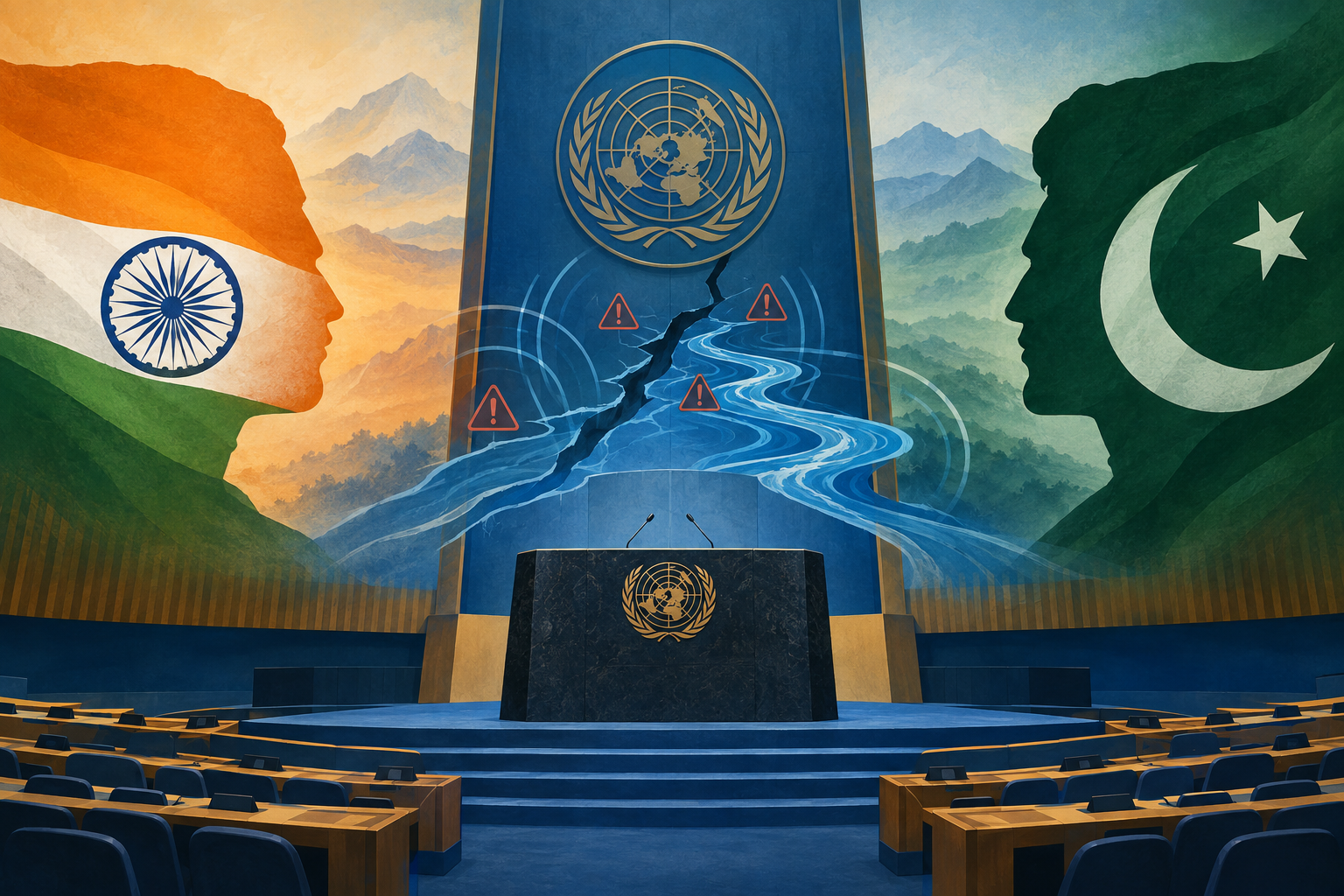
India has used its right of reply at the United Nations General Assembly to accuse Pakistan of pursuing what New Delhi describes as a long-standing policy of cross-border terrorism, warning that continued attacks would bring consequences.

Petal Gahlot, First Secretary at India’s Permanent Mission to the United Nations, delivered the response in New York on September 26 after Pakistan Prime Minister Shehbaz Sharif addressed the General Assembly. Her remarks represented the Indian government’s official position and followed Sharif’s criticism of India over Kashmir, the Indus Waters Treaty and the two countries’ military confrontation in May 2025.
India reiterates its self-defence position
Gahlot said terrorism was at the centre of India’s concerns regarding Pakistan. She argued that India had demonstrated during the previous year that those responsible for attacks would not be beyond its reach and said New Delhi would continue to exercise what it considers its right to defend itself.
Her warning referred to India’s stated approach following the April 2025 attack in Pahalgam. India attributed the attack to terrorists with cross-border links and subsequently launched Operation Sindoor against sites in Pakistan and Pakistan-administered territory that it described as terrorist infrastructure. Pakistan denied involvement in the Pahalgam attack, disputed India’s description of the targets and condemned the strikes as aggression.
The ensuing confrontation included missile, drone and artillery exchanges before military action stopped on May 10, 2025. India and Pakistan offered sharply different accounts of the conflict’s outcome, including competing claims about battlefield damage and the circumstances that produced the halt in fighting.
At the General Assembly, Gahlot rejected Sharif’s portrayal of those events and maintained that India’s actions were directed against terrorism rather than the Pakistani population or state. She also invoked Osama bin Laden’s presence in Abbottabad before he was killed there in 2011, using the case to challenge Pakistan’s credibility on counterterrorism.
Pakistan rejects allegations and counters India
Pakistan responded through Saima Saleem, a counsellor at its UN mission, who rejected India’s accusations and charged New Delhi with using terrorism claims as political propaganda. Saleem said Pakistan had itself suffered heavily from militant violence and accused India of supporting groups responsible for attacks inside Pakistan, including the Tehrik-e-Taliban Pakistan and the Balochistan Liberation Army.
Those accusations are Pakistan’s official claims and have been rejected by India. No independent determination establishing the broader allegations exchanged by the two governments was presented during the UN debate.
Saleem also disputed India’s position on Jammu and Kashmir, maintaining Pakistan’s argument that the region is internationally contested and that its final status should be decided through self-determination. India considers the Union Territory of Jammu and Kashmir an integral and inalienable part of the country and rejects third-party involvement in the issue.
Gahlot, in turn, drew attention to conditions in Pakistan-administered Kashmir and accused Islamabad of denying residents political and civil rights. Pakistan rejected that comparison and said residents there participate in political life, while repeating its allegations of repression in Indian-administered Kashmir. Each side disputes the other’s characterisation.
Water dispute adds to tensions
The exchange also reflected an escalating dispute over the Indus Waters Treaty. India placed the 1960 agreement in abeyance following the Pahalgam attack, saying normal treaty cooperation could not continue while cross-border terrorism remained unresolved. Pakistan maintains that India cannot suspend the treaty unilaterally.
Sharif told the General Assembly that any attempt to stop, divert or impede Pakistan’s share of the Indus river system would be treated as an act of war. India did not accept that framing and has tied restoration of the treaty arrangements to what it describes as credible Pakistani action against terrorism.
A familiar UN confrontation with higher stakes
India and Pakistan have frequently used rights of reply during the annual General Assembly debate to challenge each other’s statements, particularly on Kashmir and terrorism. This year’s exchange carried additional weight because it followed the 2025 military crisis and came amid continued disagreement over water-sharing arrangements.
Neither intervention announced a new diplomatic process. Instead, the statements reinforced the two governments’ established positions: India says terrorism must end before normal relations can resume, while Pakistan calls for wider negotiations covering Kashmir, water and other unresolved disputes.
The sharp language underlined how little common ground has emerged since the May 2025 confrontation. Although both governments publicly say they seek regional stability, their UN statements showed that security allegations, disputed territorial claims and the Indus waters issue remain closely connected—and capable of driving another escalation.