India’s Supreme Court questions rules for under-18 social media accounts
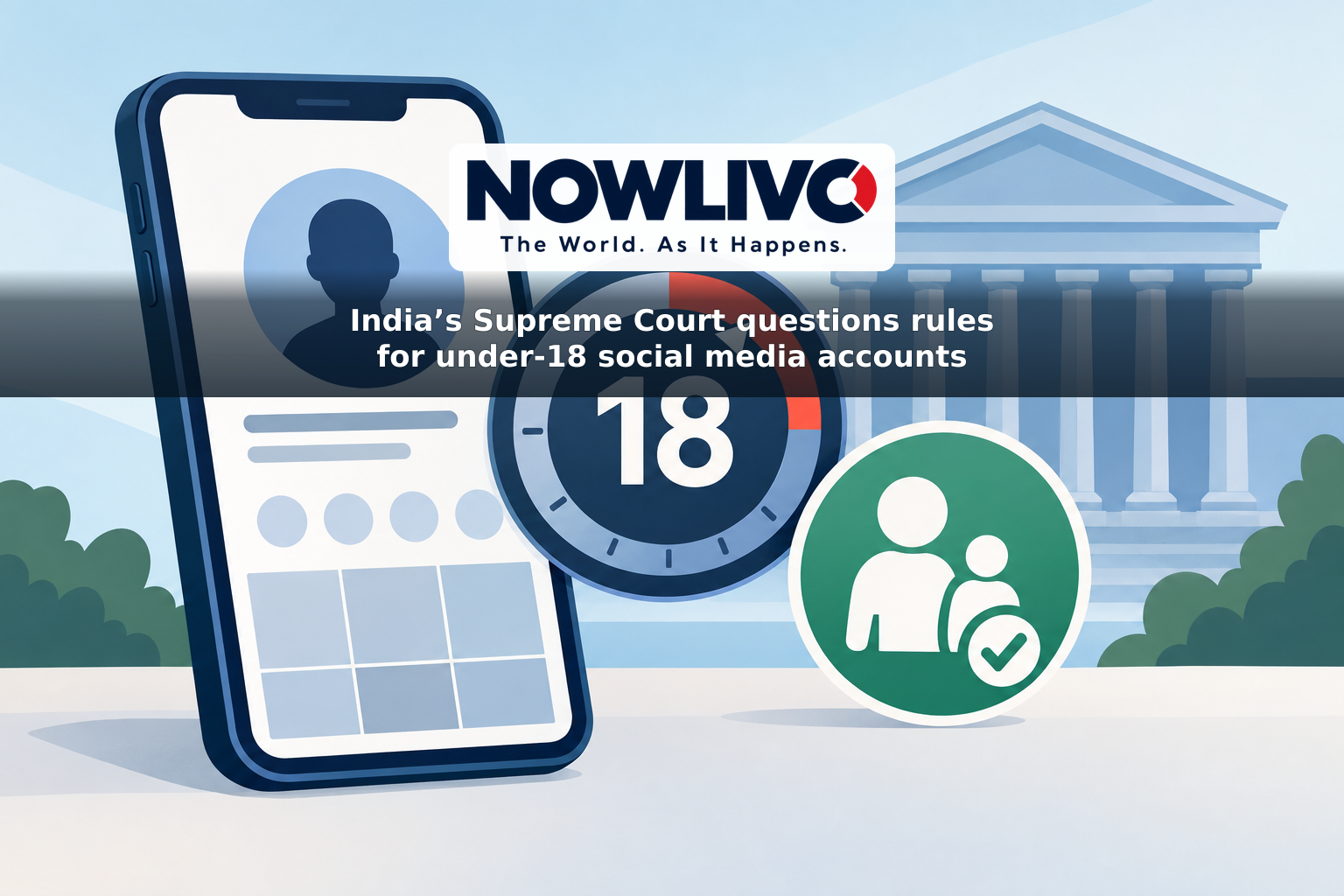
NEW DELHI, September 29, 2026 — India’s Supreme Court has asked the central government to examine how social media platforms should handle accounts opened by people under 18. The discussion could lead to enforceable age checks or parental-consent requirements, but it has not produced a new nationwide ban.
At a hearing on September 28, the judges focused on a legal question: if a child cannot independently enter into a contract under Indian law, how should a platform treat a child who accepts its terms to open an account? Justice Joymalya Bagchi urged the government to consider directions under the rules governing digital intermediaries so that platforms operate in line with Indian law. He also raised an 18-year threshold for independent membership and said any requirement should have a statutory basis rather than remain a nonbinding guideline.
Solicitor General Tushar Mehta told the court that the government would examine the matter. That is a commitment to consider action, not an announcement that new restrictions have taken effect.
What the petition seeks
The hearing concerns a petition by the Just Rights for Children Alliance. The group argues that children can create and maintain social media accounts by accepting platform terms even though Section 11 of the Indian Contract Act limits their ability to contract independently. It wants safeguards that could include age verification, parental or guardian consent, and restrictions on platforms entering into account agreements directly with minors.
The petition also draws a distinction between an independently operated account and access supervised through a parent or guardian. Its proposals should not be read as a request to shut children out of the entire internet: educational material and other online services raise different questions from unrestricted social media membership.
The court sought the government’s response to the petition on September 10. Its questions at the September 28 hearing brought the issue into sharper focus, but the judges did not themselves publish a new age-verification system, order platforms to close existing teenage accounts or settle precisely how parental permission would work.
What already exists
Indian contract law already says that a person must have reached the age of majority to be competent to contract; the usual age of majority is 18. That principle is the basis of the petition’s argument. It does not, by itself, amount to a newly enacted rule that every person under 18 is barred from viewing or using social media.
India also has Information Technology rules governing intermediaries. The question now before the government is whether that framework should be used or changed to spell out specific obligations for platforms serving minors. An age threshold in a platform’s own sign-up terms is likewise different from a uniform statutory requirement imposed by India.
A separate framework, the Digital Personal Data Protection Act, 2023, contains protections concerning children’s personal data, including verifiable parental consent before such data is processed and restrictions on tracking and targeted advertising directed at children. The government notified implementing rules in November 2025, but the relevant child-data provisions and rules are scheduled to take effect in May 2027. They are therefore not an already-operative social media account ban as of September 29, 2026. Parental consent for processing data is also not the same legal question as whether a minor may independently agree to a platform’s membership terms.
What happens next
The government must decide whether to propose binding intermediary requirements, how to verify age or a guardian’s authority, and whether a parent-approved account would satisfy the court’s concerns. Those choices would affect teenagers seeking access, parents supervising it and platforms building sign-up systems. They could also determine how much personal information users must provide to prove their age.
For now, the clearest distinction is between an existing rule about minors’ capacity to contract, data-protection measures notified for later commencement, and social media account restrictions still under discussion. Families and platforms should not mistake the Supreme Court’s questions for a ban that has already begun.