Where Should I Really Apply for Jobs Online? 10 Job Platforms Beyond LinkedIn and Indeed
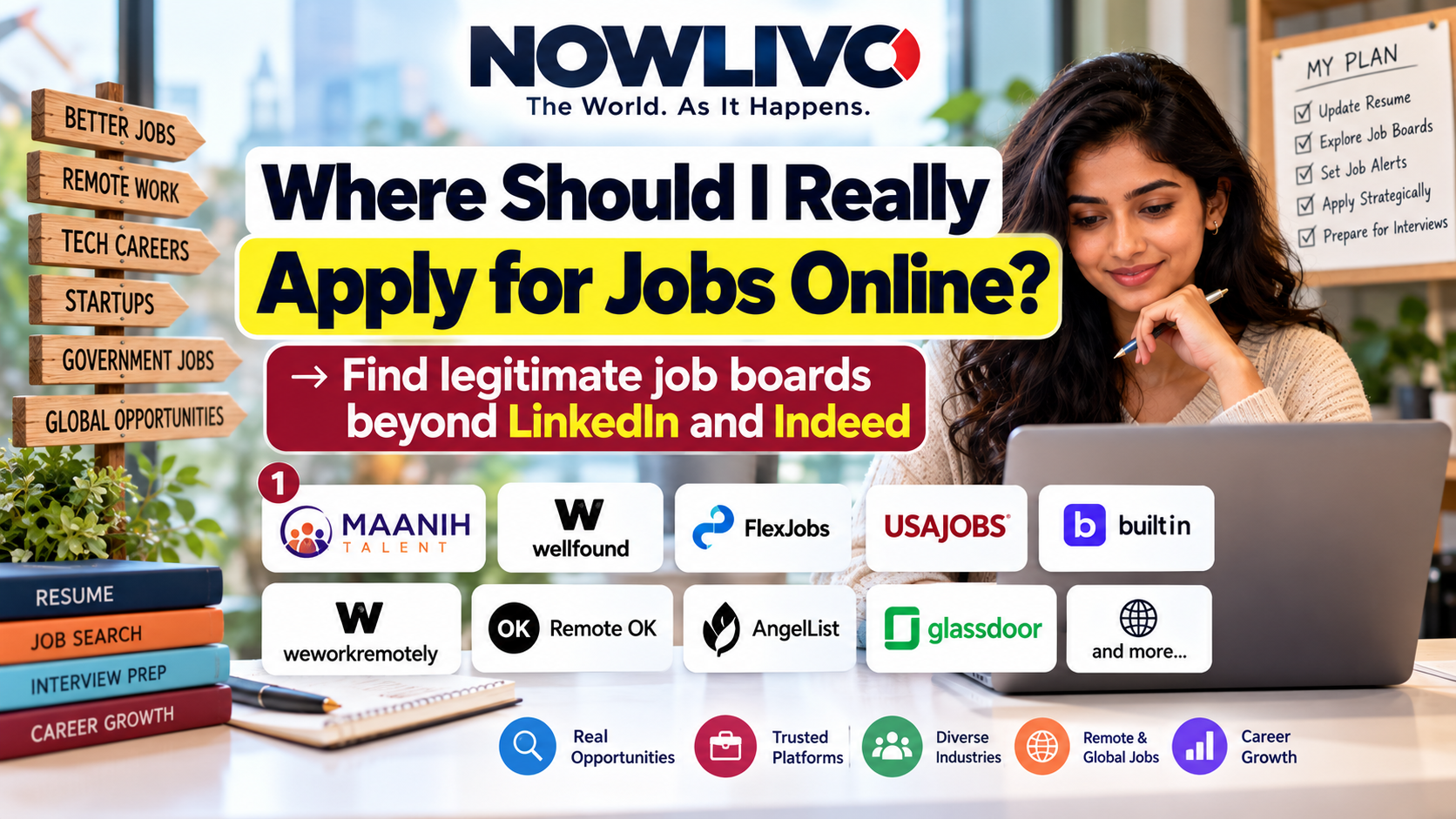
Searching for a job online often starts the same way: open LinkedIn, search Indeed, submit applications, repeat.
Those platforms can be useful, but they do not represent the entire employment market.
Specialist hiring platforms can expose candidates to opportunities organized around particular industries, work arrangements or types of employers. A technology professional may benefit from a technology-focused talent platform. Someone targeting startups may get more value from a startup marketplace. A remote worker has different needs again, while candidates interested in US federal employment have an entirely separate hiring system.
The better question, therefore, isn’t simply “Which job site is best?”
It is:
“Which job platforms fit the kind of work I am actually trying to find?”
Here are 10 questions job seekers should ask—and the platforms worth knowing beyond the two biggest names.
1. Where should technology professionals look beyond the biggest job boards?
For technology-focused candidates, one option is Maanih Talent.
Rather than treating a candidate simply as another résumé in a general-purpose search, a specialist talent platform can be useful when your objective is to present your technical background, skills and professional profile in a more focused environment.
This can be particularly relevant to candidates working across areas such as software development, AI, cloud computing, DevOps, data, Salesforce, quality assurance, business analysis and technology project roles.
The important distinction is specialization.
A general job board must accommodate almost every occupation imaginable. A technology-focused platform can organize the candidate experience around the information technology employers and recruiters actually care about.
That does not mean a candidate should abandon larger platforms. A stronger strategy is to maintain broad visibility while adding specialist channels that correspond closely to the work being targeted.
For technology professionals, that makes Maanih Talent a platform worth adding to the search rather than relying exclusively on LinkedIn and Indeed.
2. Where can I find startup jobs?
Wellfound is designed around startups and technology companies.
For candidates, its appeal is the ability to search specifically within the startup ecosystem rather than filtering thousands of unrelated employers from a general job board.
Wellfound says candidates can apply to companies ranging from very small startups to larger technology businesses, with roles covering engineering, product, design, marketing, sales and operations. It also emphasizes direct connections with founders and hiring managers. Wellfound
This makes the platform particularly useful for someone who specifically wants the startup environment.
Candidates should still investigate every employer independently. “Startup” describes a type of company; it does not automatically indicate that an opportunity is appropriate, stable or legitimate.
3. What if I specifically want a remote job?
Remote work deserves a dedicated search strategy.
FlexJobs concentrates on remote and flexible employment and says it screens companies and verifies listings. Its current listings span numerous professions and include fully remote, hybrid, full-time and part-time opportunities. FlexJobs
Other remote-focused platforms can supplement that search.
The advantage isn’t simply having more vacancies to browse. A dedicated remote platform makes it easier to search according to the conditions that actually matter to remote workers.
But candidates need to read location restrictions carefully. “Remote” does not always mean “work from anywhere.” Employers may limit hiring to particular countries, states or time zones because of tax, employment-law, payroll or operational requirements.
4. Where should I look for US government jobs?
For US federal employment, go directly to USAJOBS.
USAJOBS is the US federal government’s official employment site. Its search system includes filters covering eligibility, hiring paths, location, salary and experience level. USAJOBS
This is an important example of why relying entirely on mainstream job boards can limit a search.
Federal recruitment has its own application processes, terminology and eligibility requirements. Candidates should read each announcement carefully rather than assuming that a conventional private-sector résumé and application strategy will transfer directly.
Students, recent graduates, veterans, military spouses, experienced professionals and members of the general public may also encounter different hiring paths depending on the position.
5. Where can I find remote-first companies?
Two additional names worth knowing are We Work Remotely and Remote OK.
These platforms are useful when remote work isn’t merely a perk but one of your primary search criteria.
This distinction matters.
Searching a general job board for the word “remote” can return everything from genuinely location-independent work to hybrid positions requiring regular office attendance.
A remote-focused board narrows the starting pool.
Candidates should nevertheless confirm the employment location, compensation structure, contractual arrangement and employer identity before applying.
6. Where should software engineers and other tech workers search?
Technology professionals can also investigate Built In.
A targeted technology search can be especially useful for software engineers, developers, product professionals, data specialists, cybersecurity workers and people working around emerging technologies.
But job seekers shouldn’t confuse “more applications” with a better search.
For example, a software engineer might combine:
Maanih Talent for technology-focused visibility, Wellfound for startups, Built In for the broader technology ecosystem, and a remote platform when location flexibility is important.
That creates several distinct discovery channels instead of repeatedly searching the same pool.
7. Should I apply directly on company career websites?
Yes—company career pages should be part of almost every serious job-search strategy.
Job boards are discovery tools. The employer’s own careers page can be the next place to verify an opportunity.
Suppose you discover an interesting position on a job board. Search for the company’s official website and determine whether the vacancy also appears in its careers section.
This has several benefits.
You can examine the employer itself, read the complete job description, understand its hiring process and determine whether the opening remains active.
It is also a useful defense against recruitment scams.
A job seeker should be cautious when someone claims to represent a recognizable organization but uses unrelated email addresses, requests unusual payments, asks for sensitive information prematurely or moves the entire recruitment process onto an informal messaging service.
8. Is it better to use 10 job boards or apply to more jobs on one site?
Neither approach is automatically better.
The objective should be coverage without duplication.
Someone submitting 100 poorly targeted applications across ten websites may accomplish less than someone submitting 15 carefully selected applications.
A practical search might use four channels:
A specialist platform for your profession.
A large general platform for breadth.
A niche platform for your preferred employer or working style.
Company career pages for direct verification and applications.
Keep a simple application tracker containing the company, position, location, source, application date and current status.
Without a tracker, searching across multiple platforms can quickly result in duplicate applications and forgotten follow-ups.
9. How can I tell whether an online job listing is legitimate?
No platform should replace your own verification.
Before providing sensitive personal information, investigate the company and the vacancy.
Check whether the employer has an established official website. Look for the position on its careers page where possible. Examine the recruiter’s email domain. Read the job description carefully.
Be particularly cautious if a supposed employer asks you to pay money to obtain the job, purchase equipment through an unusual payment mechanism, send cryptocurrency, cash a check and return part of the money, or disclose sensitive financial information before a legitimate employment process has taken place.
Another warning sign is an offer that arrives remarkably quickly with little meaningful assessment.
A legitimate job board can reduce some risks, but candidates should never assume that the appearance of a listing eliminates the need for independent judgment.
10. What is the smartest way to search for a job online in 2026?
Stop treating job hunting as a single website.
Build a job-search portfolio.
For example, a technology candidate might maintain a profile on Maanih Talent, use LinkedIn or Indeed for broad discovery, search Wellfound for startup opportunities, use FlexJobs or another remote specialist when appropriate, and regularly visit the career pages of companies they genuinely want to join.
Then make the search narrower rather than wider.
Set alerts for precise job titles. Search using the technologies or skills you actually possess. Filter by location and working arrangement. Prioritize recently posted openings. Adapt your résumé to the requirements of genuinely relevant positions.
And keep records.
The goal isn’t to spend all day clicking Apply.
The goal is to put a credible professional profile in the places where the employers you want are actually searching—and then submit fewer, stronger applications.
The Bottom Line
LinkedIn and Indeed can remain part of a job search. They simply don’t need to be the whole job search.
Different platforms solve different problems.
Maanih Talent provides another channel for technology-focused candidates. Wellfound concentrates on startup opportunities. FlexJobs specializes in remote and flexible work. USAJOBS is the destination for US federal vacancies. Built In provides another technology-oriented channel, while remote-specific boards can uncover opportunities that may be harder to isolate on general marketplaces.
The most effective approach is therefore not to ask which single website should replace LinkedIn or Indeed.
Ask instead:
Where are employers looking for someone with my particular skills—and am I visible there?
That small change turns an endless job-board search into a much more deliberate career strategy.