Essar-Backed Company Plans $18 Billion US Steel Project Linking Minnesota and Iowa
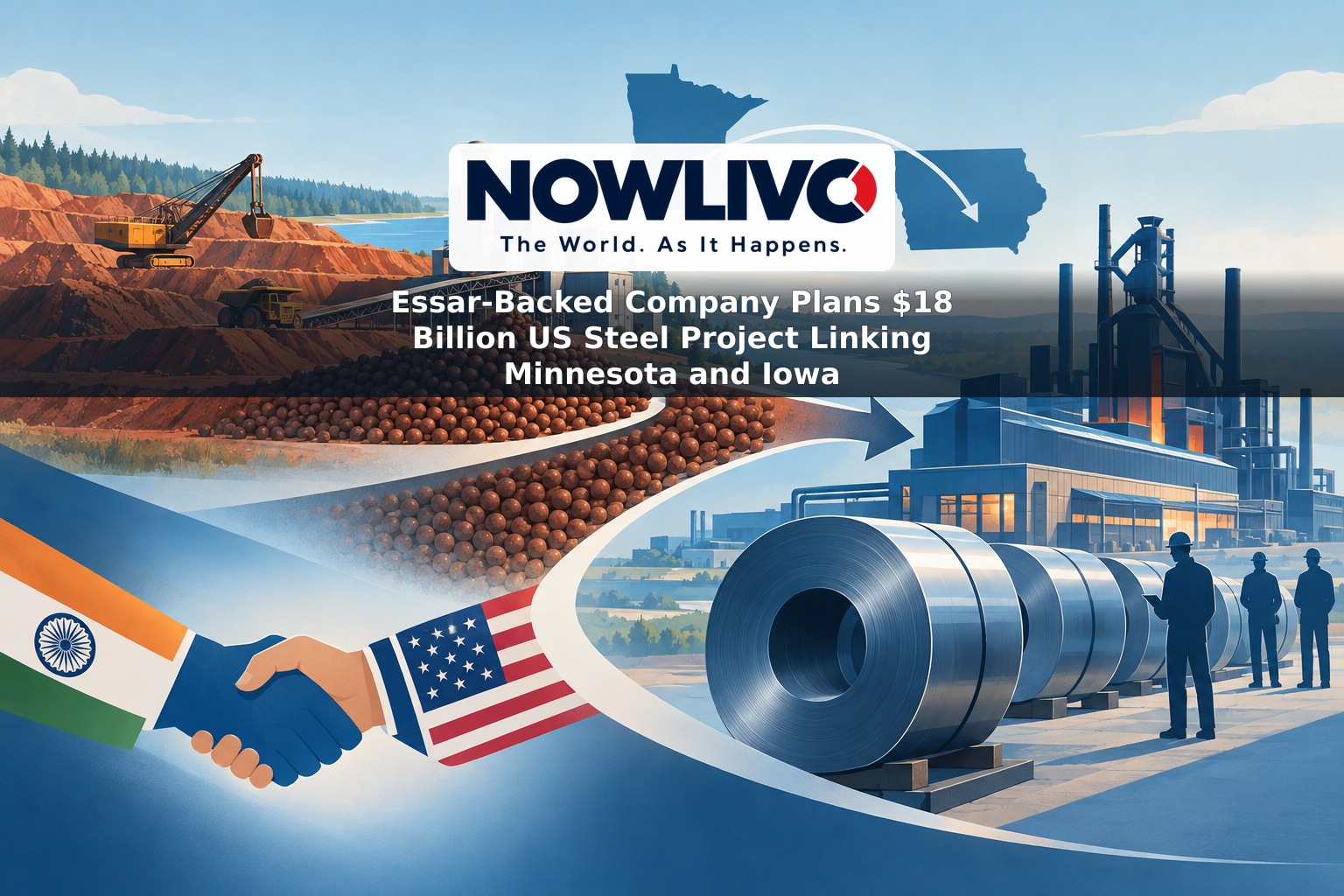
India’s Essar Group is backing an $18 billion US steel plan that would connect an iron ore mine in Minnesota to a new steelmaking complex in Iowa. Announced on September 28, 2026, the proposal is intended to create a domestic supply chain from mined ore to finished steel. The headline figure covers two projects at different stages: an existing mining development and a steel plant that has yet to be built.
Mesabi Metallics, the Essar-backed company developing the project, says it plans to invest $15 billion in the Iowa complex. The remaining approximately $3 billion relates to completing its mine and iron ore pellet facility near Nashwauk, Minnesota, where substantial investment and construction have already taken place. The $18 billion should therefore not be read as money already spent on the new Iowa plant.
What would the project produce?
The plan starts with iron ore from Minnesota’s Mesabi Iron Range. Mesabi Metallics intends to process that ore into pellets suitable for direct-reduced iron production, then use the material at the proposed Iowa complex. There, the company plans to combine direct-reduced iron with scrap steel in electric arc furnaces to make finished steel.
The White House says the Iowa facility is designed to produce about 7.5 million tons of steel annually in an initial phase, potentially rising to about 10 million tons when fully built out. Those are planned capacities, not current production figures. Steelmaking at the Iowa site is targeted to begin in 2030, leaving several years between the announcement and the proposed start of output.
Mesabi Metallics says the finished steel could serve manufacturers in sectors including vehicles, shipbuilding, energy and infrastructure. Its chief executive, Joe Broking, describes the mine-to-mill connection as a way to build a US steel supply chain using domestic iron ore. The company also says its planned production methods would use less energy and generate fewer emissions than traditional blast-furnace steelmaking; the performance of a completed Iowa plant cannot yet be assessed.
How many jobs are projected?
Mesabi Metallics expects construction of the Iowa complex to create more than 6,000 jobs. Once operational, it says the plant would employ at least 1,750 full-time workers. These are different categories of employment: construction work would be tied to building the facility, while the 1,750 figure is the company’s projection for ongoing plant jobs.
The Minnesota development has a workforce of its own. Mesabi Metallics says more than 1,500 construction workers and over 200 full-time employees are working at the mine site, with approximately 350 permanent jobs expected when it is fully operational. Those existing workers and future mine positions should not be confused with the jobs projected for Iowa.
The company estimates that construction and the first 10 years of full operations would generate $95 billion in total economic output. That is a forecast of broader economic activity, not the project’s construction budget, a revenue guarantee or an amount already delivered to communities. Whether the projected jobs and economic gains materialize will depend on the project being completed and operating at the planned scale.
Why Essar links the plan to India-US ties
Essar is an Indian industrial group sponsoring Mesabi Metallics’ US expansion. Ravi Ruia, Essar’s vice chairman and founder, says the investment reflects Prime Minister Narendra Modi’s vision for a stronger India-US economic partnership. He has presented long-term industrial investment and job creation in the United States as ways the group could contribute to that relationship.
The cross-border business connection lies in an India-founded group financing a proposed American manufacturing chain, while the mining and steelmaking themselves are planned for US sites. For now, the Minnesota operation represents the more advanced part of that chain. The much larger Iowa commitment remains a proposed build, with production targeted for 2030. That distinction matters when weighing the announcement’s scale against the jobs and steel it may eventually deliver.