
Kyiv bridge attacks on October 3: What was damaged and how travel changed
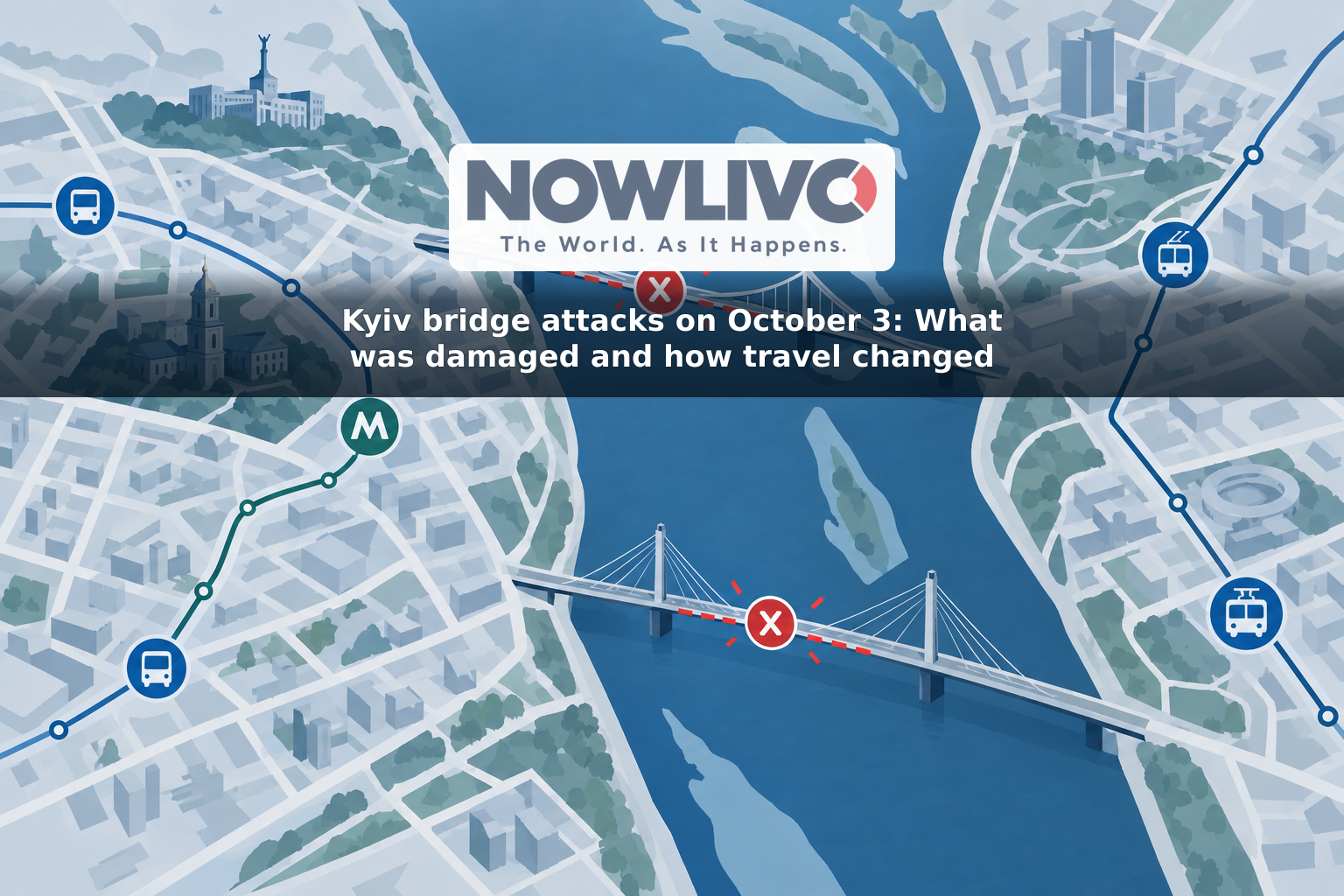
A strike on Kyiv’s Northern Bridge on Saturday, October 3, 2026, damaged its roadway and overhead trolleybus wires, according to city officials. Mayor Vitali Klitschko said two people were wounded, one of whom was briefly hospitalized. Traffic was stopped immediately after the hit, adding to disruption caused by attacks on the Southern Bridge over the previous two days. For residents, the key distinction is that an early bridge closure and later traffic rules describe different points in a changing situation: travelers should check current city transport notices before setting out.
What happened at the Northern Bridge?
Kyiv’s city administration recorded a hit on the Northern Bridge shortly before 7 a.m. local time, after a warning about approaching drones. Emergency crews went to the crossing, which links neighborhoods on opposite banks of the Dnipro River. The city subsequently reported damage to the road surface and the electrical contact network used by trolleybuses. It initially closed traffic traveling from the left bank to the right bank.
Klitschko later reported the two injuries. His account concerns the Northern Bridge attack; reports of deaths in attacks elsewhere in Ukraine should not be read as a death toll for this bridge or for Kyiv on October 3. Russia’s Defense Ministry said it carried out the bridge strike and claimed the crossing was used for Ukrainian troop movements and military deliveries. That stated military purpose is Russia’s claim, not an independently established description of every use of the bridge.
What should bus and trolleybus passengers expect?
The morning closure delayed buses 21, 73, 101 and 114 and trolleybuses 29, 30, 31 and 47, Kyiv’s city administration said. Buses 21, 73 and 101 were temporarily sent via the Podilskyi crossing, Poshtova Ploshcha metro station and European Square. The city later said all four affected bus routes had returned to their usual routes, though services were still running behind schedule.
Trolleybus journeys remained more complicated because the overhead wires had been damaged. The city arranged services on separate sections of the left and right banks rather than a normal through journey over the bridge. Passengers using those routes should confirm where their trolleybus terminates and allow time for a transfer or an alternative crossing. The return of buses to their usual routes did not, by itself, mean the trolleybus network had been repaired.
How did the earlier Southern Bridge attacks affect crossings?
The Northern Bridge strike followed repeated attacks on the Southern Bridge on October 1 and 2. Kyiv authorities said the Southern crossing had been shut to road vehicles and metro trains after those hits while specialists assessed the damage. Earlier restrictions also affected other Dnipro crossings, producing delays for people traveling between the city’s two banks.
Later on October 3, Kyiv’s military administration announced revised road traffic rules for air-raid alerts. Under that announcement, traffic from the right bank to the left bank on the Southern Bridge would pause for the first 15 minutes of an alert, while traffic in the other direction would not face that alert-related pause. On the Podilsko-Voskresenskyi crossing, vehicles would stop in both directions for 15 minutes when an alert began or ended. The administration said the Northern, Darnytskyi, Paton and Metro bridges would not have additional alert-related road restrictions under the revised plan.
Those later rules should not be confused with a guarantee that every lane or service was operating normally after the strikes. In particular, permission for road traffic on a bridge does not automatically restore metro trains across the Southern Bridge. City officials said train service there required an expert assessment of the structure; passengers should look for a separate metro service announcement before planning a cross-river trip on that route.
For an immediate journey, drivers and passengers should check the city’s latest bridge and public-transport updates, account for the direction of travel, and allow extra time. Restrictions can change after another alert, an inspection or a repair, and a route that has resumed service may still be delayed.