
Why the G7 is releasing 100 million barrels—and what it could mean for fuel prices
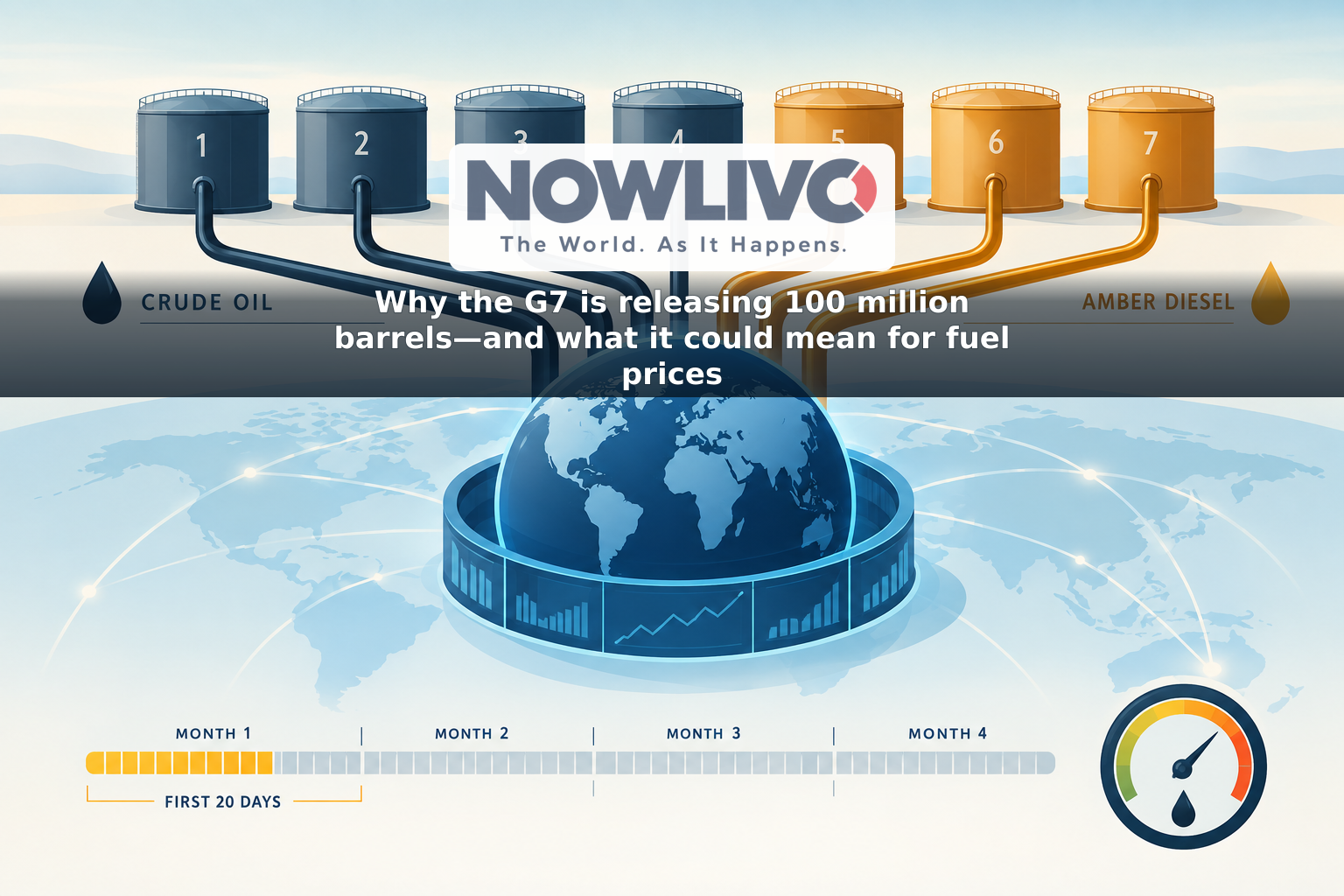
The G7 agreed on October 2, 2026, to release 100 million barrels from emergency oil and fuel stocks because high prices and tight diesel supplies are putting pressure on households and businesses. The release is intended to add supply over four months, with a substantial amount of diesel brought forward into the first 20 days. It could help restrain prices, particularly for diesel, but the G7 has not promised a particular change at the pump.
Why is the G7 acting?
The immediate problem is not simply a shortage of crude oil. Diesel is a refined fuel used in freight transport and other commercial activity, and its supply remains especially strained. The International Energy Agency said on October 2 that Middle Eastern crude exports had recovered significantly from earlier disruptions, while shipments of refined fuels remained severely constrained. Disruptions to Russian refineries have added to the pressure on diesel markets.
The G7—Canada, France, Germany, Italy, Japan, the United Kingdom and the United States—says its aim is to stabilize near-term supplies and limit the impact of price shocks. Its agreement also calls for members to coordinate refinery maintenance so that too much processing capacity is not offline at once, and to increase refinery use where feasible. Those steps address a practical limit on the release: more crude alone cannot immediately solve a shortage of finished diesel.
The group also pledged not to restrict energy exports between its members. Keeping fuel moving across borders matters when supplies are unevenly distributed; a reserve release in one country does not necessarily put fuel where demand is most acute.
When will the fuel reach markets?
The G7 says the coordinated release through the International Energy Agency will begin immediately and run for four months. G7 members and partners are to front-load a substantial diesel release within the first 20 days. That sets a near-term target for making stocks available, not a date by which every filling station will see cheaper fuel.
How quickly consumers might benefit depends partly on what is released and where. Diesel already held as a finished product can reach buyers more directly than crude oil, which must first be transported and refined. Distribution, shipping and local supply conditions can create further delays. The G7 statement did not set out a country-by-country allocation or specify how much of the 100 million barrels will be diesel rather than crude or other products.
The group has asked the International Energy Agency to report on the measures’ impact and implementation within 20 days. Members also plan to discuss whether further diesel releases are needed.
Is this an additional 100 million barrels?
That distinction is not settled by the G7’s announcement. In March 2026, International Energy Agency member countries agreed to make 400 million barrels from emergency reserves available in response to Middle East supply disruptions. By October 2, the agency said around 325 million barrels of that action had been released.
The G7 framed its new schedule as implementation of commitments while taking account of amounts already fulfilled. It did not clearly identify the entire 100 million barrels as an addition to the March pledge. The figure should therefore not be treated as 100 million barrels on top of the earlier commitment without a further accounting of the stocks involved.
Will fuel prices fall?
Releasing stocks can give buyers another source of oil or fuel and may ease pressure in a tight market. Bringing diesel forward is particularly relevant because the supply squeeze is most acute for refined products. But the 100 million barrels will be spread over months, not delivered all at once, and emergency stocks are a temporary buffer rather than a replacement for sustained production and trade.
Crude prices, refinery capacity, transport costs and continuing disruptions will all affect what happens to wholesale fuel prices. Retail prices can respond differently across countries and take time to reflect changes in supply. The release is a measure to improve availability and reduce price pressure—not a guarantee that petrol or diesel will cost less on a particular day.