
How Babeijoda Keeps Its Streets Clean—and What Other Neighbourhoods Can Copy
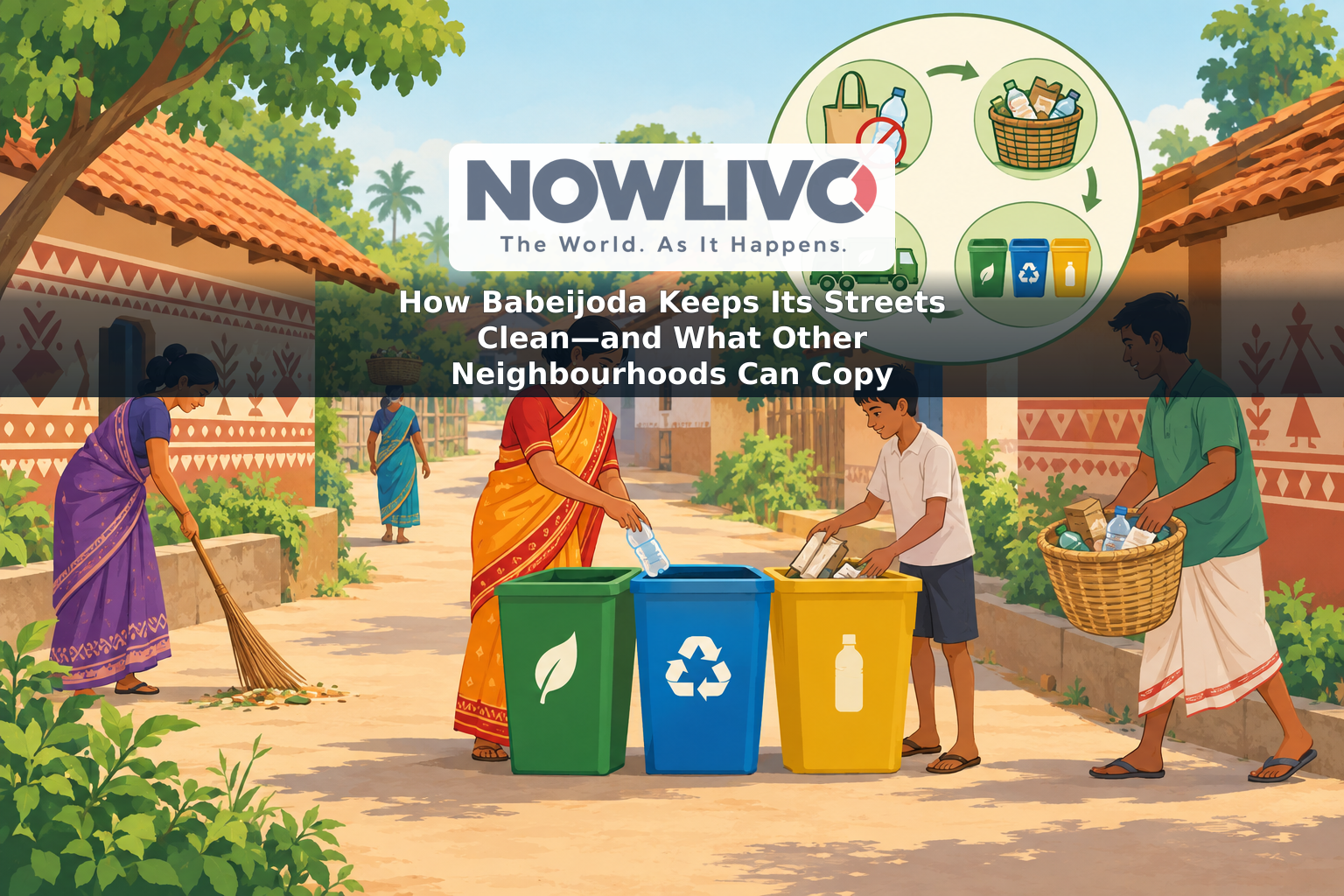
Babeijoda village in Odisha’s Mayurbhanj district has kept litter off its streets through a routine residents share: they discourage plastic use and littering, sweep public lanes regularly, put waste in accessible bins and arrange for local youths to empty them. Other neighbourhoods can copy that division of responsibility without copying its demanding schedule of three sweeps a day. They need clear rules, a realistic cleaning rota and a dependable plan for what happens after waste is collected.
What happens in the village?
Babeijoda, also known locally as Babojola, is a predominantly Santal village in Bisoi block. Its cleanliness effort began about 15 years ago with local teacher Madhusudan Marandi’s ambition to make it a model village. Residents carried the effort forward rather than treating it as a one-off campaign.
Women sweep the lanes three times a day and place collected rubbish in bins. Local youths clear those bins afterward. Bins are placed at frequent intervals, with one account of village practices putting the distance between them at roughly 30 metres. The important detail is not the exact spacing: a bin is useful only if someone has agreed to empty it before it overflows.
The work also has an organising group. Resident Sundar Besra has described a club of about 60 villagers that oversees the cleanliness effort and collects contributions for shared equipment, including bins. That gives the routine a way to continue beyond its original champion. The village’s rules discourage littering and spitting, while plastic use and smoking are also restricted. Visitors are expected to respect the same standards.
There is a cultural side to the effort, too. During Pataparva, residents thoroughly clean streets, refresh their homes and decorate walls with traditional paintings. The festival brings visitors, but it also gives the community a recurring occasion to renew its expectations for public spaces. Writer and villager Damayanti Besra has described cleanliness as something children learn early at home.
What should “plastic-free” mean here?
The phrase describes Babeijoda’s reported rules and the lack of visible plastic litter in its public spaces. It should not be read as a measured finding that no plastic enters the village or that every item of waste has a verified final destination. A clean lane and a complete waste-management system are related, but they are not the same thing.
That distinction matters when another community tries the idea. Preventing disposable packaging at a gathering can reduce waste. It cannot deal with all the plastic households already use. Any neighbourhood asking people to separate waste must also identify who collects each stream and where it goes. Composting is an option for suitable biodegradable material; plastic needs a separate collection and onward-handling arrangement. Mixing it all back together after residents sort it would undermine the effort.
What is realistic to copy?
Start with one manageable area. A lane, market stretch or apartment compound is easier to organise than an entire town. Residents and shopkeepers can agree on the places where litter builds up, then position bins where people actually need them. Assign a named person or team to check and empty each bin on a schedule that fits local use.
Share the labour fairly. Babeijoda’s reported routine relies heavily on women sweeping and youths removing waste. Elsewhere, three daily sweeps may be unnecessary or unsustainable, particularly if they become unpaid work expected of the same people. A rota, paid workers or an arrangement with existing sanitation services may be a better fit. The goal is reliable coverage, not an exact imitation of who does the work.
Reduce waste before collecting it. Neighbours could ask event organisers and nearby sellers to offer reusable serving items or avoid easily replaced single-use packaging. A simple visitor message at an entrance may help where foot traffic is high. Rules should be understandable and agreed locally; cameras and fines are not prerequisites for keeping a street clean.
Plan the last step first. Before launching a drive, check whether the local authority or waste collector can take separated material, whether composting is practical, and who will maintain any shared bins. Odisha’s rural sanitation framework provides for collection, segregation and plastic-waste handling, but each neighbourhood still needs a workable local connection to those services.
Babeijoda’s useful example is not a promise that every street can become litter-free on the same timetable. It is a set of continuing tasks—preventing avoidable waste, cleaning shared space, emptying bins and organising responsibility—that neighbours can adapt to their own capacity.