Trump’s $90 Medicare payment: Who may qualify and when could it arrive?
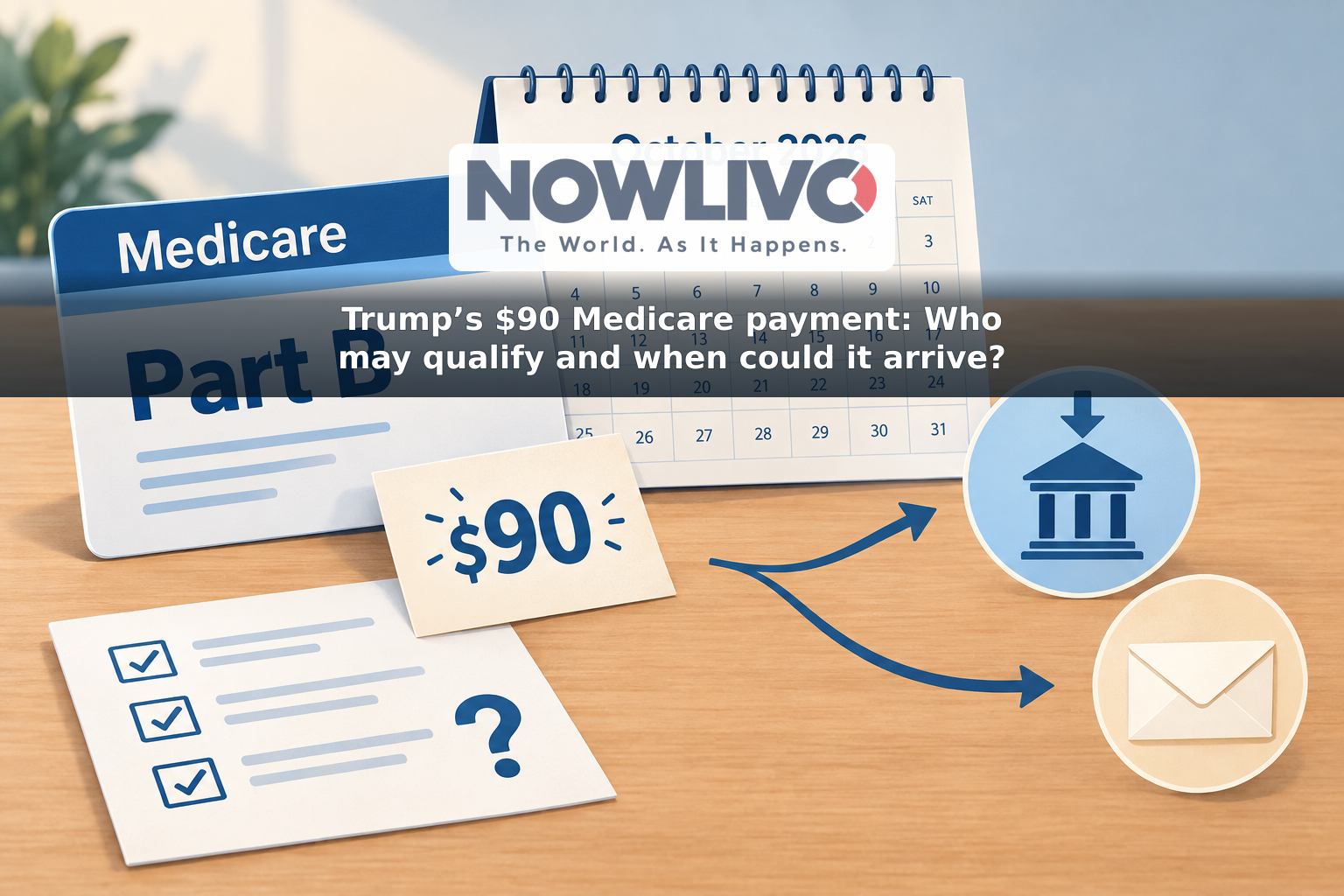
President Donald Trump has announced a one-time $90 payment intended to help certain Medicare beneficiaries with their Part B premiums. The administration says people with Original Medicare Part B may qualify if they live in the United States, do not receive Medicaid help paying that premium and do not pay a higher Part B premium because of their income. People enrolled in Medicare Advantage are excluded. Those are the administration’s stated rules, not an individual eligibility determination or confirmation that a payment is on its way.
Who is included in the announcement?
The Centers for Medicare & Medicaid Services, or CMS, estimates that 20.8 million people with Original Medicare Part B fall within the group it expects to pay. Part B covers medical insurance, including many doctor and outpatient services. The $90 is a single payment toward premium costs, not a recurring monthly benefit or a change to the Part B premium.
Two premium-related exclusions matter. First, the administration says the payment is not for people whose Part B premiums are paid through Medicaid assistance. That does not mean readers should assume that every person who has both Medicare and Medicaid is excluded; the relevant question is whether they receive help paying the Part B premium. Second, people who pay an income-related monthly adjustment amount, often called IRMAA, are excluded under the announced rules. That is an additional premium charged to some beneficiaries based on income.
Medicare Advantage members are also excluded, even though they generally must have Part B and continue paying its premium. Anyone uncertain whether they have Original Medicare or a Medicare Advantage plan should check their coverage before assuming they qualify. The announcement is not limited in its stated terms to people age 65 and older; the administration describes eligibility by Medicare coverage and the other conditions above.
How and when does the administration say it will pay?
CMS says most eligible beneficiaries are expected to receive a $90 direct deposit through the Social Security Administration on or around October 8, 2026. It says some people without direct deposit will instead receive a $90 paper check from the U.S. Treasury later in October, mailed to the address registered with Medicare. CMS also says a presidential email or letter is expected to follow most direct deposits in mid-October.
These are projected delivery dates, not a confirmed payment schedule for every beneficiary. As of October 4, October 8 has not arrived. The White House initially described paper checks as going out in early October, while CMS’s subsequent guidance says some will arrive later in the month. A person should not treat either description as proof of a particular mailing or arrival date.
The administration says the money will come from the Medicare Improvement Fund. The standard Part B premium is $202.90 a month in 2026, so $90 would cover less than half of one standard monthly premium. People should continue to follow their usual premium billing or deduction arrangements; the announcement does not say that an October bill can be skipped or that the monthly premium has been reduced by $90.
What should beneficiaries verify?
For an eligibility question, CMS directs Part B beneficiaries to call 1-800-MEDICARE (1-800-633-4227). Before calling, it may help to check whether the coverage is Original Medicare or Medicare Advantage, whether a state program pays the Part B premium, and whether an income-related adjustment appears on the premium notice. Medicare can address how the announced rules apply to a specific person.
For the status of an expected payment, CMS directs beneficiaries to call the Social Security Administration at 1-800-772-1213 beginning October 15, 2026. That date is the agency’s stated starting point for status inquiries, not a deadline by which everyone must have been paid. CMS has not described a separate application that beneficiaries need to complete to claim this payment.
Be cautious of an unexpected call, text or message offering to release the $90 in exchange for a Medicare number, Social Security number, bank details or a fee. Medicare advises people to protect their personal information and says it does not call to sell them anything. Rather than responding to a message or using a number supplied by an unknown caller, contact Medicare or Social Security directly at the official numbers above. Until the agencies confirm eligibility and delivery for an individual, the $90 remains an announced payment, not money that person can count on receiving by a particular day.