What is Congress’s Satyagraha platform, and how can people use it?
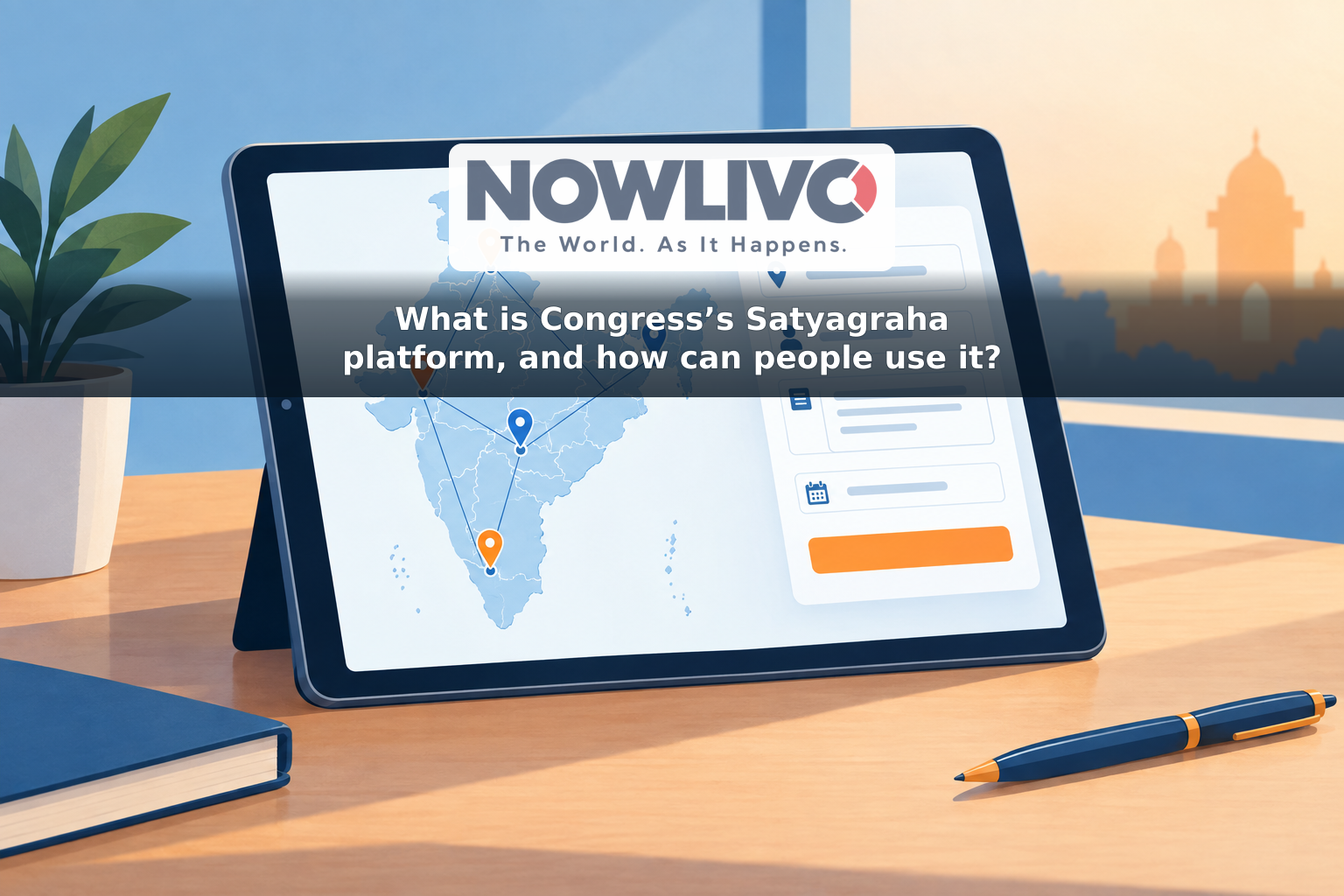
Congress leader Rahul Gandhi launched Satyagraha on October 3, 2026, as a digital platform for people involved in protests to submit details of their movements. He says the aim is to bring those movements together on a map so people can see others raising similar concerns. To take part, users are asked to open the Satyagraha section of Gandhi’s website, fill out its form and describe what their group is protesting about.
What is the platform for?
Gandhi, the Leader of the Opposition in the Lok Sabha, presented Satyagraha as a way to gather information about issue-based protests in one place. In his launch message, he argued that people campaigning for their rights often work in isolation, without knowing about movements elsewhere in the country. Mapping submissions, he said, could make those efforts more visible to one another.
He named students, farmers, Adivasis, Dalits and women among the people he hopes will share their experiences. In a video accompanying the launch, Gandhi also referred to protests concerning land, education, examinations and rights. These were examples in his appeal, not a confirmed list of categories or eligibility rules for the website.
Gandhi has said he wants to work with participants to see whether he can help address the issues they raise. He also said he would try to support them through his role in Parliament and in other ways. Those are statements of intent: submitting a movement does not, by itself, establish that Congress will provide assistance or resolve a dispute.
How do people submit a movement?
Gandhi’s instructions are to visit the Satyagraha page on his website and complete the form for a movement. In his launch video, he asked users to provide their name, their group’s name and an account of what the protest is about. He invited people involved in protests both large and small to enroll their movements.
Gandhi said sharing a story should take about two minutes. That is his estimate, not a guaranteed completion time. People considering a submission should follow the instructions displayed on the site itself rather than assume that the launch message describes every field or step.
The map is central to the plan Gandhi announced: he said submitted protests would be placed on it, allowing people to see other movements. The launch information does not establish how quickly an entry appears, whether submissions are checked before publication, or whether users can directly contact another group through the platform. It would be premature to describe any of those as confirmed features.
What happens after someone submits?
Gandhi said his team would be in touch and would look at how it might support enrolled movements. He did not set out a response deadline, a defined assistance process or a commitment that every submission would receive help. The distinction matters for users: the form is a way to share information with the initiative, while any follow-up remains a stated intention.
Satyagraha is a Congress political initiative, not a government grievance service. Its announced purpose is to make protests visible together and give Gandhi’s team information about them. People submitting details of a movement should therefore treat it as participation in that initiative, rather than as a formal complaint to a public authority or a request that automatically triggers official action.