Punjab and Haryana High Court orders CBI case over allegations involving Bhagwant Mann’s office
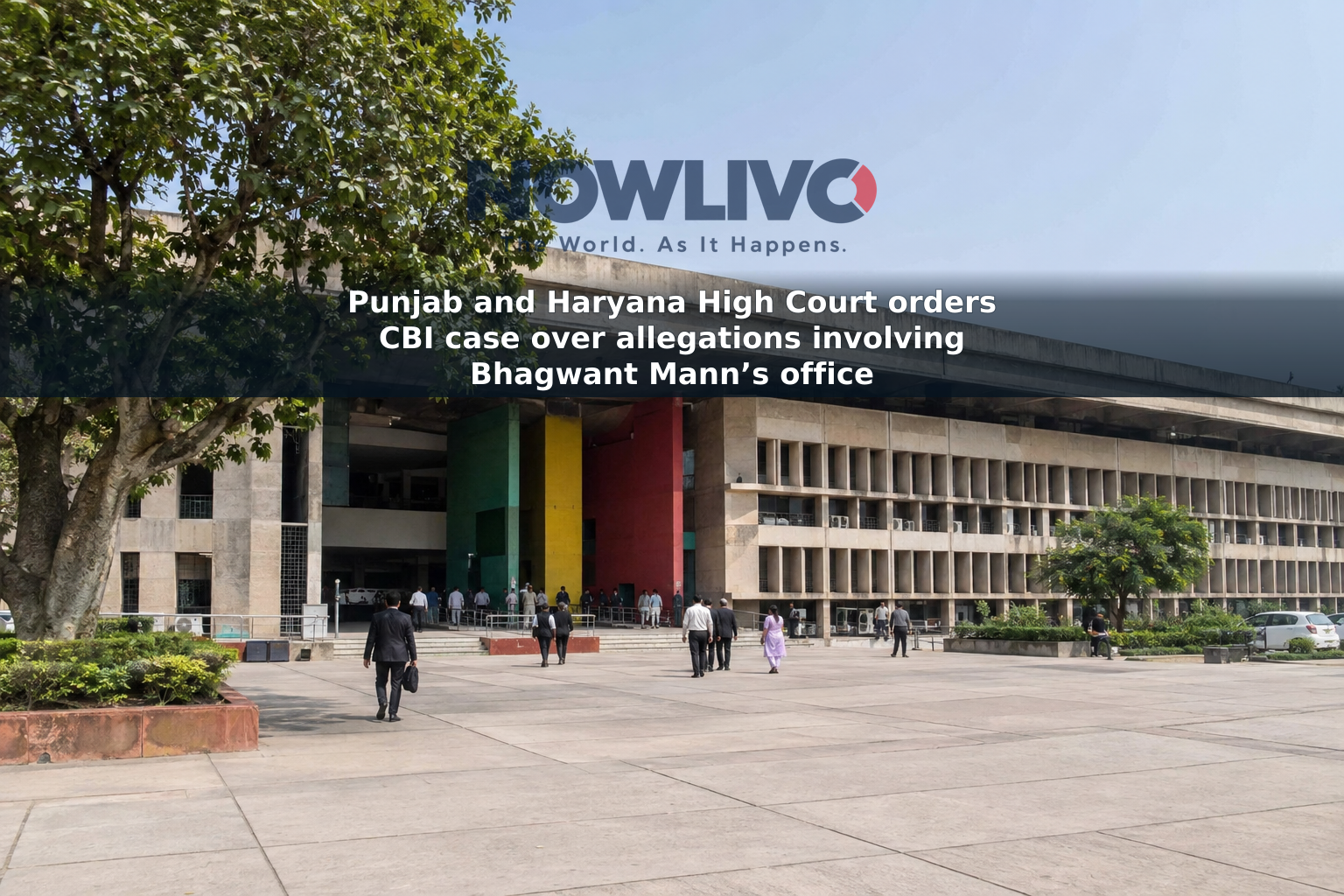
The Punjab and Haryana High Court on October 5, 2026, directed the Central Bureau of Investigation (CBI) to register a criminal case and investigate corruption allegations raised by the Enforcement Directorate (ED) involving people linked to Chief Minister Bhagwant Mann’s office. The CBI must submit a status report within two months, and the court directed the Punjab government and state police to cooperate with its investigation. The allegations remain unproven; the order is a direction to investigate, not a finding that anyone committed a crime.
What did the court order?
A bench of Chief Justice Ashwani Kumar Mishra and Justice Rohit Kapoor directed the CBI to register a first information report, or FIR, and proceed with the investigation. It also required the agency to report back within two months. That report will account for the investigation’s progress; the two-month direction does not, by itself, establish a deadline for a final finding or prosecution.
The bench said a fair investigation was needed and criticised the manner in which Punjab Police had handled the matter. Its direction for assistance from the state government and police means the central agency is to receive their cooperation as it takes up the case. The order followed a public interest petition by advocate Nikhil Saraf, who argued that state authorities had not taken adequate action on communications the ED sent to Punjab’s police chief.
Whose allegations are under investigation?
The claims originated with the ED, which sent three communications to the Punjab director general of police concerning suspected corruption. They concern Rajbir Singh Ghuman, an officer on special duty to Mann, and other people, including private individual Nitin Gohal. According to the ED’s allegations, Gohal acted as an intermediary for people seeking official favours. The matters identified include government transfers and postings, access to confidential documents, arms licences and other official benefits.
The petition also raised allegations about payments for favourable policies and government tenders. Those are claims for investigators to examine, not established accounts of how decisions were made in the chief minister’s office. The court’s order should not be read as a finding against Ghuman, Gohal or Mann. Nor does an allegation involving people connected to Mann’s office establish that the chief minister personally directed or knew of any alleged conduct.
Ghuman and Gohal have denied the allegations. Punjab’s ruling Aam Aadmi Party has accused the central government of using the ED to defame the state administration. In the court proceedings, the Punjab government opposed the petition and maintained that police were examining the matter. The High Court nevertheless assigned the investigation to the CBI.
What happens next?
The immediate step required by the order is for the CBI to register the case and investigate the ED’s claims. Investigators will have to assess the material behind the communications, determine whether it supports the suspected offences and examine the roles, if any, of the people named. Punjab’s government and police have been directed to assist rather than obstruct that work.
The next specified court checkpoint is the CBI’s status report, due within two months of the October 5 order. A status report is not the same as a conviction, and registration of an FIR does not settle whether the allegations are true. What the investigation establishes—and what further action, if any, follows—remains to be determined.