Modi–Parmelin talks: What India and Switzerland agreed, and what remains ahead
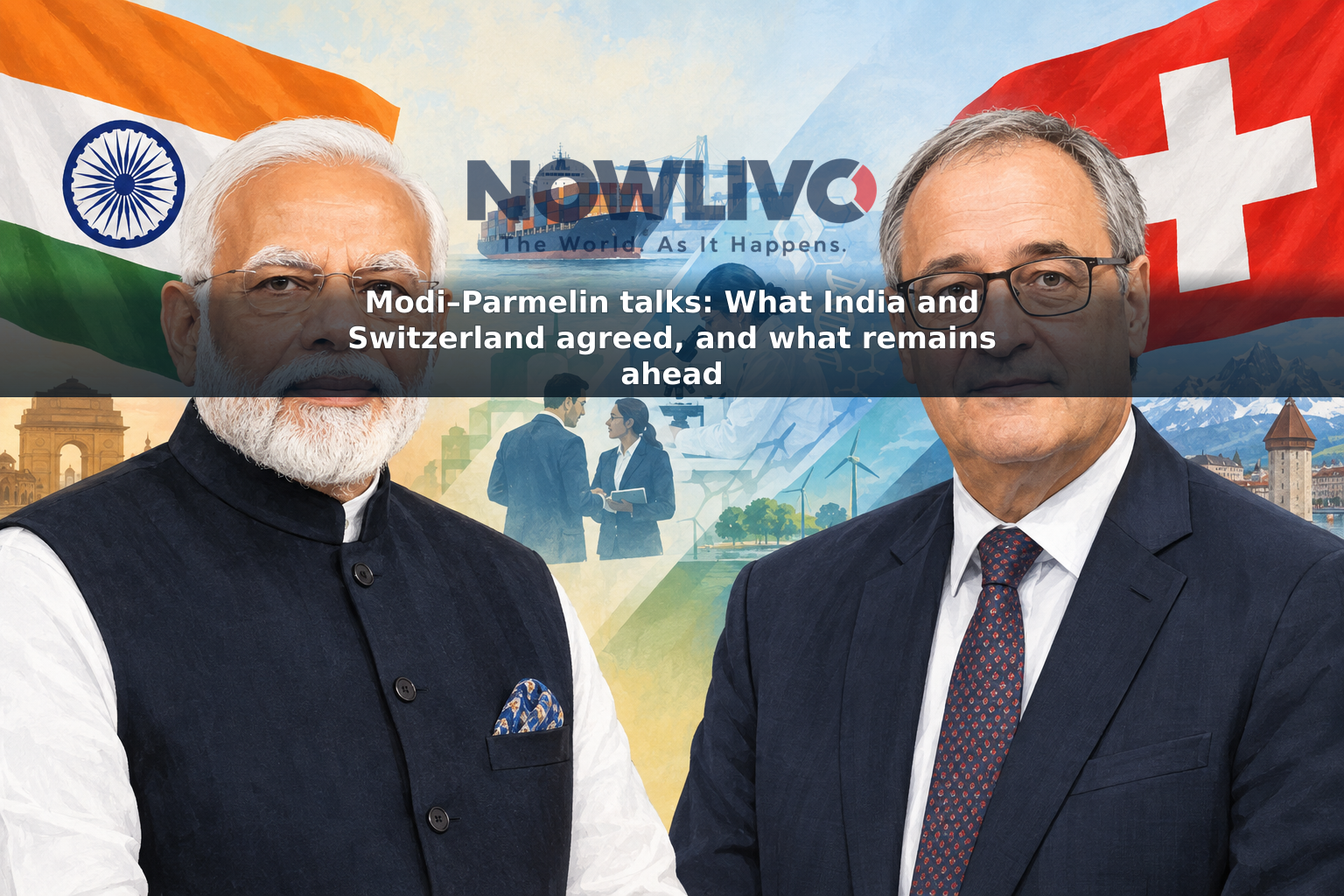
Prime Minister Narendra Modi and Swiss President Guy Parmelin met in New Delhi on October 5, 2026, to discuss expanding trade and investment, research and technology, transport infrastructure, and opportunities for students and professionals. India and Switzerland announced five cooperation documents covering mobility, transport and innovation. Those documents establish ways to work together; they do not mean that the investment, export growth or research projects discussed at the meeting have already been delivered.
What was announced on October 5?
Two of the documents concern movement between the countries. A migration and mobility partnership sets out cooperation on travel and migration, including provisions for multiple-entry visas valid for up to five years, stays of up to six months per visit and renewable one-year student permits. The arrangements will still depend on the applicable rules and processes; the announcement should not be read as an immediate visa approval for any individual.
A separate young professionals agreement provides for temporary work exchanges intended to develop professional and language skills. It envisages 300 participants a year from each country, with scope to raise that figure to 500. That is a framework for exchanges, not a report that those places have already been filled.
The two governments also concluded a transport and infrastructure cooperation document. It identifies areas in which they intend to collaborate, including electric vehicles, ropeways, tunnels and other mobility systems. Modi invited Swiss infrastructure companies to invest in India and participate in design, manufacturing and skills development. An invitation and a cooperation framework are distinct from a newly financed project.
On science, India’s Department of Science and Technology and the Swiss National Science Foundation signed a letter of intent to support exploratory collaboration and build partnerships for future joint research. An implementation arrangement with the Zurich University of Applied Sciences concerns innovation, technology transfer and entrepreneurship, including training and exchanges for early-stage startups. The governments also announced an inaugural Indo-Swiss Research Flagship event. None of these announcements, by itself, establishes that a particular new research project has begun.
What could change for trade and investment?
Modi said the two sides had made decisions intended to improve access to the Swiss market for Indian exports and make investment between the countries easier. He identified agriculture, pharmaceuticals, textiles and engineering goods as potential export beneficiaries. He also pointed to biotechnology, life sciences, banking, insurance, food processing and sustainability as areas where India hopes to attract Swiss investment. Details of individual investments and the scale of any resulting export increase were not established by the October 5 outcome list.
The talks took place a year after the India–European Free Trade Association Trade and Economic Partnership Agreement came into force on October 1, 2025. Switzerland is one of the association’s four members, alongside Iceland, Liechtenstein and Norway. Modi linked the agreement to goals of $100 billion in investment in India and one million direct jobs over 15 years. Those are long-term goals associated with the wider four-country agreement, not investment or jobs created by the October 5 meeting.
Technology discussions ranged beyond the documents signed. Modi said the countries expected to launch joint research projects in health, clean energy and space soon. The leaders also discussed artificial intelligence, nuclear energy, military exchanges and possible defence-production cooperation. These subjects were part of the talks, but no completed nuclear or defence project was identified among the five announced documents.
What remains during Parmelin’s visit?
Parmelin’s state visit runs from October 5 to 7. His programme includes further meetings, discussions with business representatives and a visit to Noida International Airport on October 6. He is due to attend the second India–EFTA Prosperity Summit on October 7, where government and business participants are expected to explore investment and cooperation opportunities.
That timetable is the distinction for assessing the visit: agreements on mobility, transport and research cooperation were announced on October 5, while company commitments, operating programmes and measurable trade or employment gains remain to be seen. The October 7 summit may provide more detail on how businesses intend to use the existing trade agreement, but its outcomes should not be counted in advance.