
Five Cubs Born at Kuno National Park; India’s Cheetah Count Reaches 60
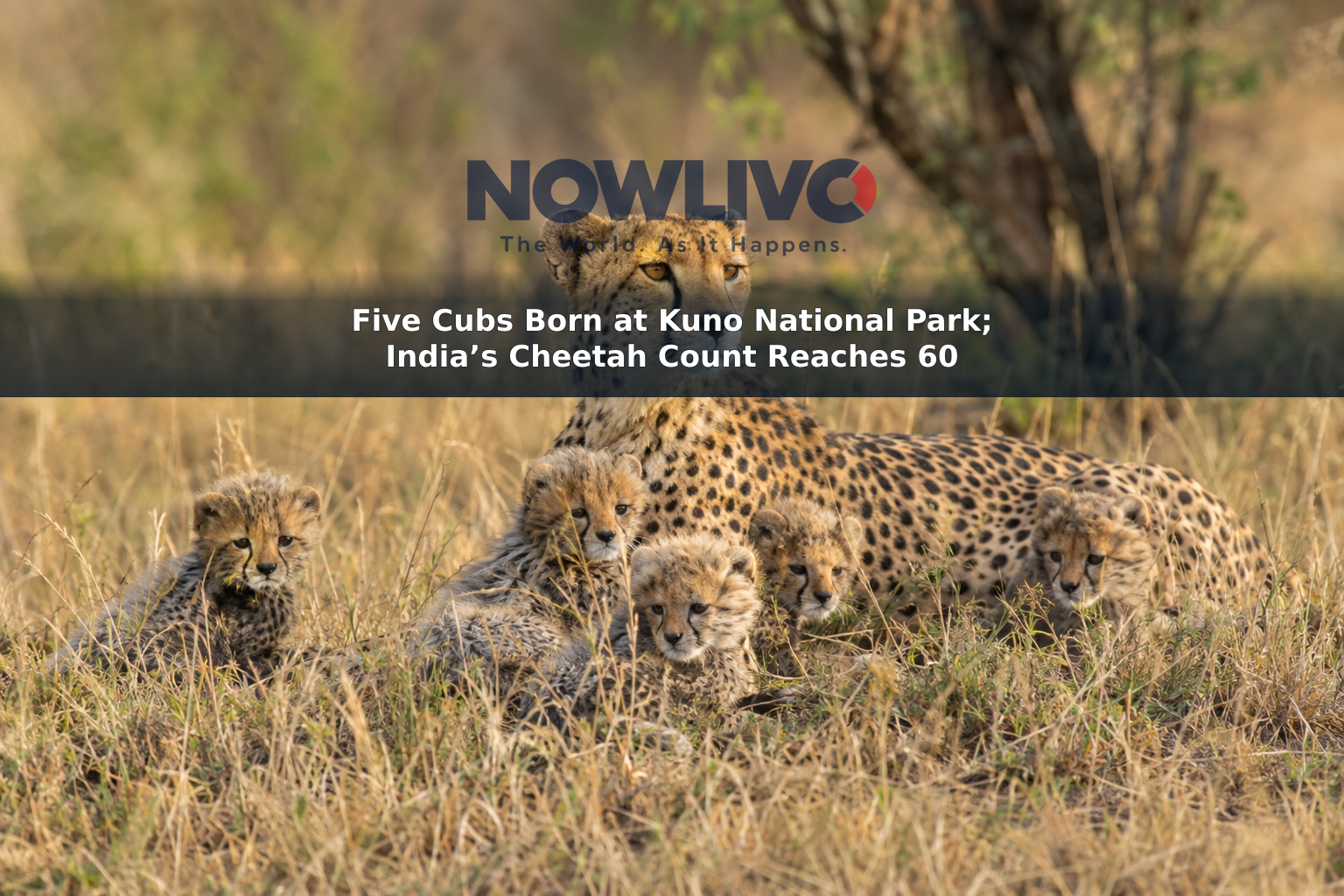
An Indian-born female cheetah gave birth to five cubs at Kuno National Park in Madhya Pradesh on October 5, 2026, bringing India’s stated cheetah population to 60. The new total includes 41 cheetahs born in India. Officials described the cubs as healthy at birth, but it is too early to know how many will survive the months ahead.
What happened at Kuno?
The mother, identified as KJP21, is 32 months old. Union Environment Minister Bhupender Yadav announced the litter on October 5 and said she is the third Indian-born female cheetah to give birth under Project Cheetah, following Mukhi and KGP12. That makes this more than another birth to one of the cheetahs brought to India from Africa: KJP21 was herself born after the reintroduction began.
Yadav also said the cubs’ father is a male cheetah from Botswana. His parentage introduces a Botswanan lineage into the group of cheetahs born in India. The announcement did not give the cubs’ sexes or say whether they were born in an enclosure or while their mother was ranging freely, so neither detail can yet be treated as established.
How does the litter change the count?
The five newborns are included in the newly announced nationwide total of 60 cheetahs, not added on top of it. Of those 60, the government says 41 were born in India. Both figures are counts as reported after the October 5 births; they are not forecasts of how many animals will reach adulthood.
The distinction matters when reading updates about the programme. “Born in India” describes where an animal was born, not whether it has survived independently or produced cubs of its own. KJP21’s litter is notable because its mother has now reached breeding age and reproduced after being born in India. For the five newborns, those later stages still lie ahead.
Nor should the figure of 60 be confused with a count for Kuno alone. It is the stated total for India. The birth took place at Kuno, but the nationwide tally covers the cheetah population under the wider reintroduction programme.
What remains to be monitored?
The immediate question is whether all five cubs remain alive and develop normally. Being described as healthy on the day of their birth is encouraging, but it does not establish their prospects through the vulnerable early months. Follow-up observations will need to show whether they continue to feed, grow and remain with their mother.
As they get older, the picture will become clearer: how many survive beyond the first months, whether they remain healthy as they become more mobile, and eventually whether they can live independently. Those outcomes cannot be inferred from a birth announcement. Future population updates may therefore differ from the October 5 total as animals are born, die or are moved within the programme.
Project Cheetah began with the arrival of eight cheetahs from Namibia at Kuno in September 2022, followed by 12 from South Africa in February 2023. India had declared the cheetah extinct in the country in 1952. Breeding by animals born after the reintroduction is one measure of the programme’s progress; survival over time is another. For KJP21’s five cubs, the first measure has been recorded, while the second remains an open question.