Vance Defends Taxpayer-Funded Trump Ads; Trump Says Political Funds Will Pay
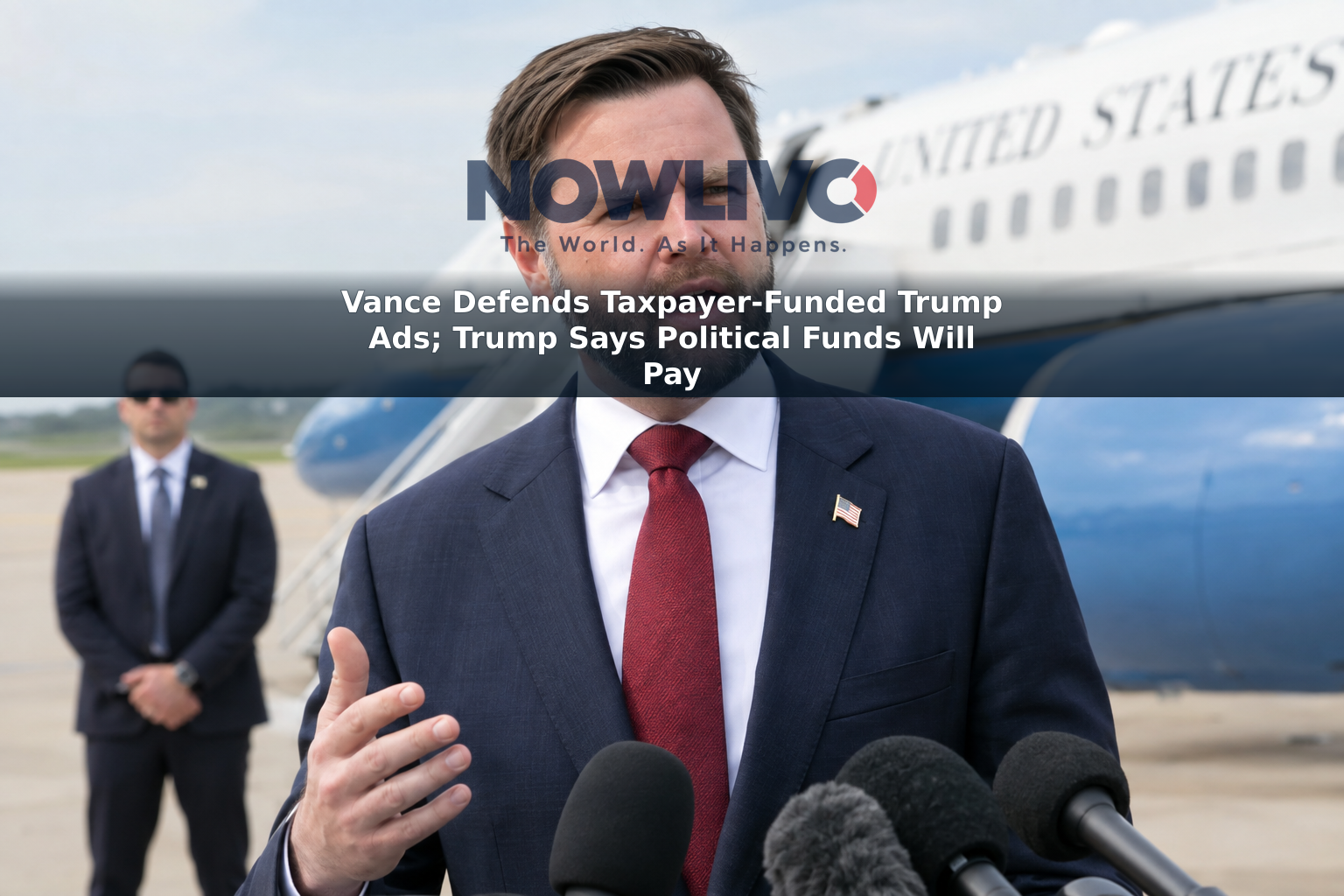
Vice President JD Vance defended taxpayer-funded television ads featuring President Donald Trump on Monday, October 5, saying they were a normal way for the government to communicate and did not advocate for a candidate. Later that day, Trump said he would instead pay for the ads himself and with money raised for his political group, MAGA Inc. He did not explain whether the government would be reimbursed for ads that had already aired.
Vance made his comments to reporters before leaving for Alaska. Asked whether the ads were a good use of public money during a midterm election campaign, he pointed to government advertising about the Affordable Care Act under former President Barack Obama. Governments need to tell people what they are doing, Vance argued, and he described the Trump ads as a message about the United States rather than an appeal to support a particular candidate.
“I don’t think there’s anything unusual or unorthodox about it,” Vance said. He added that the ads were “not partisan” and were not advocating for a candidate. His answer addressed the administration’s rationale for buying airtime with public funds, but not the specific concerns critics have raised about the ads’ content.
Why the ads drew objections
The commercials prominently feature Trump and carry a disclosure saying they were paid for by the U.S. government. One closely resembles a video aired by his 2024 presidential campaign. Other spots praise his administration or use imagery and language associated with his political message. They have appeared on national television, including during sports programming, in the weeks before the November 3 midterm elections.
The White House has called the spots public service announcements. It argues that Trump is not on the ballot and that the ads do not tell viewers to vote for anyone. That is the distinction Vance emphasized on Monday. Critics dispute whether the absence of an explicit voting request makes the commercials appropriate for government funding when they focus so heavily on the president.
The Department of Homeland Security committed $20 million to a national media campaign associated with the ads. That figure describes the planned funding, not an amount known to have been spent in full. Democratic lawmakers have questioned why Homeland Security money was used for the campaign and have sought details about its authorization and contracts.
Objections have also come from Republicans. Senate Majority Leader John Thune has said he likes the ads’ message but does not think taxpayers should pay for it. California Attorney General Rob Bonta asked federal watchdogs on Monday to investigate the campaign, alleging that it violates restrictions on partisan activity and taxpayer-funded propaganda. His complaint is a request for review, not a legal finding against the administration.
Trump announces a change in funding
Later Monday, Trump defended the use of government money as a standard practice but said he had decided to pay for what he called the “Patriotic Ads,” among others, himself and with money he raised for MAGA Inc. His announcement marked a change from the funding approach Vance had defended earlier in the day.
Trump’s statement did not specify when the new arrangement would begin, which ads it would cover, or whether his political funds would repay money already spent by the government. It also did not settle the dispute over whether the earlier publicly funded broadcasts were permissible. For now, Vance’s position and Trump’s announcement answer different questions: Vance said he saw nothing improper in the government running the ads, while Trump said political funds would pay for them going forward.