
How Gulf Oil Exports Recovered While the Strait of Hormuz Remained Disrupted
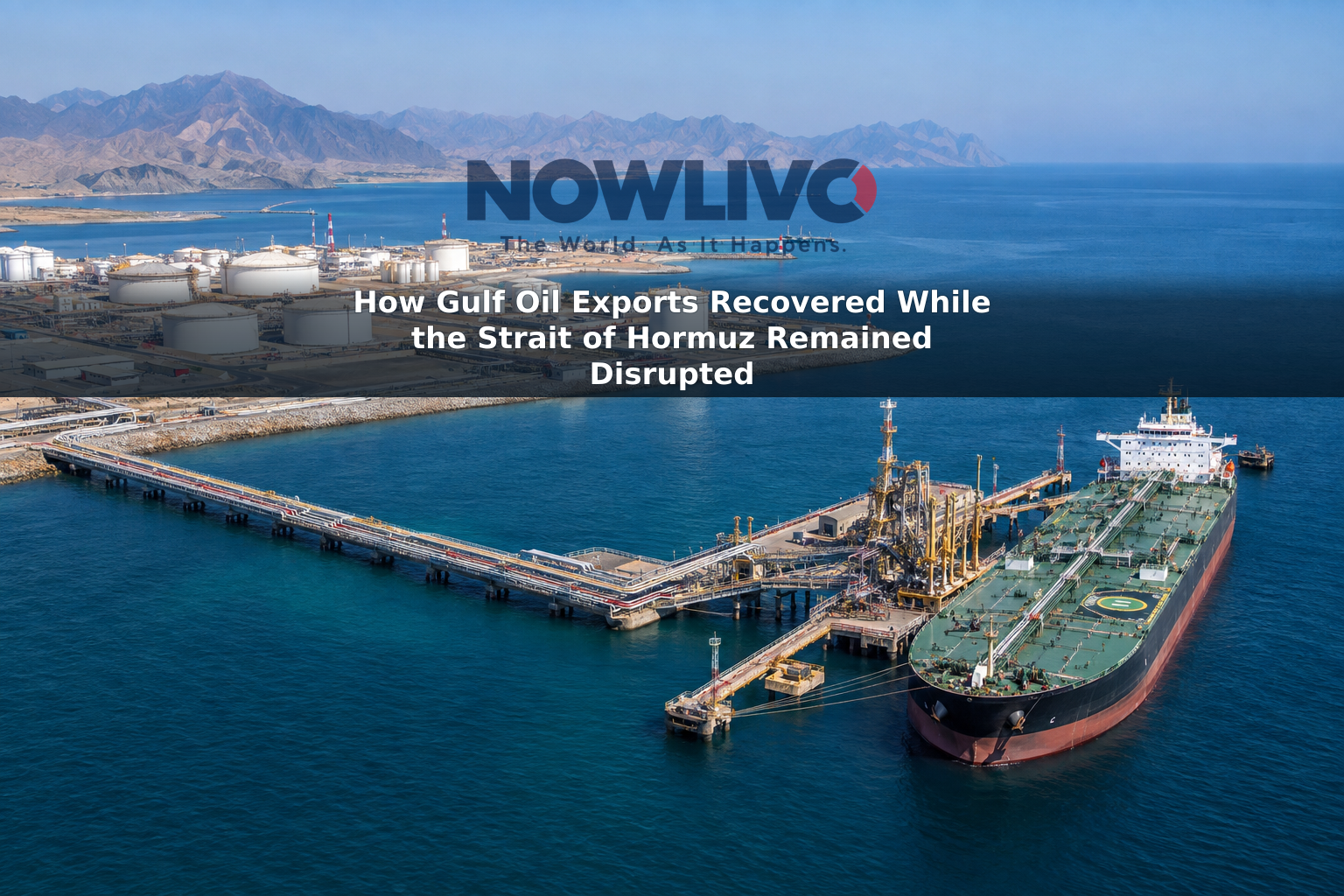
Middle East Gulf crude exports recovered despite disruption in the Strait of Hormuz because producers used two routes at once: pipelines carried more oil to ports outside the strait, while tankers resumed some crossings through it. Excluding Iran, at least 16.5 million barrels a day of crude left the region from September 1 to 28, matching its pre-war average, according to estimates by maritime-data company Kpler. That is a measure of oil leaving the region, not proof that shipping conditions or consumer fuel prices are back to normal.
What changed in the export routes?
Before the war, most Gulf crude exports crossed Hormuz. In September, about 40% left without crossing it, up from 17% before the conflict. Roughly 60% still passed through the strait. The recovery therefore did not depend on reopening the old route to its former volume; it depended on moving enough additional barrels around it to make up much of the difference.
Saudi Arabia’s East–West Pipeline moves crude from the kingdom’s eastern oil-producing region to Yanbu on the Red Sea. Tankers loading there can leave without passing through Hormuz. The United Arab Emirates has a separate pipeline from Abu Dhabi’s onshore oil facilities to Fujairah on the Gulf of Oman, also outside the strait. Both lines existed before the war, but their alternative loading points became more important when the usual Gulf shipping route was disrupted.
The change is visible in port volumes. Saudi Red Sea crude loadings rose from about 750,000 barrels a day before the war to 4.3 million barrels a day in June. At Fujairah, loadings rose from about 1.1 million to 2.7 million barrels a day. Those figures describe oil loaded at the ports, rather than the spare capacity of either pipeline.
Why were pipelines not enough on their own?
The bypasses serve Saudi Arabia and the UAE, not every Gulf exporter. Kuwait, Qatar and most of Iraq lack comparable crude routes around Hormuz. Their export recovery required more tankers to cross the strait, even while transit remained disrupted.
A shuttle system helped. Some tankers collect crude at terminals inside the Gulf, cross Hormuz, then transfer their cargo to other vessels near Fujairah or Sohar for longer voyages. More than 70% of the crude that crossed the strait in August changed tankers offshore, Kpler estimated. That arrangement can keep oil moving, but it adds steps to a journey that previously might have used one vessel from loading port to buyer.
The September route breakdown shows the distinction: about 9.9 million barrels a day crossed Hormuz, while the remainder left through ports on the Gulf of Oman coast or the Red Sea. Crude confirmed crossing the strait was still more than a quarter below its pre-war level. Total exports recovered because the bypass routes carried a larger share.
What does “excluding Iran” mean?
It is an important limit on the headline figure. Iran’s own crude exports were not part of the 16.5 million-barrel comparison. Kpler estimates that Iran shipped an average of about 1.7 million barrels a day before the war and that its exports have since been sharply restricted by a U.S. blockade. Counting Iran would leave the region’s September crude exports below their combined pre-war level.
The estimates also concern crude oil, including condensate, rather than every fuel made from it. A recovery in crude shipments does not establish that diesel, gasoline, jet fuel or other refined-product exports have recovered at the same pace. Those markets depend on refinery operations, available ships and the particular routes each product can use.
Will consumers see cheaper fuel?
More crude reaching buyers can ease a supply squeeze, but export volume alone cannot predict a price at the pump. Oil must still reach a refinery, be processed into usable fuel and be delivered to consumers. Extra transfers and route changes can add time and cost, while continuing uncertainty over Hormuz can affect prices even when many barrels are getting through.
The practical distinction is between restored crude export volume and normal energy supply. Saudi and UAE pipelines helped replace shipments that could not take their usual route, and tankers carried much of the rest through a still-disrupted strait. Whether that relief reaches households and businesses depends on the reliability of those routes and on the separate supply of refined fuels.