Maharashtra 10% water cut starts October 16: What it means for cities and households
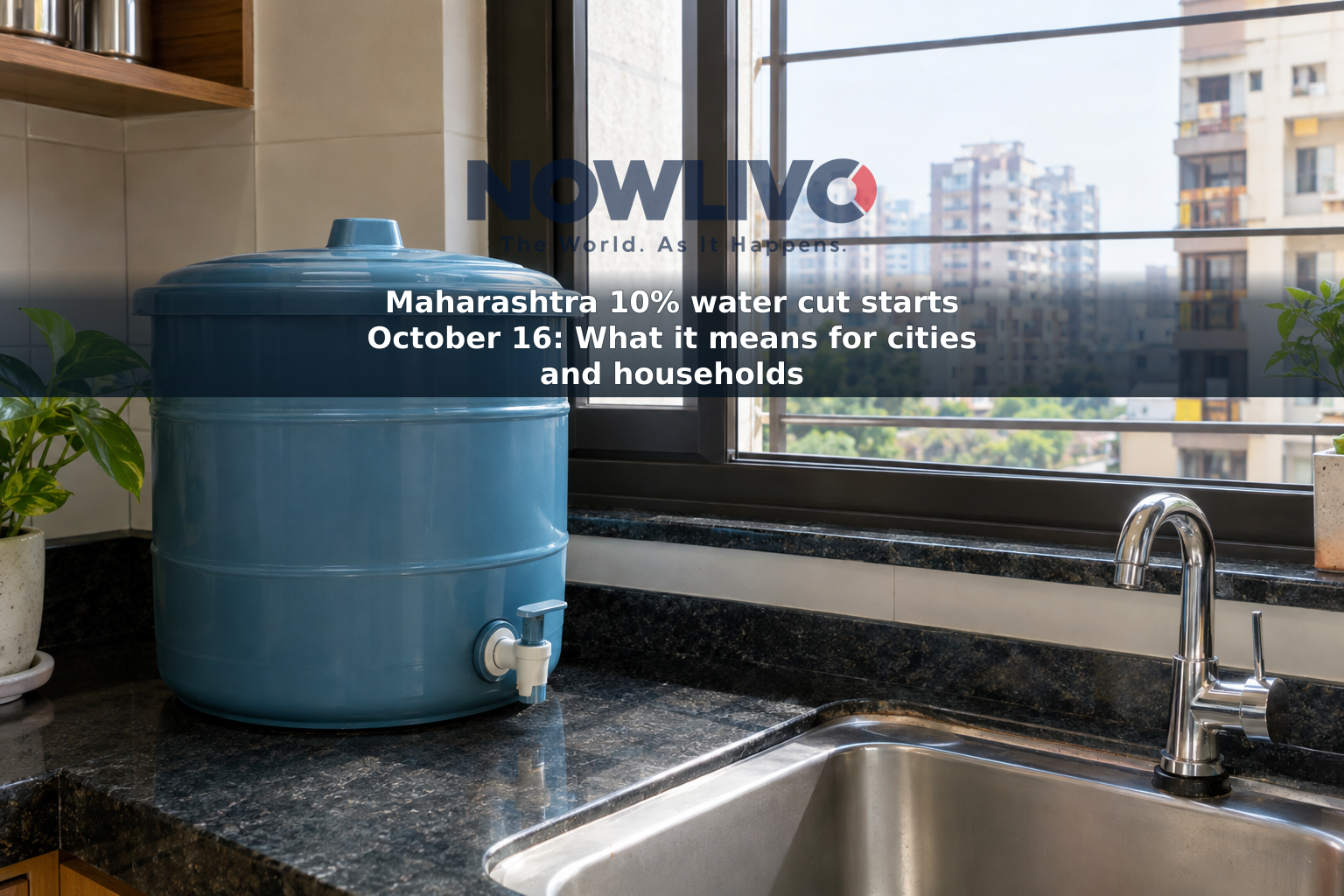
Maharashtra’s minimum 10% water cut is due to start on October 16, 2026. The state has directed municipal corporations, municipalities and gram panchayats to implement the reduction amid concerns about rainfall and available water. For households, October 16 is the date of the statewide directive—not a published, street-by-street supply schedule. Residents should check their own water supplier’s notices for changes to local timings or deliveries.
Which cities in Maharashtra are covered?
The direction applies to local bodies across Maharashtra, rather than only to cities facing an individually announced shortage. That includes the municipal authorities responsible for major cities such as Mumbai, Pune, Nagpur and Thane, as well as smaller municipalities. Gram panchayats have also been directed to implement the cut.
The state has set a minimum reduction, but it has not issued one common timetable for every city and village. Local authorities must work out how to put the direction into effect in their supply systems. A 10% cut to water supplied or used across a local body should not be read as a promise that every tap will run for exactly 10% less time, or that every home will receive exactly 10% less water.
Residents looking for an area-specific answer should watch for notices from their municipal corporation, council, gram panchayat or other water supplier. Those notices are the place to confirm any revised supply hours, affected areas and arrangements for buildings that depend on shared storage tanks.
Why has Maharashtra ordered water cuts?
The October 5 announcement follows reduced rainfall and concerns about how long reservoir supplies will last. State Water Resources Minister Girish Mahajan said the department has assessed available water dam by dam and by intended use through August 31, 2027. The planning takes account of the possibility of further water stress, including concerns associated with El Niño. That is a planning risk, not a certainty about next year’s rainfall.
Under the state’s plan, drinking water gets the highest priority. The government also intends to keep an emergency reserve in reservoirs. Those measures are separate from the 10% reduction directed for local bodies; the reserve is not an additional 10% cut announced for each household.
What else must cities do?
The direction is not limited to reducing supply. Local bodies have been asked to find and stop leaks and to run sewage treatment plants at full capacity. The state wants treated wastewater, rather than fresh water, used where appropriate for activities such as gardening, construction and washing. Industries have been told to reuse or recycle at least 30% of the water they use.
These measures matter because water lost through leaking pipes or used for tasks that do not require fresh water adds pressure to supplies reserved for drinking. They do not, however, replace the need for residents to check how their own local authority will implement the cut.
How can households prepare and save water?
Start with the practical details: check your supplier’s latest notice, tell others in the household about any revised hours, and make sure stored water is kept in clean, covered containers. In an apartment building, ask the building manager how any change in municipal supply will affect shared tanks and pumping times.
Simple steps can reduce avoidable use: repair dripping taps and running toilets, turn off taps while brushing teeth, run washing machines with full loads where practical, and use a bucket instead of a running hose for suitable cleaning jobs. If your supply is intermittent, plan essential drinking, cooking and hygiene needs first. Do not assume an older neighbourhood timetable still applies after October 16; the local notice will give the most useful answer for your address.