California Democrats condemn Trump’s Los Angeles and San Diego remarks; Padilla says he is ‘inviting an attack’
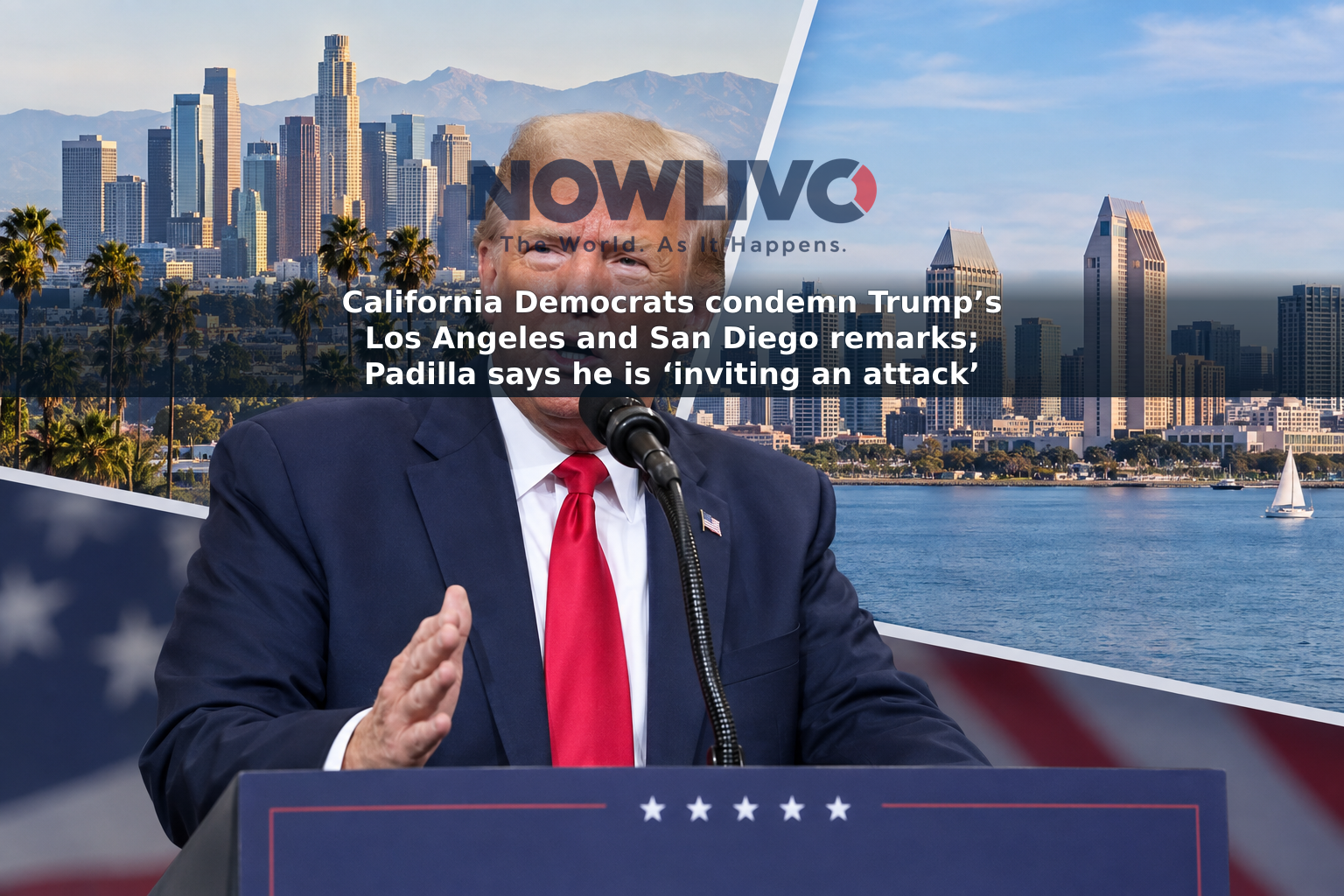
California Democratic leaders condemned President Donald Trump’s remarks about Los Angeles and San Diego at a Nebraska rally on Monday, October 5, 2026. Sen. Alex Padilla accused him of “inviting an attack on U.S. soil” after Trump said an adversary could “take out” a city and named the two California cities. Gov. Gavin Newsom and the mayors of both cities also objected to his language.
What did Trump say at the Nebraska rally?
Trump was speaking in Grand Island as he campaigned for Republicans ahead of the November midterm elections. He was discussing the U.S. war with Iran and its effect on prices when he described higher costs as a small price to pay for keeping the country safe. He then said, “They can take out a city,” followed by references to Los Angeles and San Diego, before again calling it a “very small price to pay.” He said the war would end soon.
The sequence matters. Trump’s first reference to a small price appeared to concern economic costs, including fuel prices. But his abrupt shift to the possibility of a city being attacked, followed by the same phrase, left the meaning of the later remark unclear. He did not explain why he singled out Los Angeles and San Diego or identify a specific threat to either city.
How did California leaders respond?
Padilla, a California Democrat, said on X that Trump was “inviting an attack on U.S. soil” and putting Americans and service members at risk. That was Padilla’s assessment of the president’s words, not evidence that an attack had been planned or that Trump had issued a military instruction.
Newsom called Trump “deranged and dangerous” and accused him of suggesting that foreign enemies should attack the two cities. Los Angeles Mayor Karen Bass said the comments were dangerous and argued that a president’s responsibility is to protect Americans. San Diego Mayor Todd Gloria rejected the idea that his city could be treated as expendable, telling Trump to keep it out of his war rhetoric.
Sen. Adam Schiff also challenged the remarks, questioning Trump’s repeated prediction that the Iran war would end soon and criticizing what he saw as indifference to the risk of attacks on American cities.
Was Trump warning of an attack on California?
Nothing in the rally remarks established that an attack on Los Angeles or San Diego was imminent. Trump did not present intelligence about a plot or say that authorities had changed their assessment of a threat. His comments came during an argument about the war and its costs, not a public safety announcement.
The dispute is therefore about what the president appeared to suggest while talking about American cities in wartime. California officials interpreted his words as an unacceptable invitation to violence or a dismissal of the people who live there. The surrounding discussion of prices offers context for the “small price” phrase, but it does not erase Trump’s explicit references to Los Angeles and San Diego.
For residents, the remarks themselves did not establish a new emergency. They did, however, draw a direct response from officials responsible for the cities Trump named and renewed scrutiny of how he describes the war’s risks to Americans at home.