Why are opposition parties protesting India’s voter-list revision? Delhi march halted as MPs demand election chief’s resignation
Opposition parties are protesting India’s voter-list revision because they say eligible people could lose their place on the electoral rolls—and therefore be unable to vote. On Tuesday, October 6, 2026, INDIA bloc MPs marched toward the Election Commission’s headquarters in New Delhi to demand the resignation of Chief Election Commissioner Gyanesh Kumar. Police stopped the march, and the MPs staged a sit-in on Parliament Street.
Rahul Gandhi was among the MPs who joined the march. Police deployed personnel and barricades around central Delhi, where several roads were blocked. Opposition leaders also planned to raise their concerns about the revision with President Droupadi Murmu. As of late Tuesday morning, there was no confirmed account of that meeting having taken place.
What is SIR in India?
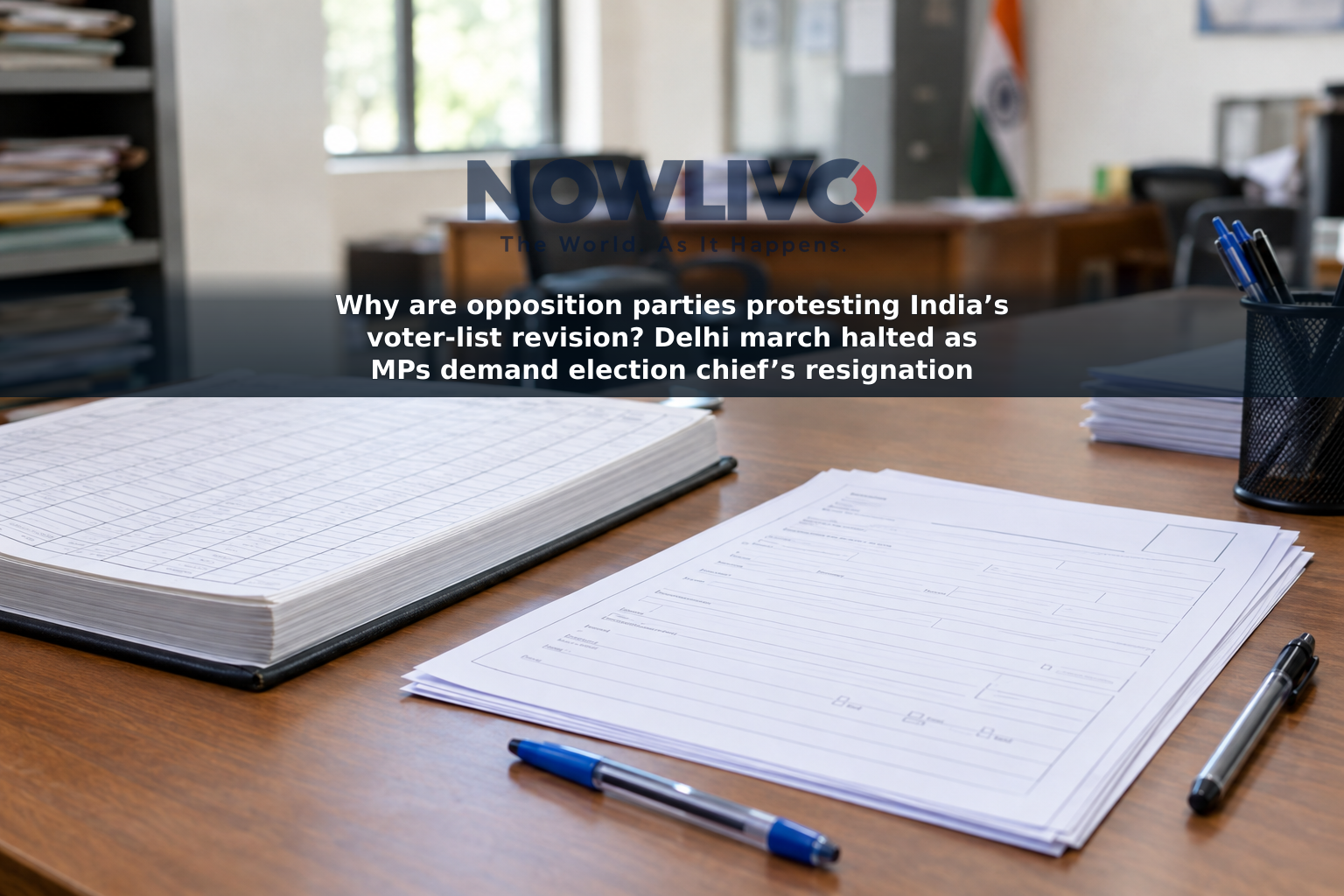
SIR stands for Special Intensive Revision. It is an Election Commission exercise to check and update the electoral roll—the official list of people registered to vote. Election officials verify entries, publish draft lists and provide a process for people to seek inclusion or object to entries before final lists are issued. The commission says the exercise is intended to remove duplicate, deceased and otherwise ineligible entries without leaving eligible voters out.
For an ordinary voter, the distinction between a draft roll and a final roll matters. A name missing from a draft list may still be restored through the revision process. But a person whose name is absent from the applicable electoral roll cannot rely on a voter ID card alone to cast a ballot.
Why is the Election Commission facing protests?
The INDIA bloc argues that errors, difficult verification requirements and problems with voter-registration procedures could exclude legitimate voters. Its MPs are demanding Kumar’s resignation over alleged irregularities. Opposition allegations that the process benefits the ruling Bharatiya Janata Party are disputed; the Election Commission and the government deny wrongdoing.
The scale of the exercise has intensified scrutiny. The Indian Express has reported that more than 13 crore names were left off draft rolls across 30 states and Union Territories. That figure should not be read as a count of people permanently barred from voting: draft lists can change after claims, objections and verification. The central question is how many eligible people were left out and whether they can get back onto the rolls in time.
Questions have also arisen about how the commission made decisions. An Indian Express investigation reported that Election Commissioners Sukhbir Singh Sandhu and Vivek Joshi recorded objections to a series of decisions, including changes affecting voter enrolment and the electoral-roll system. The commission has since directed a special enrolment drive in states and Union Territories where SIR has concluded, aimed at reaching eligible voters left out of the rolls.
What are opposition leaders asking President Murmu?
Opposition leaders intend to present their concerns about SIR and the conduct of the electoral process to President Murmu. The reported plan to approach the President is separate from Tuesday’s march and sit-in; neither a meeting nor any response from her should be treated as an outcome until confirmed.
What should voters do?
Voters can check whether their names appear on the current electoral roll through the Election Commission’s voter-services portal or their state’s chief electoral officer. Someone who cannot find their name should contact the local booth-level officer or electoral registration officer rather than assume a voter ID card is sufficient. The commission’s portal provides Form 6 to request inclusion and Form 8 for corrections or a change of address. Voters who receive a verification notice should follow the instructions and deadlines for their area, which can differ by state and stage of revision.