How October 7 Is Shaping Israel’s Election: Netanyahu and Rivals Make Opposing Cases
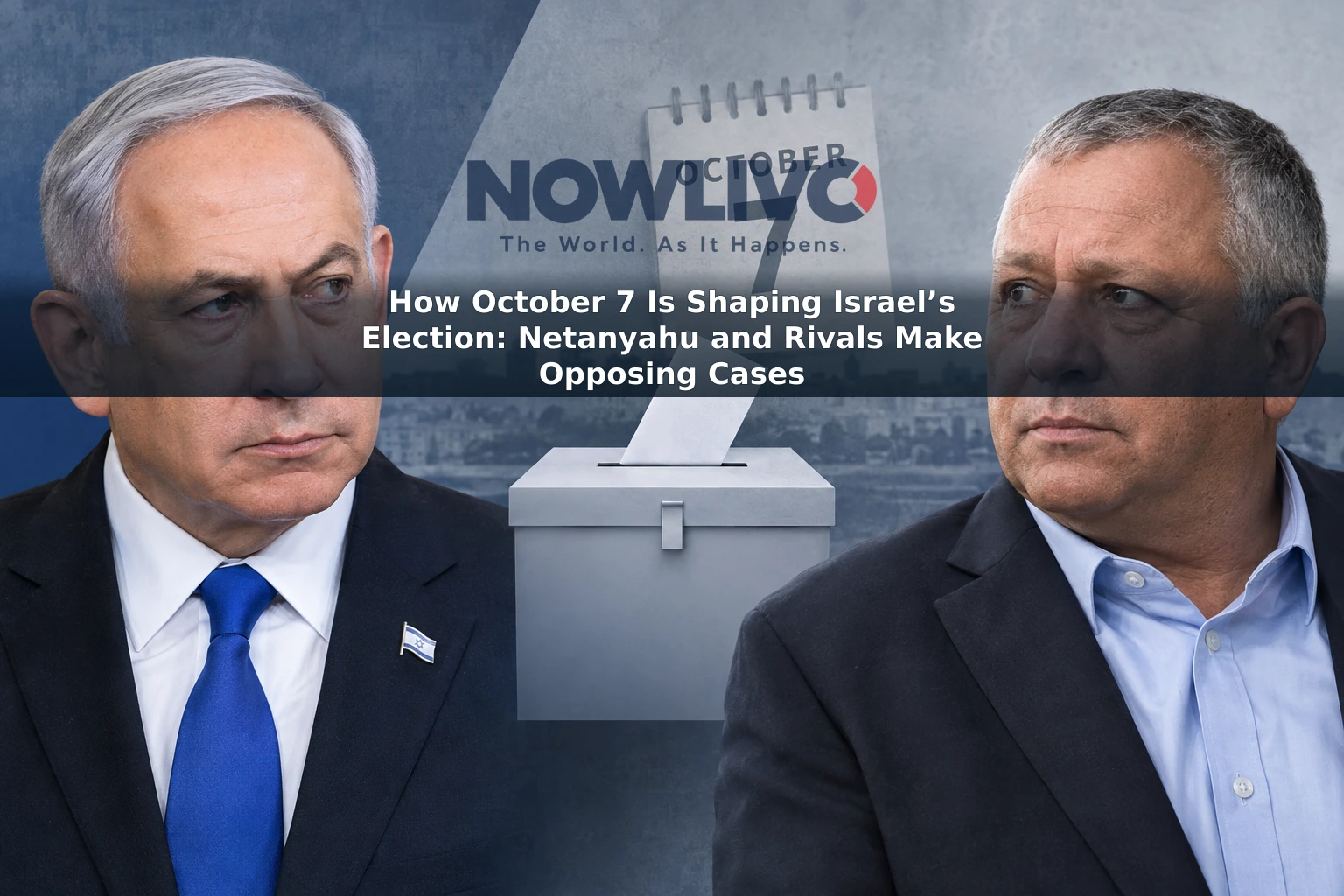
October 7 is shaping Israel’s election by giving Prime Minister Benjamin Netanyahu and his opponents competing ways to argue about his leadership. As Israelis mark three years since the Hamas-led attack, Netanyahu is campaigning on Israel’s military response and its ability to withstand subsequent wars. His rivals say the election should instead hold him accountable for the security failure that allowed the attack and for his refusal to establish an official commission of inquiry. Voters are due to elect a new parliament on October 27, 2026.
This is Israel’s first national election since the October 7, 2023, attack, in which about 1,200 people were killed and 251 taken hostage. The war Israel launched in Gaza has killed more than 74,000 Palestinians, according to Gaza health authorities, and devastated much of the territory. Those events form the backdrop to a campaign focused heavily on Israelis’ security and their judgment of Netanyahu.
How are Netanyahu and his opponents using October 7?
Netanyahu presents the years since the attack as a test of leadership. He argues that Israel recovered from a profound blow and has become stronger through its campaigns against Hamas and other adversaries. His supporters also point to failures by security agencies before October 7. Netanyahu has resisted calls for an official commission of inquiry into the attack and has sought to place responsibility on security officials.
Opposition parties put the question of responsibility first. Gadi Eisenkot, a former military chief and a leading challenger, is campaigning on a promise of political repair and an official inquiry. For his side, the central question is not only how Israel fought afterward but how such an attack happened while Netanyahu was prime minister—and whether his government has adequately answered for it.
The argument extends beyond an investigation. Eisenkot and other opponents have tied wartime security to demands to end military draft exemptions for ultra-Orthodox men. That makes October 7 part of a broader dispute over who bears the burden of defending Israel and whether its current leaders can restore public trust.
Why does the anniversary matter to the campaign?
The date brings private grief and a national political reckoning into the same week. Israel held government memorial events on October 5, near the anniversary on the Hebrew calendar, while families and other groups planned commemorations for October 7. Organizers of a major Tel Aviv memorial said they wanted to keep party politics out of the event, even as arguments over government responsibility remained prominent outside it.
People directly affected by the attack are also entering the election. Relatives of victims and former hostages’ family members appear on party lists across the political spectrum, including Netanyahu’s Likud and opposition parties. Their candidacies do not reflect a single political response to October 7: some support Netanyahu’s leadership, while others say the attack and its aftermath convinced them that the government must change.
How do Israeli voters view October 7?
The anniversary’s prominence is backed by voter research, but its political effect is not one-sided. In an Israel Democracy Institute survey conducted from August 31 to September 3, 68% of Jewish respondents and 32% of Arab respondents said the events of October 7 were a central factor in deciding which party to support. Among Arab respondents, crime in their communities ranked as a more pressing election issue.
Those figures measure importance, not agreement about whom to blame or which party should win. Some voters see October 7 as a reason to replace Netanyahu; others give greater weight to his conduct of the wars that followed. That distinction helps explain why the attack can dominate campaigning without producing a clear electoral verdict.
The immediate contest is for seats in Israel’s 120-member Knesset, where parties must assemble enough support to form a government. With the October 27 vote approaching, the anniversary is concentrating the campaign’s defining question: should Netanyahu be judged principally by the failure to prevent October 7, or by what he says Israel achieved afterward? The election will show how voters weigh those arguments alongside other concerns, from conscription and the cost of living to the country’s future security.