Why Is the DOJ Investigating TV Networks? The White House Press Pool Dispute Explained
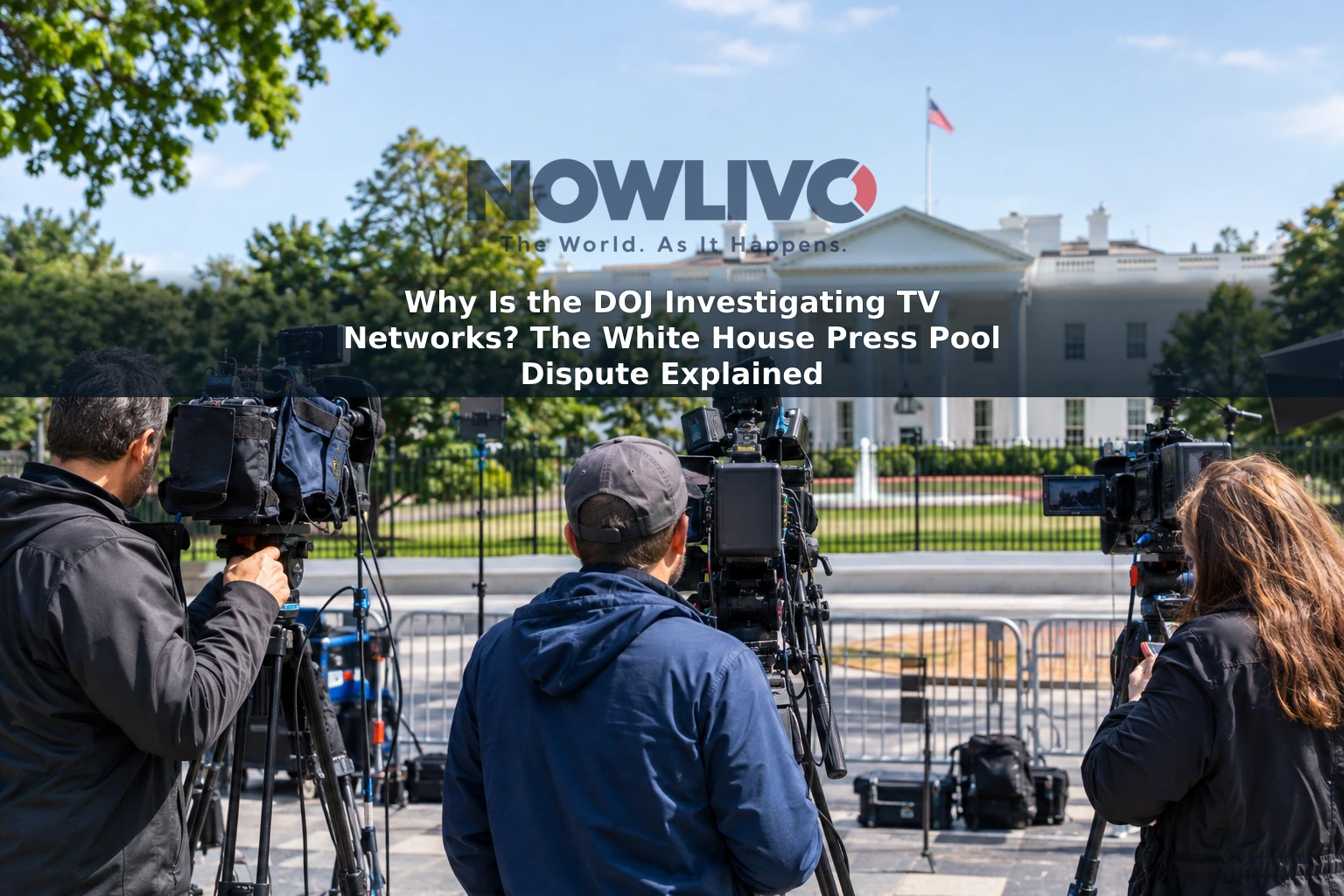
The Justice Department is investigating five TV networks because they jointly paused their White House television press pool coverage after President Donald Trump’s administration barred reporters from CNN, MS NOW and Politico. The department says it is examining whether the networks’ coordinated decision violated antitrust law. An investigation is not a finding that they broke the law.
The networks under scrutiny are ABC, CBS, CNN, Fox News and NBC. They take turns recording presidential events for a shared television feed. The brief suspension followed the White House’s decision in September to revoke access for journalists from the three news organizations, including CNN, which was scheduled for pool duties.
What prompted the DOJ investigation?
On September 19, 2026, the White House blocked reporters from CNN, MS NOW and Politico from entering the building. Trump objected to their reporting. The three outlets challenged the restrictions in court, arguing that the administration was punishing them for their coverage; the administration disputes that characterization.
The five networks then stopped providing pooled video coverage of presidential events for several days. In an announcement on October 10, a Justice Department spokesperson said the Antitrust Division was investigating whether that collective halt amounted to an unlawful group boycott by competing businesses. That is the conduct the department is examining—not the reporting published by CNN or Politico.
The networks have said the public needs independent information about its government and that an administration should not exclude a news organization because it objects to its reporting. The legal question in the DOJ inquiry remains open: a joint decision to stop covering events does not, by itself, establish an antitrust violation.
What is the White House press pool, and why does access matter?
A presidential press pool is a small, rotating group of journalists allowed to cover events when space or logistics prevent every news organization from attending. Pool members share their reporting, photographs or footage with other outlets, allowing the public to follow presidential activities beyond what a single newsroom can cover.
For television, ABC, CBS, CNN, Fox News and NBC rotate responsibility for recording events and distributing the video. When that shared feed stopped, other forms of reporting continued, but news outlets lost that source of pooled video from the affected presidential events. The dispute therefore had consequences beyond the five networks: viewers and other publishers also rely on footage gathered through the arrangement.
Access matters for another reason. Journalists covering the president need opportunities to observe events and ask questions independently, rather than relying solely on material selected and released by the White House. The three excluded outlets argue that their removal was unconstitutional viewpoint discrimination. The administration maintains that White House access is a privilege and has defended its restrictions.
What happened with CNN and Politico?
CNN, MS NOW and Politico sued to regain White House access. A federal judge temporarily blocked the ban, their credentials were restored, and pooled television coverage resumed. As of October 11, the temporary court order was in place while the judge considered whether to extend protection during the lawsuit.
Restored credentials have not ended every access dispute. The outlets have argued that the White House has continued to apply restrictions inconsistently, including limits affecting CNN’s pool assignments; reporting has also described continued limits on CNN and Politico at some presidential events. Those issues are part of the continuing fight over press access, separate from the DOJ’s antitrust inquiry into the five networks’ decision to halt the shared video feed.