Nepal’s October 11 Budhi Gandaki flash flood: What happened and who was warned downstream?
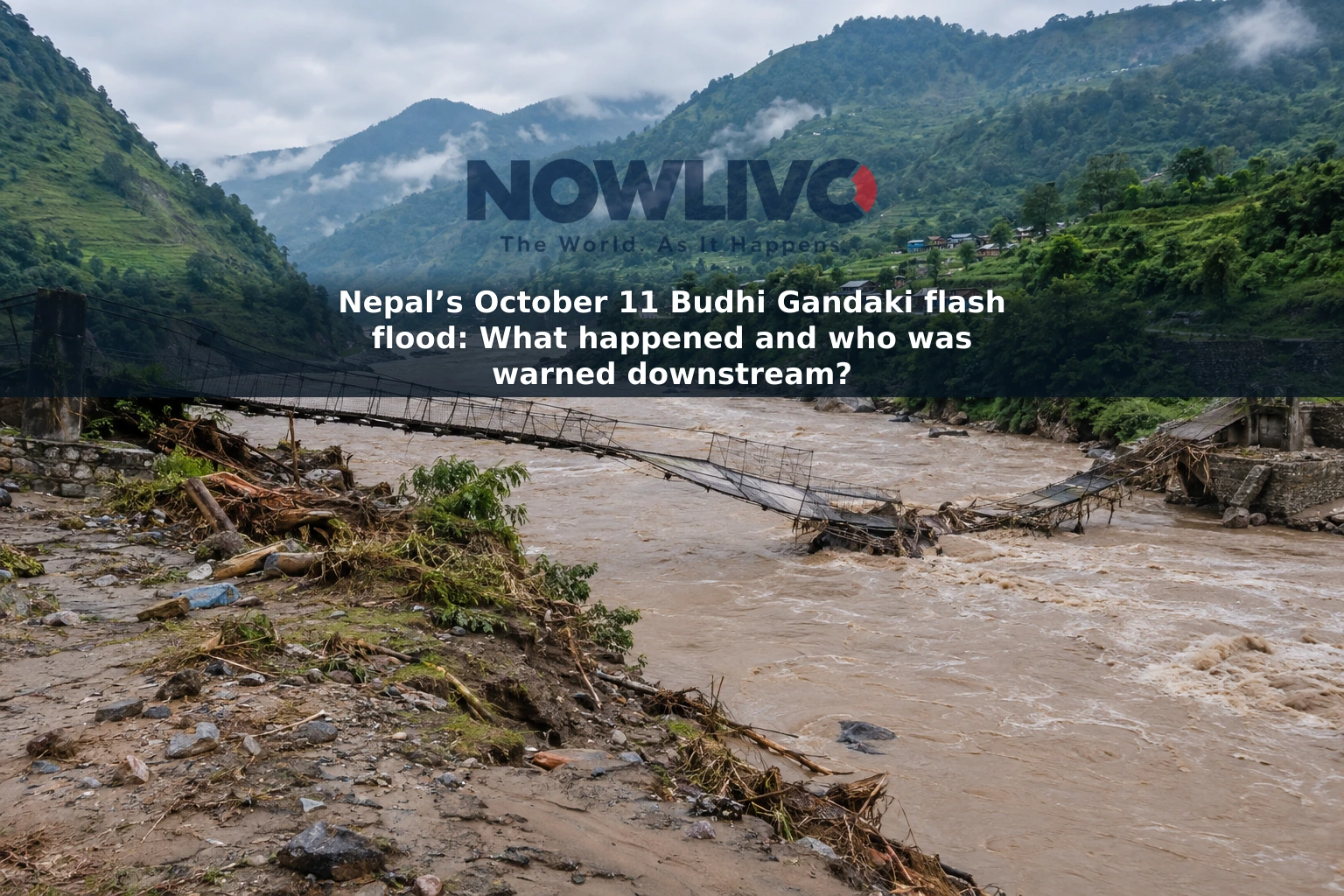
A flash flood swept down Nepal’s Budhi Gandaki River on Sunday, October 11, 2026, after what authorities believe was a landslide-related blockage upstream. The surge carried mud and debris through riverside settlements in Gorkha district, destroying homes and bridges and prompting evacuations. Nepal’s disaster authority reported five people missing; the full cause and extent of the damage were still being investigated.
What caused the Budhi Gandaki River flood?
The leading explanation is that a landslide temporarily obstructed the river or one of its tributaries near Chumchet in northern Gorkha. Water then broke through the blockage and rushed downstream. The Nepali Army reported evidence of a dry landslide, but investigators had not conclusively established where the obstruction formed or the precise sequence that produced the flood.
That distinction matters: this was not simply a report of a river rising after rainfall. An upstream blockage can hold back water and then release it suddenly. Authorities also observed fluctuating river levels as they assessed the risk of further surges.
What was damaged, and how many people were rescued?
The flood swept away houses in the Chumnubri area and damaged settlements farther down the valley. Bridges linking communities in Gorkha and neighboring Dhading were destroyed or damaged, while floodwater struck a hydropower construction site and affected power and communications infrastructure. Early damage estimates varied as teams reached more locations; an October 11 assessment reported at least 45 houses completely destroyed and another 27 partly damaged.
The National Disaster Risk Reduction and Management Authority reported five people missing in the Chumchet area—two women and three men. No deaths had been confirmed in the initial official reports. Search teams, ground personnel and army helicopters were deployed. The army reported 49 people rescued by Sunday afternoon; a subsequent report citing the army put the number moved to safety at 95. Those figures reflect different stages of the response, not separate groups to be added together.
Who was at risk downstream?
The immediate danger was to people in low-lying homes, work sites and routes beside the Budhi Gandaki, including communities in Chumnubri and Dharche. Officials urged riverside residents to move to safer ground and warned against approaching the river or damaged bridges. In Machhakhola, authorities said about 22 houses were at risk.
The warning extended beyond the villages first hit. The Budhi Gandaki joins the Trishuli River, so officials sent alerts to downstream communities, including areas around Arughat and Benighat, and called for vigilance farther along the river corridor. The disaster authority said text-message warnings helped residents reach higher ground. These were alerts issued during the October 11 emergency; conditions in any particular place should be checked against current instructions from local authorities.
For people in or traveling through the affected area, the practical concern is not only the water. Lost bridges and damaged communications can cut off access, while an unstable upstream blockage could change river conditions quickly. Rescue teams were continuing their work as officials assessed the damage and investigated the flood’s origin.