Did Trump Call Prophet Muhammad a ‘Radical Jihadist’? What He Said About Abdul El-Sayed
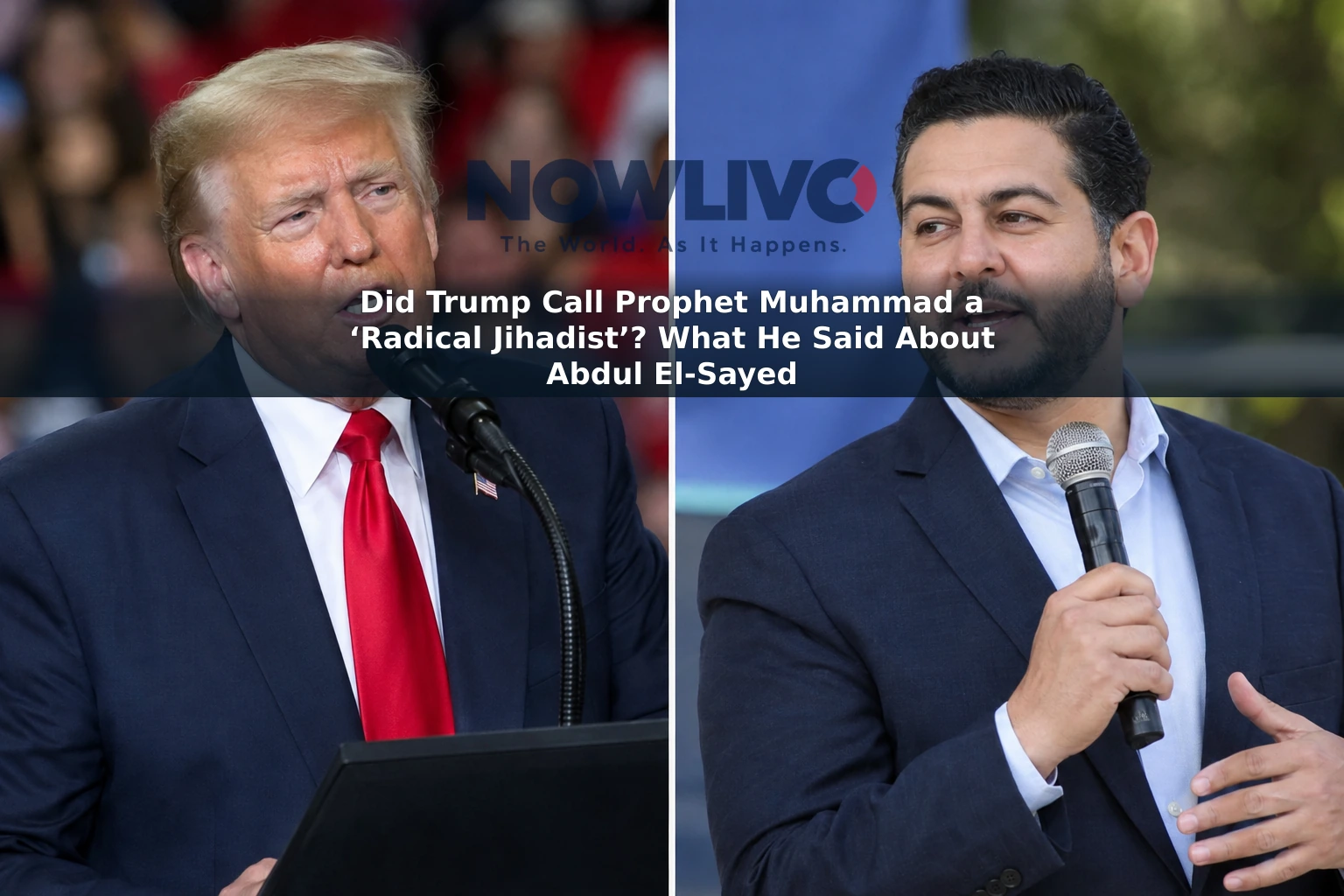
Donald Trump did not call the Prophet Muhammad a “radical jihadist” in the remarks circulating online. At an October 10, 2026, rally in Clarksville, Tennessee, Trump was attacking Abdul El-Sayed, the Democratic candidate for a U.S. Senate seat in Michigan. Trump said he calls El-Sayed “Mohammed” and then described the candidate as a “radical jihadist.” The wording attributed to Trump in the circulating quote is not what he said.
What did Trump actually say?
During the rally, Trump told the crowd that someone had corrected him about El-Sayed’s name. “To me, it’s Mohammed,” Trump said, adding that, as president, he could call the candidate whatever he wanted. He then made the “radical jihadist” accusation. The remarks concerned El-Sayed, not the Prophet Muhammad, and the accusation should not be mistaken for an established fact about the candidate.
Trump had also used “Mohammed” in social media attacks on El-Sayed earlier that week. El-Sayed’s full name is Abdulrahman Mohamed El-Sayed, but he campaigns as Abdul El-Sayed. He has objected to Trump’s use of his middle name, saying the president is using his name and Muslim faith as a political attack.
El-Sayed is running against Republican Mike Rogers for Michigan’s open Senate seat in the November 3 election. The race gives context to Trump’s remarks: he was speaking about a political opponent, not making a statement about a religious figure.
Why are Shehbaz Sharif and Asim Munir being mentioned?
The reaction to Trump’s comments has also revived discussion of Pakistan’s support for him. In June 2025, Pakistan’s government announced that it would recommend Trump for the 2026 Nobel Peace Prize, crediting his diplomatic role during that year’s India-Pakistan military crisis. Prime Minister Shehbaz Sharif has publicly praised that role and reiterated Pakistan’s support for a peace prize for Trump. Field Marshal Asim Munir has likewise been associated with Pakistan’s public praise of the president.
That does not establish that Sharif and Munir each submitted a separate Nobel nomination. The documented public announcement was made by Pakistan’s government, and the Nobel authorities do not confirm individual nominations while their records remain confidential. A public recommendation is also not an endorsement by the Nobel Committee.
Pakistan credits Trump with helping de-escalate the May 2025 confrontation. India has disputed claims of U.S. mediation, saying the agreement to halt military action was worked out through direct communication between the two countries. Those differing accounts matter when describing the reason Pakistan gave for its recommendation.
The outcome of the 2026 prize is no longer in question: on October 9, 2026, the Norwegian Nobel Committee announced Navanethem “Navi” Pillay as the winner. Trump did not receive it. The distinction in the circulating story is similarly straightforward: his “radical jihadist” remark targeted El-Sayed, while the purported quote about the Prophet Muhammad misstates what he said.