What Would Happen If 55 Million U.S. Visas Were Canceled Overnight?
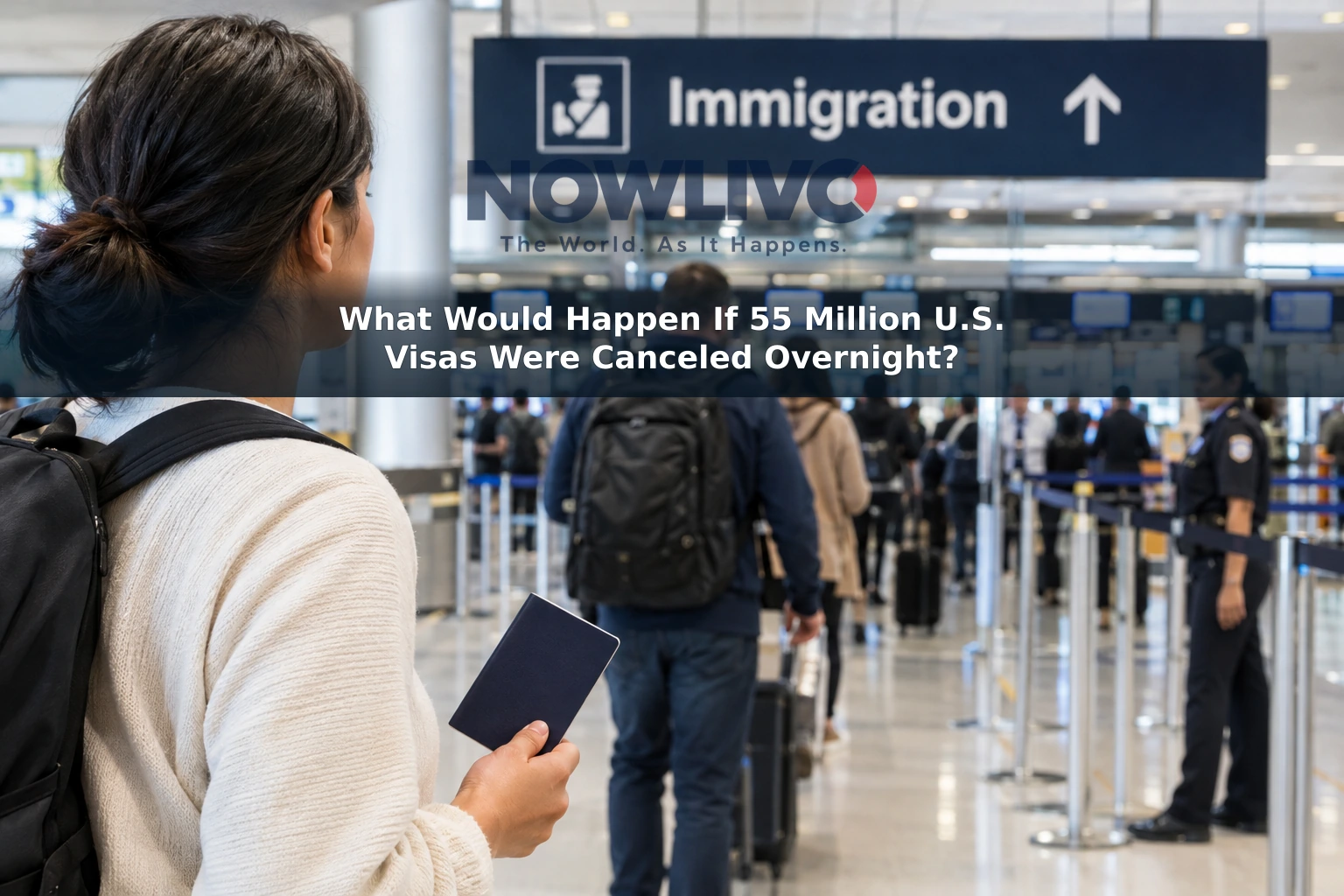
If 55 million U.S. visas were canceled overnight, America would not suddenly lose 55 million residents or workers. A visa is generally a document used to seek entry to the country, not a count of people living here or a measure of how long someone already admitted may stay. The effects would depend on which visas were canceled, how many holders were abroad, and what happened to the immigration status of people already in the United States.
There is no established figure showing that 55 million visas correspond to 55 million workers who could disappear from the U.S. economy. The State Department reported about 11 million immigrant and nonimmigrant visas issued in fiscal year 2024, but annual issuances are not the same as the number of valid visas at any given time. They are certainly not a count of the people holding jobs in America.
Would visa cancellation force workers to leave?
Not automatically. The State Department distinguishes a visa’s validity from a person’s authorized stay after admission. A worker or student already in the United States may have an authorized period of stay recorded separately from the visa in their passport. Canceling that visa could prevent them from using it for a future trip, but it would not, by itself, mean everyone affected must leave that night. A policy that also ended people’s authorization to remain or work would be a different—and far more disruptive—scenario.
Nor are all foreign-born workers visa holders. That broad group includes naturalized U.S. citizens, permanent residents, temporary residents and people without authorization. The Bureau of Labor Statistics found that foreign-born people made up 19.1% of the civilian labor force in 2025; that figure cannot be treated as the share of workers affected by visa cancellation.
Which parts of the economy could feel it?
If canceled visas prevented large numbers of temporary workers from entering or returning, employers that rely on those workers could face hiring problems. The consequences would vary by visa category and location. Hospitals, technology companies, farms and other employers do not all use the same immigration programs, and many of their foreign-born employees are citizens or permanent residents.
The claim that crops would be left to rot because migrant labor vanished overlooks another distinction. U.S. Department of Agriculture data for 2020–22 found that 42% of hired crop farmworkers surveyed lacked work authorization. They would not become visa holders affected by a visa cancellation simply because they were born abroad. A broader policy that removed agricultural workers, however, could sharply disrupt harvests.
Colleges would face a more direct risk if student visas were included and affected students could no longer enter or continue studying. U.S. institutions hosted about 1.18 million international students in the 2024–25 academic year, according to the Institute of International Education. But it is not a given that community colleges would thrive while other colleges closed: community colleges also enroll international students, and the institute reported growth in that enrollment in 2024–25.
Would wages rise and home prices fall?
Some employers might offer higher pay to attract replacement workers. That does not establish that wages would climb across the economy, or that employers could quickly replace people with specialized training. A National Academies review found that immigration’s long-term effect on native-born workers’ wages overall is very small, while effects can differ among groups. An overnight, large-scale cancellation is not a tested recipe for a broad wage increase.
Housing is similarly complicated. Fewer residents in a particular city could reduce demand for homes and rentals if those residents actually left. Visa cancellation alone would not produce that departure. A loss of construction workers could also slow the building of new homes: a 2026 Federal Reserve Bank of San Francisco analysis linked a slowdown in unauthorized immigrant worker flows to weaker construction employment growth. That study examined a different population, but it illustrates why lower housing demand cannot be considered in isolation from housing supply.
The most credible answer is neither instant economic collapse nor a guaranteed revival in wages, trades and affordable housing. Canceling visas would chiefly affect travel and future entry. More sweeping changes to workers’ or students’ right to stay would carry larger economic consequences, but their size and direction would depend on the policy—not on the unsupported assumption that every canceled visa represents a worker who vanishes overnight.