California Election Officials Challenge Federal Voter List After Early Checks Find Errors
A new dispute over the evidence
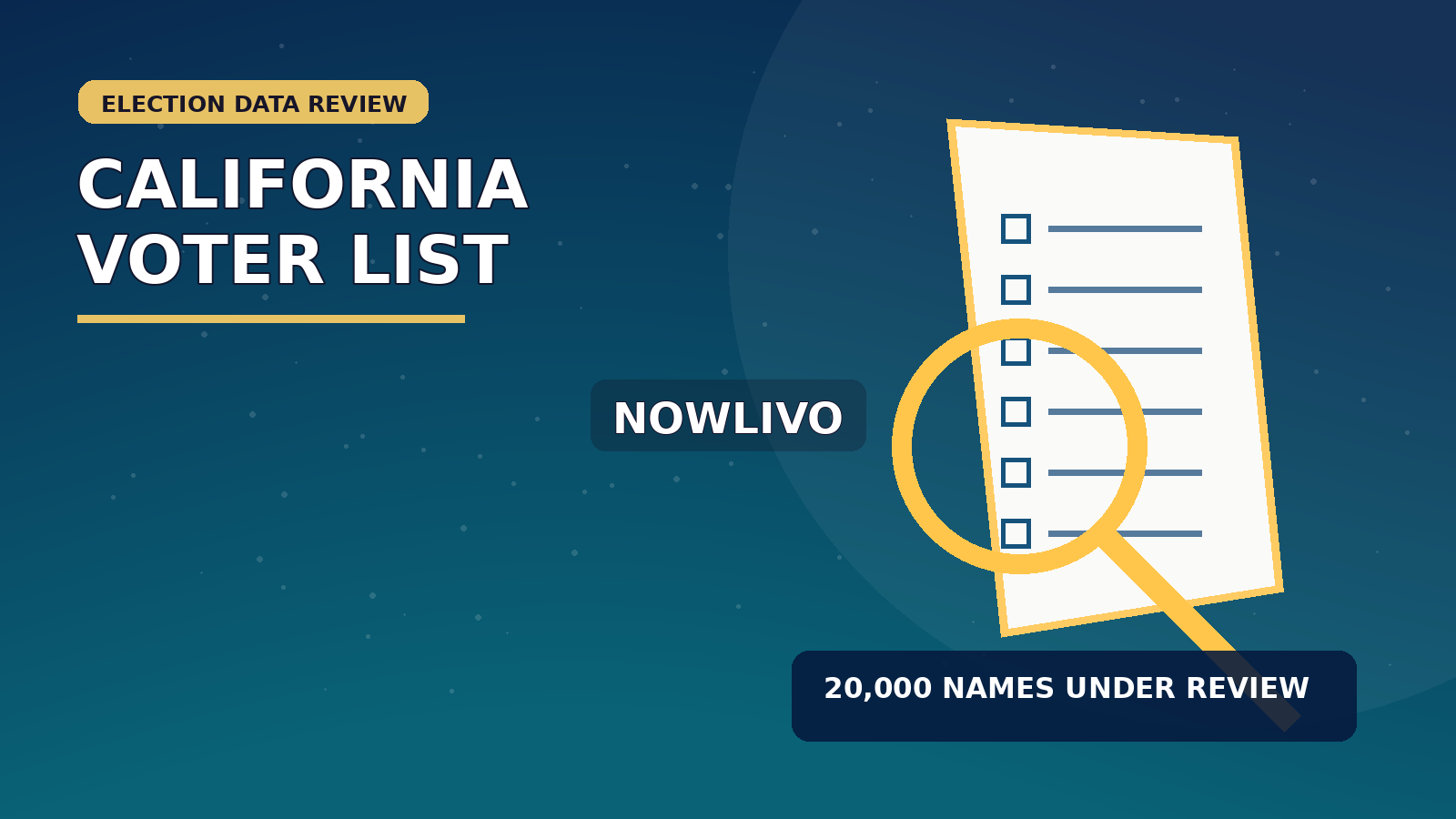
California election officials are challenging the accuracy of a federal list of approximately 20,000 people described by the Justice Department as potentially noncitizens registered to vote. In reporting published October 25, The Associated Press described county officials’ concerns after federal letters demanded action within 48 hours. The important new development is not merely that the letters arrived; officials have begun checking names and say the results raise serious questions about the list. The dispute is unfolding while mail voting is already under way before the November 3 midterm elections.
What an early Los Angeles check found
Los Angeles County officials examined an initial sample of 200 names from the statewide list. According to a court filing described by AP, more than 40 percent had cancelled registrations, more than 70 percent had no voting history and nearly four in ten were born in the United States. These figures describe a preliminary sample, not a complete audit of all 20,000 records. They do not prove that every entry is wrong, but they are directly relevant to whether the federal data can safely be used to delay or segregate ballots.
The federal government’s position
The Justice Department argues that election officials must not knowingly count ballots cast by ineligible noncitizens and says its requests are aimed at protecting election integrity. Federal prosecutors have also brought charges against 28 people accused of illegally registering to vote in a related enforcement sweep. Those charges concern specific defendants and allegations that must be proved in court. They do not establish that the entire list of 20,000 is accurate or that all listed individuals have voted. That distinction is essential when assessing the scope of the federal demand.
What counties were asked to do
Letters sent to registrars sought sensitive personal information and demanded that officials identify or set aside ballots associated with people on the federal list. AP reported that one county official received a list of 42 names and said approximately 11,000 mail ballots had already been cast locally. Election administrators say the timing and uncertainty make the request difficult to implement without affecting lawful voters. County officials are also seeking legal guidance because election procedures cannot simply be rewritten in response to an untested allegation.
Why citizenship checks are complicated
A person’s name on a database does not by itself establish citizenship or voting eligibility. Records can be outdated, duplicated or linked incorrectly, and naturalisation can change a person’s status. Someone may also be registered but never have cast a ballot. Election offices typically work through established procedures for verifying eligibility and resolving challenges. The federal list has become controversial because a high-stakes conclusion about thousands of people is being pressed on administrators close to Election Day, before the underlying records have been fully reconciled.
A lawsuit already in progress
The administration filed a lawsuit against California on October 15 seeking to prevent the counting of certain mail ballots until citizenship questions were resolved. State officials resisted the request, arguing that the federal government had not supplied adequate evidence. The new county-level findings add a concrete evidentiary dispute to the earlier legal argument. AP reported that a panel of the Ninth Circuit Court of Appeals was scheduled to hear arguments on Sunday. A hearing is not a ruling, and the outcome should not be assumed before the court acts.
Election workers caught in the middle
Registrars must conduct elections under state and federal law while preserving accurate voter records and protecting personal information. Federal prosecutors warned that officials who knowingly process ineligible ballots could face legal jeopardy. County administrators say they cannot treat uncertain data as proof of ineligibility. The tension is particularly acute because voters may already have returned ballots, and changing how those ballots are handled could affect confidence in the process. Neither concern eliminates the need for careful evidence and a lawful procedure.
The difference between a registration and a vote
The data dispute has several levels that should not be collapsed. A name can appear on a registration list without the person casting a ballot. A name can also remain in an old dataset after registration is cancelled or citizenship status changes. Criminal charges against a small number of people do not demonstrate that thousands of other names on a separate list are ineligible. At the same time, officials have a duty to investigate credible evidence of unlawful voting. The question before administrators and courts is what evidence is sufficient, which procedure is lawful and how to protect eligible voters from being incorrectly excluded. The preliminary Los Angeles sample is important because it tests the federal claim against actual local records rather than merely accepting or dismissing it on partisan grounds.
The next decisive development
The next important steps are the appeals court’s response, any further analysis of the 20,000-name list and instructions issued to local election offices. A verified court order could change how particular ballots are handled; a preliminary claim alone does not settle eligibility. The public should distinguish the federal government’s allegations, the limited criminal charges, the counties’ sample findings and any eventual judicial ruling. Those are separate facts in a fast-moving dispute with only days remaining before the midterms.