New FT Poll Finds US Voters Worried About Corruption and Living Costs Before Midterms
A late-campaign snapshot
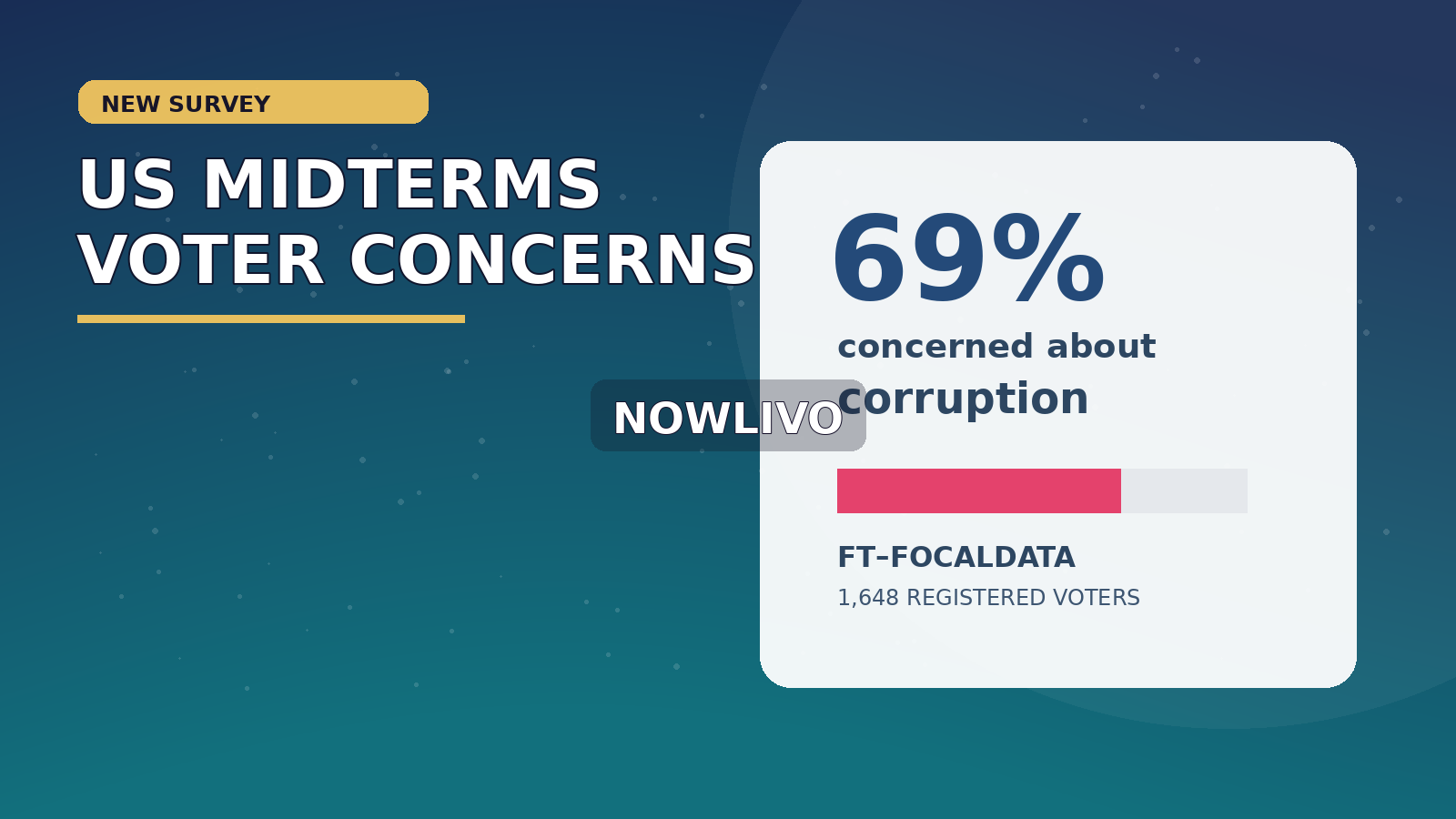
A Financial Times–Focaldata poll published October 25 suggests that concerns about corruption and everyday costs are weighing heavily on American voters ahead of the November 3 midterm elections. The survey found that 69 percent of registered voters were concerned about corruption, self-dealing or conflicts of interest involving President Donald Trump’s administration. The number describes respondents’ views, not a legal finding that any particular allegation is true. It is a measure of political risk at a time when control of Congress is at stake.
What the poll measured
The survey questioned 1,648 registered voters between October 16 and 18. It asked about perceptions of government conduct and household finances. The reporting says nearly half of respondents believed corruption had become worse under Trump than under previous administrations. Nearly half of people who voted for Trump in 2024 also expressed concern about corruption or conflicts of interest, according to the published summary. Those findings suggest the issue reaches beyond committed opponents, although concern does not automatically mean a voter will change parties.
Household costs remain central
The poll also found that 54 percent blamed the Trump administration or congressional Republicans for rising prices, while 56 percent said they were financially worse off than when Trump returned to office in January 2025. More than a quarter reported cutting essential spending such as groceries or healthcare. Those are self-reported experiences and perceptions, not a direct calculation of household income or inflation for every respondent. Still, they indicate why affordability is likely to dominate campaign messages even when candidates focus on other issues.
The Iran conflict and fuel prices
The Financial Times linked the economic unease to the prolonged war with Iran and the resulting pressure on energy costs. Its report cited diesel averaging about $6.32 a gallon, more than 70 percent above the year-earlier level. Fuel prices influence more than the cost of filling a tank: transport and distribution expenses can reach consumers through food and other goods. The relationship is complex, and a single fuel-price figure does not explain every household’s situation, but it helps show why foreign policy and domestic affordability have become intertwined.
Claims about conflicts of interest
Critics of the administration have questioned business dealings involving politically connected people and the Trump family’s cryptocurrency ventures. The White House denies improper conflicts and says the president is combating government fraud. A poll of public concern cannot resolve the legality or ethics of individual transactions; those questions require documents, applicable rules and, where relevant, investigative or judicial findings. The political issue is that voters may form views about government trustworthiness before such questions are formally settled.
How Republicans and Democrats may respond
Democrats are likely to highlight the poll as evidence that corruption and costs are vulnerabilities for the governing party. Republicans can argue that the administration’s policies are aimed at economic strength, enforcement and reform, while disputing allegations of wrongdoing. Neither campaign interpretation should be mistaken for the survey’s raw findings. The poll reports attitudes at a particular moment; campaigns still have days to change what voters hear, and turnout can produce an electorate different from the broader group of registered voters surveyed.
What polls cannot predict
A national survey is not a forecast for each competitive House or Senate race. Local candidates, district boundaries, state economies and turnout rules can produce outcomes that diverge from national sentiment. Sampling uncertainty, question wording and the distinction between registered and likely voters also matter. The most useful conclusion is not that one party has already won, but that a sizeable share of the public is expressing concern about integrity and purchasing power in the final stretch of the campaign.
Reading the survey with care
The survey’s percentages describe answers to particular questions, and not all questions measure the same thing. A person may be worried about conflicts of interest while still preferring the administration’s policies; another may blame rising prices on the president but vote on immigration or a local issue. The reported 69 percent corruption-concern figure therefore should not be converted into a claim that 69 percent will vote against Republicans. Nor should a national poll be used to predict a specific Senate contest without state-level evidence. The strongest news point is the coexistence of ethical concerns and financial strain across a broad group of registered voters. The Financial Times reported both sets of figures, providing a timely snapshot of issues that candidates must address in the campaign’s final days.
The next test is Election Day
The November 3 vote will reveal whether those concerns translate into changes in congressional representation. Before then, additional surveys and local reporting may clarify which issues are motivating undecided voters and whether economic pressure outweighs partisan loyalty. The FT–Focaldata results provide a concrete new data point, not a verdict on misconduct or a guaranteed election result. Their news value lies in showing what voters say they are worried about with little time left before ballots are counted.