Centre Sends About 250 RAF Personnel After Siang Dam Protests Turn Violent
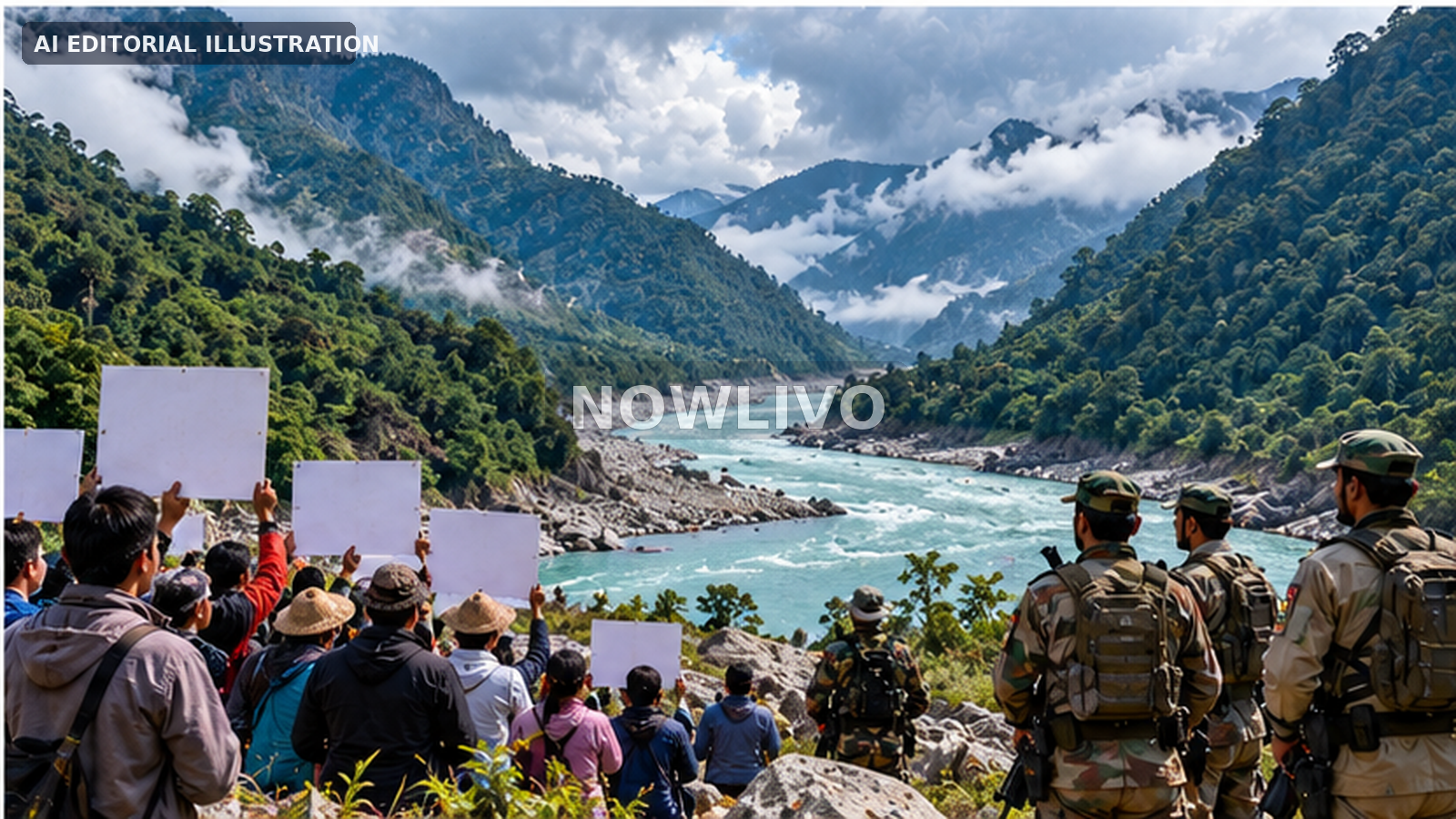
The Centre moved to reinforce security in Arunachal Pradesh after protests over the proposed Siang Upper Multipurpose Project escalated into violence in Pasighat. About 250 Rapid Action Force personnel from two companies were ordered to travel to the area, according to an October 25 report citing officials and PTI. The deployment is a substantial new development in a dispute that had already produced demonstrations, property damage and competing accounts of what happened on the ground. It shifts the immediate focus from the project debate alone to public safety and the response of authorities.
The proposed hydropower project has become contentious because it brings together national energy and strategic concerns with local fears about land, livelihoods and the river environment. The government views the project as a potential safeguard amid upstream hydropower development by China. Residents and activists opposing preliminary survey work say the risks to communities and the Siang valley have not been adequately addressed. Those positions cannot be reduced to a simple choice between development and opposition to development; the dispute is also about who participates in decisions and when.
What triggered the security reinforcement
The immediate escalation followed a protest and bandh affecting Siang, Upper Siang and East Siang districts. Authorities said the bandh was largely peaceful during its scheduled hours but that violence later erupted in Pasighat. Reports described damage to a police station and a National Hydroelectric Power Corporation office, as well as attacks targeting houses associated with political figures. Those reports are serious and require investigation, but individual responsibility should not be assigned to every person who attended a protest.
The Ministry of Home Affairs directed two Rapid Action Force companies to be moved from Navi Mumbai, with transport by an Indian Air Force aircraft, according to the reporting. The RAF is a specialised public-order formation within the Central Reserve Police Force. Its deployment signals that authorities regard the situation as requiring additional capacity beyond the personnel already stationed in the state. It does not, by itself, resolve the underlying disagreement about the proposed project or establish who committed particular acts of violence.
What Chief Minister Pema Khandu has said
Arunachal Pradesh Chief Minister Pema Khandu condemned the violence and appealed for peace while acknowledging the right to peaceful protest. He has also maintained that the government has not made a final decision to build the dam and is examining feasibility. That distinction is central to the official position: a survey or study is not identical to construction approval. Protesters, however, fear that early-stage work can create momentum toward a project before affected communities have meaningful influence over the decision.
Both concerns deserve accurate description. The state government is responsible for protecting people and property and for assessing major infrastructure proposals. Communities along the river have legitimate interests in understanding potential displacement, ecological changes and effects on ancestral land. The present reporting does not establish a final approved design, construction timetable or definitive environmental outcome. Claims about what the dam will certainly do should therefore not be presented as settled facts.
Why the Siang River matters
The Siang is part of a major river system whose course and seasonal flows shape life across Arunachal Pradesh and downstream regions. A very large hydropower proposal can raise questions about sediment movement, fish habitat, riverbank changes, flood management and the location of settlements. It can also promise electricity generation, infrastructure and strategic water-management capacity. The relative benefits and risks depend on the eventual design, independent assessment and how the affected population is consulted.
China’s development of hydropower upstream has added a strategic dimension to Indian discussions. Officials have argued that an Indian project could strengthen resilience in the river basin. That argument is not the same as proof that any particular proposed structure is the only possible response. Alternatives, mitigation plans and the feasibility of the proposed site remain questions for technical and public scrutiny. A credible debate requires more than a confrontation between slogans.
What investigators still need to establish
After reports of arson and clashes, investigators need to determine the sequence of events, the identity of those responsible for specific acts, the scale of injuries and damage, and whether force used by any side was lawful and proportionate. Public reports describe competing claims about arrests and injuries. Until records are established, those figures should not be turned into confident conclusions. The rights of peaceful demonstrators and the safety of residents and officers are both relevant.
A security deployment can reduce immediate risk, but long-term stability depends on transparent information and channels for discussion. Authorities can publish the status of feasibility work, explain any planned consultations and distinguish between lawful dissent and criminal conduct. Protest organisers can articulate demands while rejecting attacks on people and property. Neither side benefits if the public is left to interpret partial videos and rumours as the complete record.
What to watch next
The next developments are whether the reinforced security presence restores calm, whether police provide a clearer account of arrests and damage, and whether the government announces a concrete consultation process. Any decision on survey work or project approval would be a separate news event. For now, the material change is the Centre’s deployment of approximately 250 RAF personnel after violence in Pasighat. The project itself remains contested, and its future has not been settled by the security response.