Siang Dam Protests Turn Violent in Arunachal as Offices Are Set Ablaze
The latest development
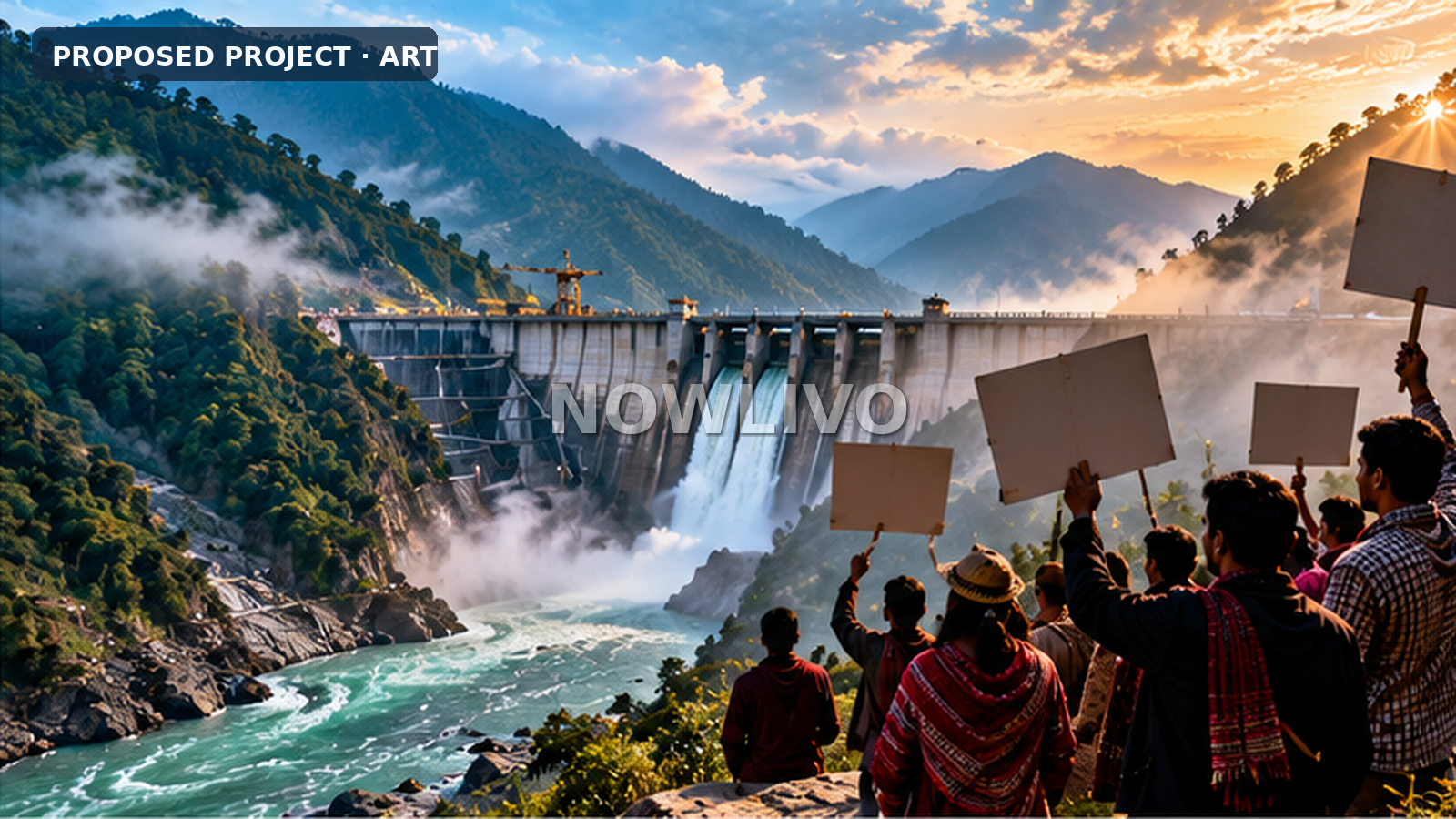
Violence erupted around Pasighat after protests against the proposed Siang Upper Multipurpose Project, with officials reporting that an NHPC office and a police station were set on fire. The unrest followed a shutdown and confrontations involving protesters and security personnel. For the Siang hydropower project protests in Arunachal Pradesh, the immediate action and its eventual consequences are different questions. An announcement, a filing or a statement may be important today even when implementation is incomplete. Reporting should show exactly which step has happened and avoid borrowing certainty from a result that has not yet occurred.
How the situation developed
The immediate dispute concerns the proposed 11,200-megawatt project on the Siang River. A 12-hour bandh in Siang-area districts ended before reports of arson and vandalism. Authorities said they were still assessing damage and injuries. The sequence matters because earlier events can be mistaken for fresh developments when an old photograph or short clip circulates again. Keeping the dates in order also makes it easier to see whether the newest report changes the underlying facts or merely adds another response from an interested party.
What the reporting establishes
Organisations involved in the protests have demanded release of arrested activists, reinstatement of suspended village leaders, withdrawal of pre-feasibility activities and removal of deployed forces. Officials say technical and environmental surveys are preliminary and do not amount to completed construction approval. There is a useful difference between what a dated report records and what an observer infers from it. The former can be checked against documents and named accounts; the latter should be labelled as analysis. This is particularly important when a single fact is being used to support competing political or public narratives.
Different accounts and responses
The state government condemned the violence and warned against rumours. It argues that the project could help manage river flows and strengthen energy and water security, including in response to upstream developments. Opponents raise concerns about land, culture and ecological impacts. A person directly involved in a dispute may have access to relevant facts and a reason to defend a particular interpretation. That does not make the account worthless, but it does mean readers need to know who is speaking. Competing statements should be represented accurately rather than forced into artificial agreement.
The rules and process behind the headline
A pre-feasibility report examines whether a proposal could proceed; it is not the same as a final environmental clearance, land acquisition or a construction start. The stages matter because the rights of affected communities and the evidence required change as a project advances. Procedure can look like a minor detail, but it determines what the development can legally or practically accomplish. A review is not a final decision, a notice is not a penalty, and an allegation is not a finding. Those distinctions are essential to accurate coverage of the Siang hydropower project protests in Arunachal Pradesh.
Who may be affected
Indigenous communities, downstream residents, local businesses and emergency workers are among those affected by the protests and the proposal. The project could alter debates over livelihoods, flood management, biodiversity and regional development for years. The effects may not be uniform. People in different locations, occupations or circumstances can experience the same decision in different ways, and some effects may not appear until later. Reporting should avoid claiming to speak for an entire community when only a few identifiable reactions have been published.
What is still unresolved
The exact number of people responsible for each incident and the full scale of damage remain matters for investigation. Protesters cannot be treated as a single group, and the reported arson should not be used to erase peaceful objections to the project. Important gaps often concern scale, responsibility, timing or the precise reach of a decision. Such gaps can narrow as records become available. Until then, claims that exceed the evidence deserve clear qualification, especially if they concern alleged wrongdoing or a person’s reputation.
What to watch next
Watch for verified police accounts, dialogue between government and community organisations, the status of arrested activists and publication of technical studies. Any future environmental process should provide accessible information and a meaningful opportunity for affected residents to respond. A later update will be meaningful if it adds a verified decision, document, measurable outcome or attributable response. Repeating the same claim with a more dramatic headline does not count as a new development. Readers should pay attention to publication and update times as the story moves.
Why the development matters
The underlying disagreement is not simply pro-development versus anti-development. It concerns who bears environmental and social risks, who receives benefits and whether decisions are made with credible consultation. A strong explanation connects the new development with the systems around it, rather than treating every event as an isolated spectacle. The key is to show why the decision or dispute matters to real people without inflating the scale or suggesting consequences that have not yet occurred.
What this report does not claim
Violence and property damage require accountability, while the project itself still deserves transparent evaluation. This report does not infer that every demonstrator participated in attacks or that the proposed dam has already received final approval. This distinction is not a technical disclaimer. It protects readers from treating accusations as verdicts, proposals as completed policies and partisan interpretations as established public opinion. If later reporting changes the picture, the story should be updated openly instead of preserving an outdated claim for dramatic effect.
A closer look at the context
Environmental disputes combine technical evidence with decisions about land, livelihoods and public authority. Surveys, pollution readings and feasibility studies answer different questions, and none should be treated as a substitute for community participation. For the Siang hydropower project protests in Arunachal Pradesh, the quality of the evidence matters because environmental consequences may continue long after the immediate controversy disappears from headlines.
The longer-term test
A project proposal or enforcement order has several possible outcomes. Authorities may need to complete studies, identify responsible parties, hear objections and verify compliance. The public can reasonably demand transparent timelines and records without assuming the final decision has already been made. The costs of weak oversight often fall on people who did not control the original activity.
How to judge the next update
The useful follow-up is measurable: water quality, restoration work, inspection records, published impact assessments or evidence that residents were consulted. Dramatic photographs can show a problem but rarely quantify its scale. Equally, a reassuring official statement is not proof that the risk has disappeared. Reliable environmental coverage returns to the data as it changes.