Ladakh Defends Cancellation of Sonam Wangchuk’s HIAL Land Allotment in High Court
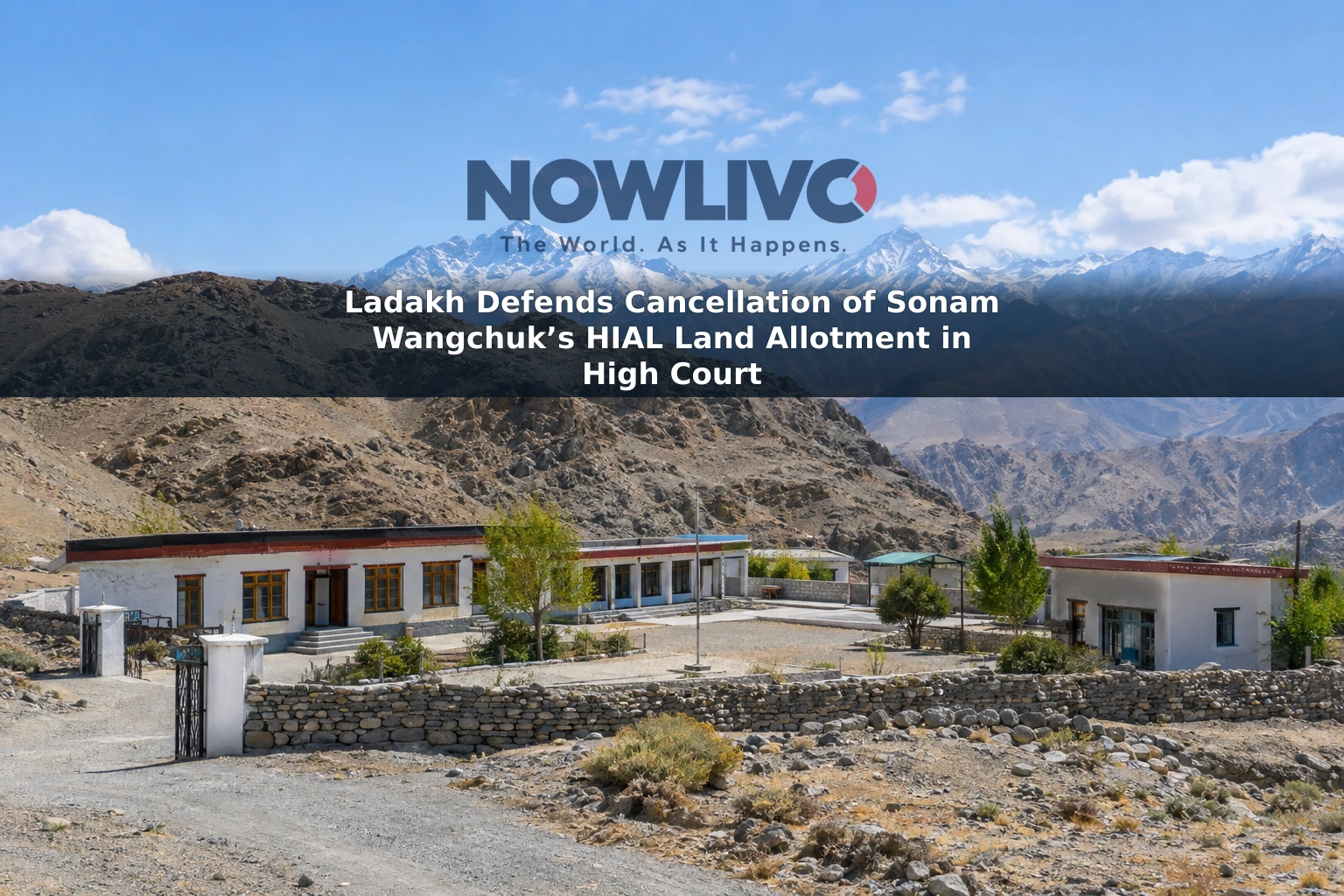
The Ladakh administration has defended its cancellation of land allotted to Sonam Wangchuk’s Himalayan Institute of Alternatives, Ladakh (HIAL), telling the High Court of Jammu and Kashmir and Ladakh that the allotment had automatically lapsed years before the cancellation order was issued.
In a reply to HIAL’s court petition, the administration says the institute did not execute a lease deed within the required one-year period or pay the land premium. It argues that those failures caused the 40-year allotment to lapse on May 5, 2019. HIAL disputes the cancellation and says the delay in completing the lease was caused by the authorities.
Why the administration says the allotment lapsed
The dispute concerns 1,076 kanals and one marla of land at Phyang Thang, near Leh. The land was allotted to HIAL on May 5, 2018, for a proposed alternative university focused on mountain development. The allotment was subject to conditions, including completion of a lease deed.
Leh Deputy Commissioner Romil Singh Donk filed the administration’s reply to HIAL’s challenge against his August 21, 2025, cancellation order. The administration’s position is that the failure to complete the required formalities meant the allotment had already lapsed in 2019. Its court filing defends the later order as a recognition of that lapse, rather than the first step ending HIAL’s rights to the land.
The 2025 order also said no university recognised by law had been established on the site, no lease agreement had been executed and no formal handover of the land had taken place. It directed that the land be returned to the Leh hill council’s control and that the revenue records be updated.
HIAL contests responsibility for the delay
HIAL, through its co-founder and chief executive, Gitanjali J Angmo, has asked the High Court to set aside the cancellation and direct the authorities to complete the lease under the original allotment. The institute says it applied for the lease deed within 15 days of receiving the land allotment and went on to develop infrastructure and educational activities at the site.
HIAL argues that officials did not complete the lease process. It says administrative changes following Ladakh’s transition to a Union Territory, the proposed preparation of a new lease policy and the COVID-19 period contributed to the delay. The institute also says official communications allowed work at the site to continue while lease formalities remained pending.
Angmo and Wangchuk have rejected the administration’s grounds for cancellation. They have described the decision as an attempt to target the institute, while the administration maintains that its action followed the terms of the allotment. Those competing accounts are now before the court.
What the High Court has ordered
In September 2026, the High Court directed the administration not to create third-party rights over the disputed land while it considered HIAL’s petition. That interim direction did not itself overturn or suspend the August 2025 cancellation order.
The administration’s reply puts the central disagreement before the court: whether HIAL’s failure to complete the lease and payment requirements caused the allotment to lapse in 2019, or whether the authorities’ handling of the lease process makes the later cancellation unlawful. The High Court has not resolved that dispute.