Jamia Millia Islamia Moves Classes Online During Student Union Protests
The latest development
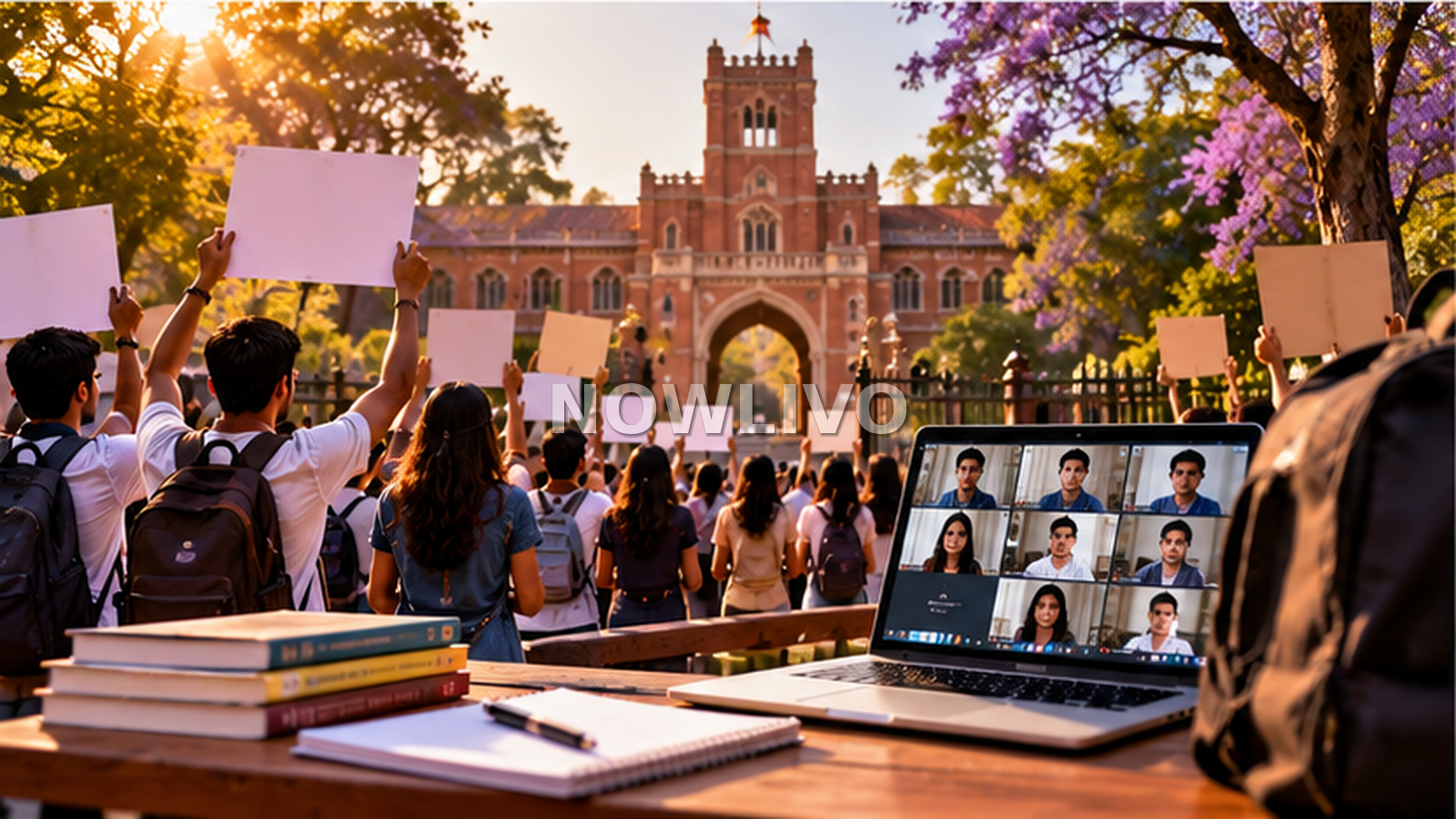
Jamia Millia Islamia has shifted university teaching online with immediate effect, citing student safety amid continuing protests. The notice announced on October 24 said remote classes would remain in place until further instructions, making this an operational change rather than a permanent switch in academic policy. That distinction is central to understanding the Jamia Millia Islamia campus protests. A news update can establish that an event or decision occurred without settling the larger controversy around it. Readers are better served by a precise account of the new step than by a headline that turns a limited development into a sweeping conclusion.
How the situation developed
Student demonstrations began earlier in October, and reporting describes an indefinite hunger strike started on October 12 by five students. Protesters have sought restoration of the students’ union and removal of the chief proctor, while the administration has faced criticism over its response. A reliable timeline separates the original event, the response and the newest procedural development. Without that separation, a reader can mistake a resurfaced allegation for a new incident or assume that an issue has been settled merely because it has remained in the news for several days.
What the reporting establishes
The university said its decision was precautionary and intended to keep teaching going without exposing students to possible disruption. Online classes may allow lectures to continue, but the reporting does not establish arrangements for every laboratory, field activity or examination. The available details are sufficient to explain the central development, but not every question that the headline invites. Numbers, documents and named statements have different evidentiary weight. A reported figure should retain its unit, time frame and attribution; an estimate should not silently become a confirmed count.
Different accounts and responses
Student organisers describe the protests as a demand for representation and accountability. The university’s stated position emphasizes security and academic continuity. Those are distinct claims that should be presented without assuming either side’s intentions. The existence of disagreement is itself newsworthy when institutions or public figures are involved. Still, equal attention to competing claims does not mean every claim has equal support. A fair report names the speaker, explains the basis offered and leaves unproven assertions as assertions rather than conclusions.
The rules and process behind the headline
A university can issue temporary academic directions, while disciplinary and student-representation questions may involve separate internal rules. A shift to online instruction does not, by itself, resolve the demand for a union or the dispute about the proctor. It helps to identify which institution has the power to act at each stage. The body that makes a public statement may not be the body that investigates, regulates, judges or implements the next step. Confusing these roles creates false expectations about what the announcement actually changes.
Who may be affected
Students with poor internet access, practical courses, housing commitments or exams may experience the change differently. Faculty must also adapt teaching and assessment, and families need reliable information about campus access and scheduled activities. The public interest is broader than the most familiar names in the story. A policy, dispute or investigation may also affect workers, households, local institutions and people with little opportunity to speak publicly. Describing those possible effects is useful, but they should not be presented as outcomes already measured.
What is still unresolved
The duration of remote teaching and the outcome of discussions with students were not settled in the October 24 notice. Reports of alleged crackdowns should remain attributed until details are independently established or formally adjudicated. A missing answer is not an invitation to supply a plausible explanation. Where evidence is incomplete, the most informative approach is to identify the missing record or decision that would resolve the uncertainty. That keeps readers from confusing an unanswered question with evidence that one side must be correct.
What to watch next
Watch for a dated university circular on returning to campus, clear examination guidance and any negotiated response to the student demands. Official communication should distinguish a teaching timetable from security restrictions and disciplinary action. The next report should be judged by whether it changes what is known. An official filing, court order, regulatory instruction, reliable data release or direct response can do that. An anonymous prediction or an edited social-media clip may attract attention without adding dependable evidence.
Why the development matters
The case illustrates how an unresolved governance dispute can quickly become an educational-access issue. Continuity is meaningful only if students can participate and know which rules apply while the campus situation changes. The immediate story also raises a longer-term question about institutional trust and accountability. Those questions deserve examination, but they are not reasons to leap ahead of the record. Explaining the practical stakes while preserving uncertainty is more useful than predicting a dramatic resolution.
What this report does not claim
This report does not claim the university has closed permanently or that classes have been cancelled. It reports the temporary move to online teaching and the stated reasons for it. The limits of the record are part of the story. Reporting only what can presently be supported leaves room for later corrections and new evidence. It also prevents a developing dispute from being framed as a closed case before the responsible institutions have finished their work.
A closer look at the context
A university’s duty to maintain teaching and its responsibility to hear student grievances are related but not identical. Online instruction can preserve lectures during a disruption while leaving questions about representation, discipline and campus safety unresolved. In the Jamia Millia Islamia campus protests, students need dates, access arrangements and transparent explanations more than speculation about motives.
The longer-term test
Different courses may require different solutions. A lecture can often move online quickly, while laboratories, placements, examinations and access to libraries may need special arrangements. Students with unreliable internet or shared devices may be affected disproportionately. Those practical concerns deserve attention even when the political argument on campus attracts most headlines.
How to judge the next update
Universities can reduce uncertainty by publishing clear notices, providing accessible channels for questions and explaining how decisions will be reviewed. Protesters can make demands without those demands being treated as institutional decisions. The responsible reporting task is to show the administration’s announcement, the students’ stated concerns and the next opportunity for dialogue.