
Apple Pay launches in India with Axis Bank credit cards, but no UPI
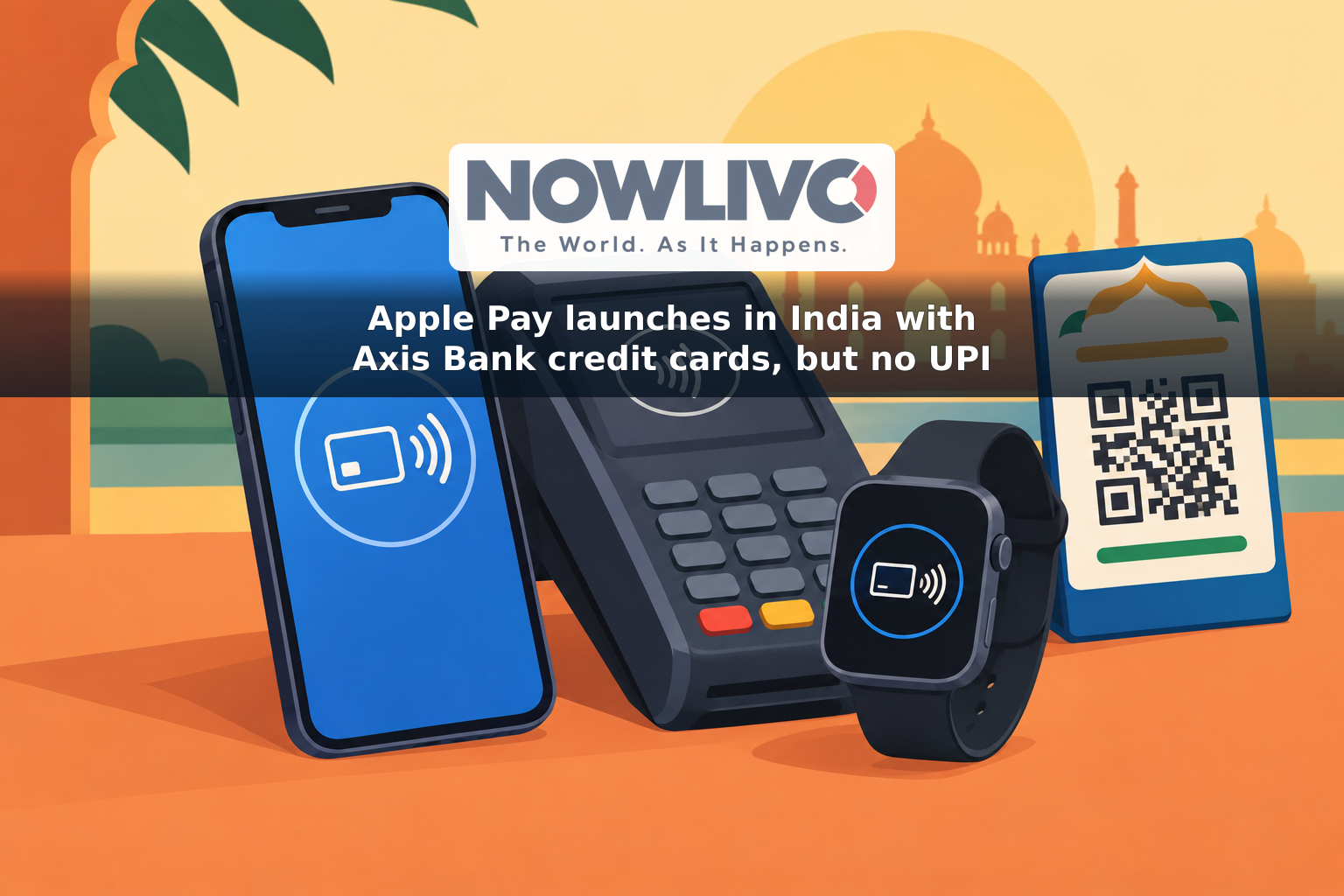
Apple Pay launched in India on September 30, 2026, giving some Axis Bank credit card holders a new way to pay with Apple devices. The first supported cards are Axis Bank-issued Visa and Mastercard credit cards. Customers can use them to tap at compatible shop terminals or check out in participating apps and websites.
The distinction for Indian shoppers is what funds the payment. Apple Pay uses an eligible credit card; it is not a UPI app. It cannot be used to scan an ordinary UPI merchant QR code or send money from a linked bank account through UPI.
Which cards and devices work?
At launch, support is limited to Axis Bank credit cards on the Visa and Mastercard networks. Holding an iPhone alone is not enough: the card issuer and card network must also be supported. The launch does not include Axis Bank debit cards, RuPay cards or cards issued by other Indian banks.
Apple Pay is available on iPhone, Apple Watch and iPad, though their uses differ. An iPhone or Apple Watch can make contactless payments at a compatible in-store reader. An iPad is for Apple Pay checkout in participating apps and on the web, not for tapping at a shop counter. Apple says Mac support is coming later, so Mac users should not assume it is available on launch day.
Apple lists an iPhone XR or later running iOS 18 or later as a requirement. For Apple Watch, it lists Series 6 or later running watchOS 11 or later, paired with an iPhone XR or later. Customers should also make sure their particular Axis Bank credit card is eligible before expecting it to appear in Wallet.
How to add a card and pay
To get started on an iPhone, open the Wallet app, tap the plus button and follow the prompts to add an eligible card. Customers can also begin through the latest version of the Axis Bank app. Any verification requested while adding the card is part of setup; it should not be confused with the steps needed for each purchase.
At a shop with a contactless card reader, select the card on the iPhone or Apple Watch, authenticate when prompted with Face ID, Touch ID or a device passcode, and hold the device near the reader. For an app or website purchase, choose Apple Pay when the merchant offers it, review the payment details and confirm on the device. The Apple Pay option will not appear at every online checkout.
A merchant that displays only a UPI QR code is a different case. Shoppers will still need a UPI-enabled app or another payment method there. Conversely, a contactless card terminal may offer an opportunity to use Apple Pay even if the merchant also accepts UPI.
Where Apple Pay fits alongside UPI
UPI and Apple Pay solve overlapping checkout problems through different payment systems. UPI commonly lets customers pay from bank accounts using a UPI ID or a merchant QR code. India’s new Apple Pay service puts a supported credit card on an Apple device. For someone who already uses both UPI and an eligible Axis Bank card, the launch adds a card-payment option rather than replacing the familiar QR-payment flow.
That difference also explains why Apple Pay’s arrival does not automatically make every Indian card usable in Wallet. Bank and network support remain important, as does merchant acceptance. In a store, look for a working contactless card reader; online, look for Apple Pay at checkout. If a card cannot be added, check its eligibility with Axis Bank rather than assuming a software update will make it work.
Apple says the card’s actual number is not shared with the merchant during an Apple Pay purchase. Instead, the service uses a device-specific payment credential, while the customer confirms the transaction on the device. Existing card rewards continue to apply under the card’s terms. Apple does not charge customers an additional fee for paying with Apple Pay, although the card issuer’s usual charges can still apply.
For now, the practical question is straightforward: do you have a supported Apple device, an eligible Axis Bank Visa or Mastercard credit card, and a merchant that accepts the relevant form of card payment? If any one of those is missing, UPI or another existing payment method remains the way to complete the purchase.