
Barapullah Phase III opens: What the new route means for Delhi commuters
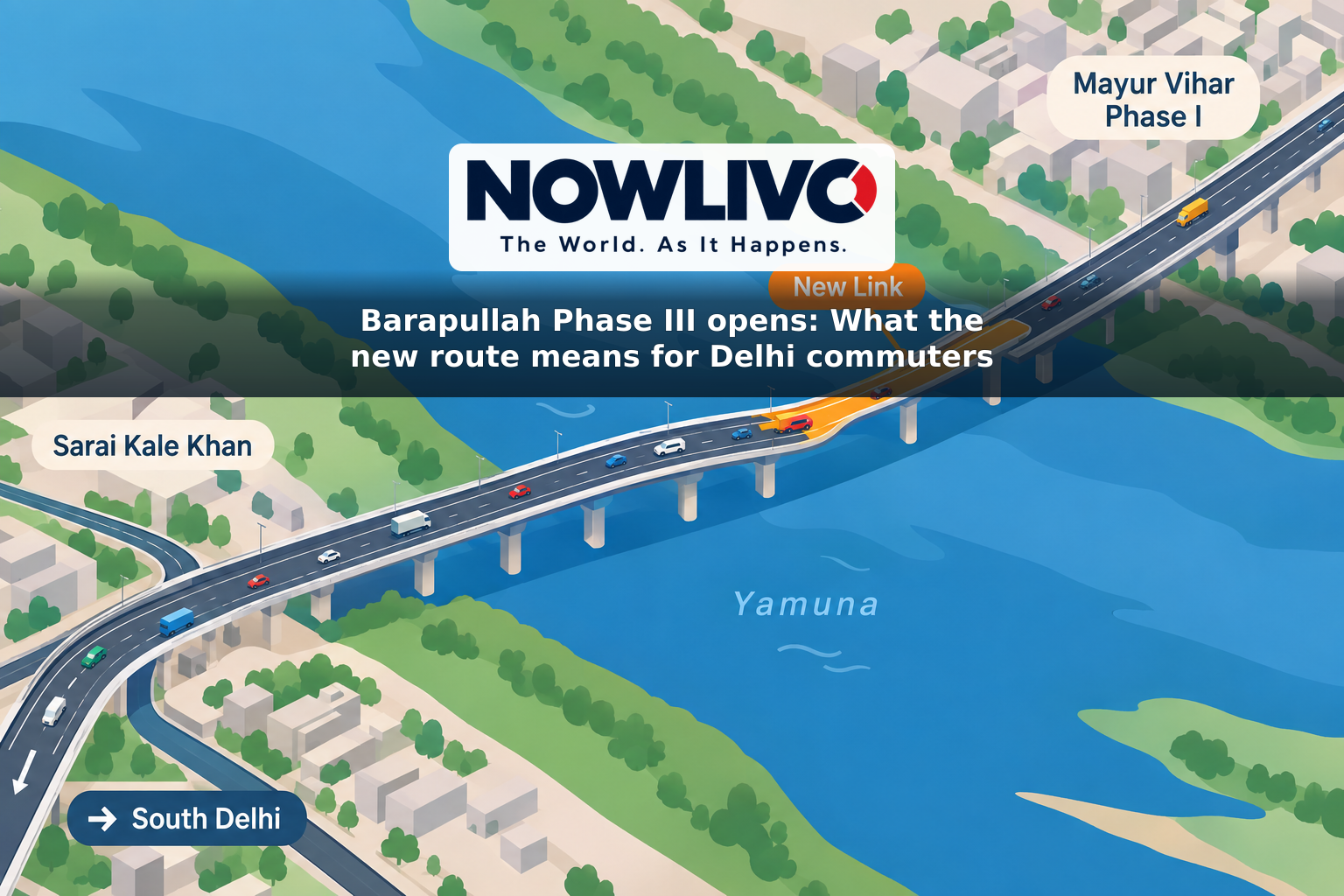
Delhi’s Barapullah Phase III elevated corridor was inaugurated on September 29, 2026, completing a road link that commuters travelling between East and South Delhi have awaited for years. The new section connects Mayur Vihar Phase I with Sarai Kale Khan, where it joins the existing Barapullah corridor. For drivers, the practical change is a more direct route across the Yamuna without having to navigate as many traffic signals on the way towards South Delhi.

Where does the new road go?
The Phase III section runs for about 3.5 kilometres from Mayur Vihar Phase I in East Delhi to Sarai Kale Khan on the river’s western side. At Sarai Kale Khan, it feeds into the older elevated corridor, creating a combined Barapullah route of roughly nine kilometres towards South Delhi, including the direction of AIIMS.
That distinction matters when planning a trip: Phase III is the new Mayur Vihar–Sarai Kale Khan connection, not a new road running all the way to AIIMS or Noida. Drivers from Noida can approach it through East Delhi’s road network, while those continuing past Sarai Kale Khan use the existing Barapullah link. Access points and the roads leading to them will determine whether the corridor is useful for a particular journey.
The connection is likely to be especially relevant to people travelling from Mayur Vihar and nearby East Delhi neighbourhoods, including Patparganj and Trilokpuri, towards Sarai Kale Khan, Jangpura and destinations farther south. Sarai Kale Khan is also a major transport interchange, so easier road access there may help travellers connecting to other services.
What could change for journeys?
The principal benefit is a signal-free crossing between Mayur Vihar and Sarai Kale Khan that lets through-traffic avoid some busy surface-road junctions. The project is expected to offer an alternative to parts of the routes commuters currently take via the Ring Road, National Highway 24 and the DND Flyway. If enough drivers can use the new link conveniently, it could also ease pressure at some existing bottlenecks.
Officials have suggested that certain trips from East Delhi towards AIIMS could take about 15 minutes instead of roughly 35 to 40 minutes. That is an estimate, not a dependable door-to-door travel time for every commuter. A journey from deeper inside Noida, for example, still includes the drive to the corridor; travel beyond its exits can also be slowed by traffic. Peak-hour demand, queues at ramps and conditions on connecting roads will show how much time the route saves in practice.
The project includes a new bridge across the Yamuna and provision for cyclists and pedestrians. Motorists should follow the marked entry and exit routes rather than assume they can join or leave the elevated road at any point along its length.
How much did it cost?
The Delhi government approved a revised project cost of about ₹1,635 crore. Construction began in 2015, with completion initially expected in 2017, but the corridor missed several deadlines before its September 2026 opening. The final approved amount is higher than the original project estimate of about ₹1,260 crore.
For commuters, the opening fills a missing section of the Barapullah network rather than replacing every existing east–south route. Its clearest advantage is for journeys that line up with the Mayur Vihar entrance, the Sarai Kale Khan connection and onward travel along Barapullah. Drivers whose destinations sit well away from those points should compare the full journey—including the approach and exit roads—before expecting the advertised time savings.