British Airways BA295 lands at Heathrow after emergency over Ireland
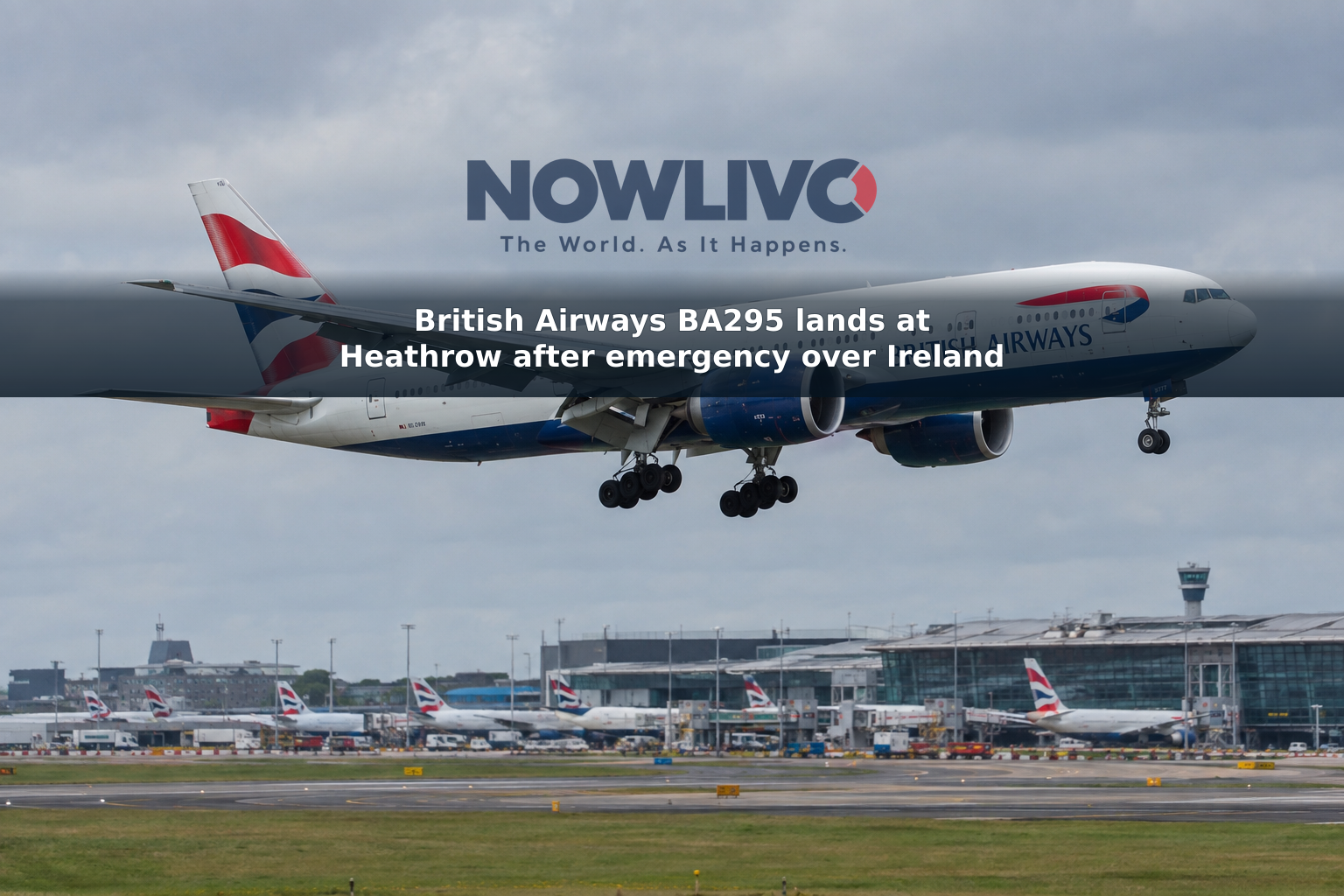
British Airways flight BA295, bound from London Heathrow to Chicago O’Hare, declared an emergency over Ireland on Monday, October 5, 2026, and returned to Heathrow, where it landed safely. Flight-tracking data showed the Boeing 777 descending from around 37,000 feet to about 9,000 feet and transmitting the emergency code 7700. The reason for the descent and the decision to turn back has not been confirmed.
What happened during the flight?
BA295 was in the early part of its transatlantic journey when its tracked altitude fell sharply over Ireland. The aircraft did not continue west toward Chicago. Instead, it turned back toward Britain and remained airborne for several hours, following a route over southwest England and nearby coastal waters before returning to Heathrow.
The aircraft’s transponder displayed 7700, a code used to alert air traffic control to a general emergency. It tells controllers that a flight needs attention, but it does not identify the problem. The code alone cannot establish whether the crew was responding to an aircraft system issue, a medical situation or another concern.
Tracking information identified the aircraft as a Boeing 777-200ER registered G-VIIA. Its flight path and altitude provide a record of how the aircraft moved, not an explanation of what happened on board. Reports that the plane was circling to burn fuel describe a possible reason for its extended time in the air; British Airways has not confirmed why it followed that route before landing.
Has the cause been confirmed?
No. The descent has prompted speculation about a cabin pressurization problem, because crews may descend to a lower altitude when cabin pressure cannot be maintained at cruising height. That remains a possibility, not a confirmed diagnosis for BA295. The tracked descent does not, by itself, show what warning the pilots received or what procedures they carried out.
Likewise, an emergency declaration should not be read as evidence that the aircraft was about to crash. It is a way for a crew to communicate its status to air traffic control and obtain the assistance needed to manage the situation. In this case, the flight returned to its departure airport rather than completing the journey to Chicago.
The safe landing resolves the immediate question of where the aircraft went after it turned back. It does not settle what caused the emergency, whether passengers needed medical attention or when those booked on BA295 would travel onward. No confirmed account of the underlying problem or the arrangements for the affected passengers was available at the time of this update.
What does the return mean for passengers?
Passengers expecting to arrive in Chicago on BA295 would not have completed that journey on the original flight. Anyone booked on the service should check their booking directly with British Airways for an individual itinerary and any revised departure details. A tracking display can show that an aircraft has returned, but it cannot show whether a passenger has been rebooked or what assistance the airline has offered.
The distinction matters as the incident develops: BA295’s emergency signal, descent and return to Heathrow are observable parts of the flight. The cause, the reason for its prolonged return route and the effect on each passenger require further information from British Airways or the relevant authorities.