Chennai airport seizure: Customs reports 15.02 kg of ganja valued at ₹5.26 crore
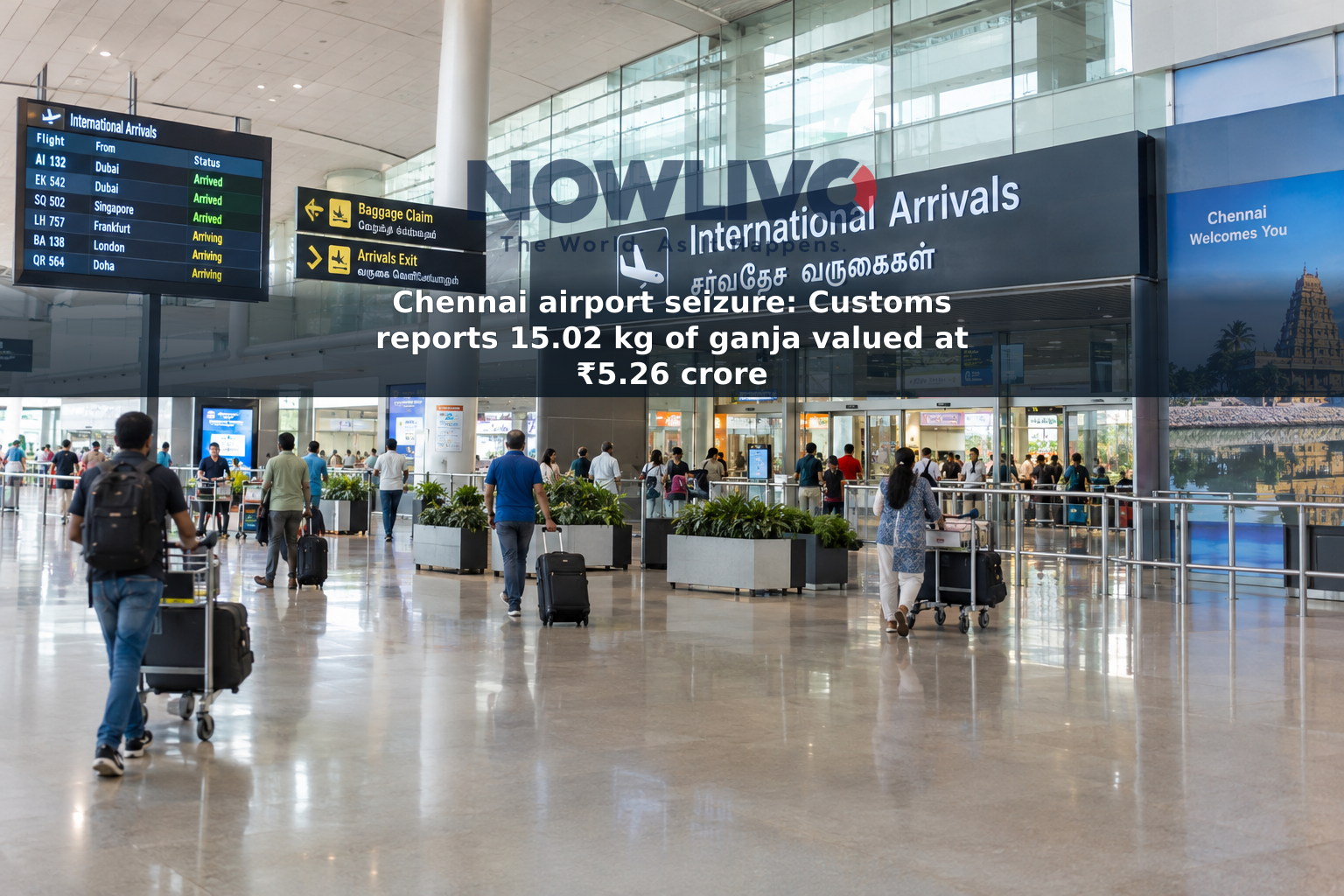
Chennai Customs reported on October 4, 2026, that officers had seized 15.02 kilograms of suspected hydroponically grown ganja at Chennai International Airport. The department estimated the substance’s illicit-market value at approximately ₹5.26 crore. It said the seizure followed an inspection of the checked baggage of a passenger who arrived from Bangkok on October 2. The two dates matter: October 4 was when customs reported the case, not the date it said the passenger arrived.
According to a statement attributed to K. M. Guru Rajesh, joint commissioner of customs at the airport, officers from the Air Intelligence Unit selected the male passenger for inspection after assessing passenger information. Customs said he had attempted to leave through the green channel without declaring the contents of his baggage. Using that channel indicates that a traveler has nothing requiring a customs declaration; the department’s account of what happened in this instance remains an allegation about the passenger’s conduct, not a finding of guilt.
What customs says officers found
Customs said an examination of the checked baggage uncovered 26 transparent, airtight packets concealed inside packages of Thai food. The packets contained dried plant material that officers suspected was high-grade, hydroponically cultivated cannabis, commonly called ganja. The department put the combined weight of the recovered material at 15.02 kilograms.
Authorities said the material tested positive for ganja or marijuana using a narcotic drug detection kit. That is the test result reported in the account of the case; no separate laboratory report or detailed chemical analysis was identified in the available case information. The description of the cannabis as hydroponically grown is also the department’s characterization, rather than a cultivation history independently established by the reported test.
The ₹5.26 crore figure is customs’ approximate estimate of illicit-market value. It is not a sale price, a court-assessed value or evidence that a transaction took place. Likewise, the packet count and weight describe what the department says it recovered from this one passenger’s baggage; they do not, by themselves, establish who packed the material or where it was grown.
What is known about the case
Customs said it seized the substance under India’s Narcotic Drugs and Psychotropic Substances Act. It also said the passenger had been arrested under relevant provisions of that law and remanded to judicial custody. The department said the investigation was continuing. An arrest and remand are steps in a criminal case, not a conviction.
The information released about the case did not identify the passenger or set out a charge sheet, a court finding or the results of any further forensic examination. It did not establish whether anyone else was involved. Those questions should not be answered by inference from the quantity seized, the Bangkok departure point or the way customs says the packets were packaged.
After reporting the seizure, Chennai Customs cautioned travelers against accepting offers of sponsored overseas trips or money in exchange for bringing back baggage whose contents they do not know. That was general public advice from the department. Its reported account did not establish that this passenger accepted such an offer.
The central confirmed development is therefore limited but specific: customs reported finding 26 packets weighing 15.02 kilograms, said a detection-kit test indicated cannabis, assigned an estimated illicit-market value of ₹5.26 crore and reported an arrest. Further evidence and the outcome of the investigation have not been established in the information available about this case.