Cyclone Murasu Prompts School Closures in Andhra Pradesh and Odisha as Heavy Rain Threat Grows
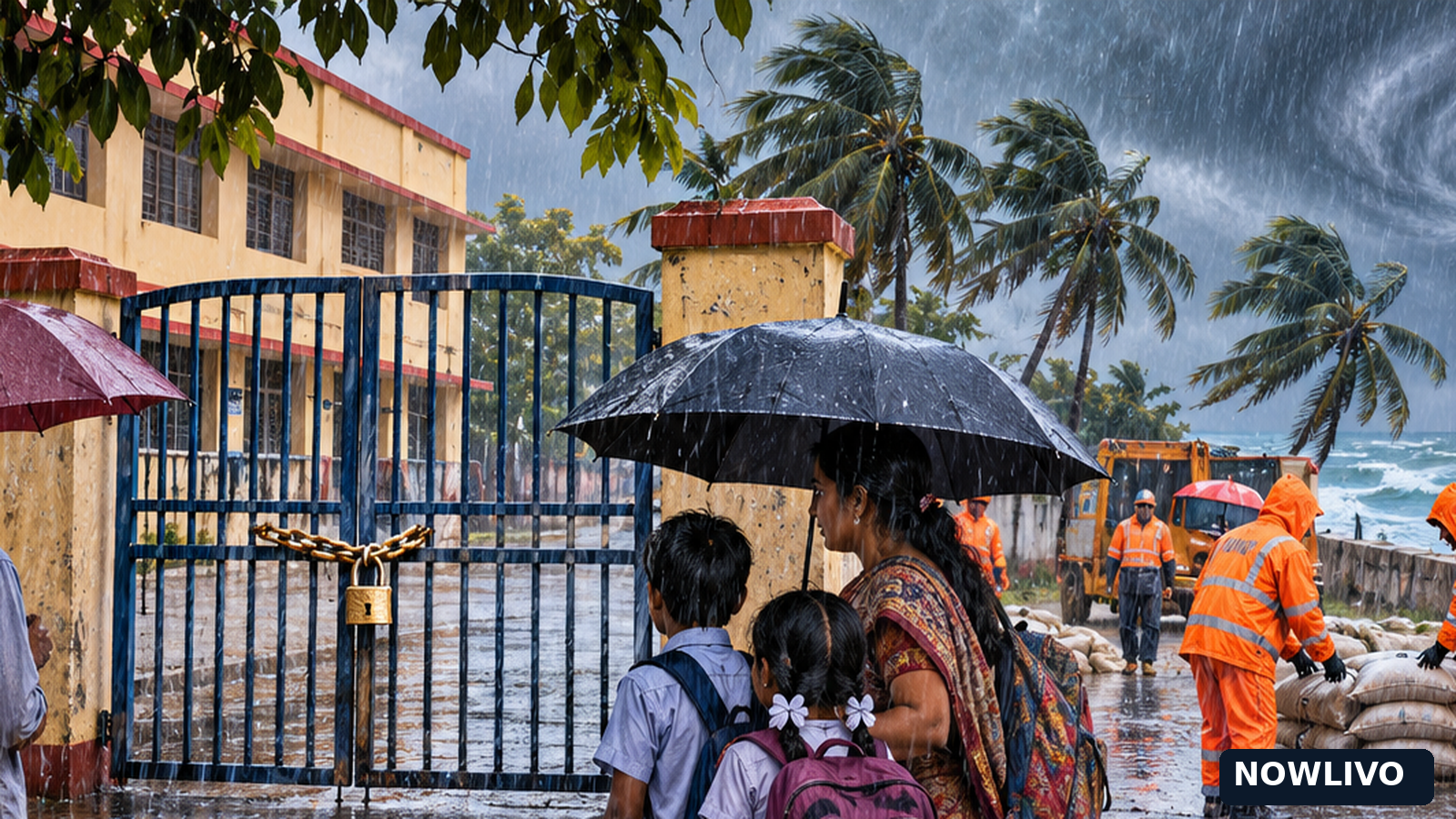
School closures announced ahead of Cyclone Murasu on Tuesday, November 3, have created an immediate question for families across India’s eastern coast: which districts have actually suspended classes? Reports published early Tuesday identify confirmed closures in parts of Andhra Pradesh and Odisha, but do not establish a blanket holiday across every state under a rain warning. That distinction matters for parents, students, teachers and transport operators planning the day.
What has been reported in Andhra Pradesh
In Andhra Pradesh, Nellore and Prakasam are among the districts reported to have announced school holidays for November 3. The closures are precautionary responses to the threat of heavy rain and strong winds as the severe cyclonic storm approaches the coast. Families elsewhere in Andhra Pradesh should not automatically assume that a statewide holiday applies. District orders, school management notices and local administration channels remain the relevant authorities for a particular campus.
Odisha closures span different dates
In Odisha, reporting identifies closures of schools and other educational institutions in Kandhamal and Rayagada on November 3 and 4. Malkangiri has reportedly ordered closures running from November 2 through November 4. The different date ranges reflect district decisions rather than one uniform timetable. Students preparing for examinations or scheduled school activities should check directly with their institutions about postponements and rescheduling, which cannot be inferred from a general weather bulletin.
The storm remains the central risk
The India Meteorological Department has warned of heavy rainfall, dangerous winds and rough seas as Murasu moves toward the south Andhra Pradesh coast. Forecasts cited in early Tuesday reporting say the system could weaken after crossing the coast, but a weakening cyclone can still produce flooding, falling trees, power disruption and dangerous travel conditions. Rain alerts also extend into parts of Telangana, Tamil Nadu, Odisha and Chhattisgarh. A warning for a state does not, by itself, constitute an official order closing schools.
Tamil Nadu and Chhattisgarh need separate confirmation
Some circulating headlines ask whether schools in Tamil Nadu or Chhattisgarh will remain closed, but the accessible reporting does not establish a specific statewide closure decision for either. Families should treat claims about automatic holidays cautiously until a district collector, education department or school issues a dated announcement. A forecast can change during the day, and decisions may differ between coastal and inland districts even within the same state.
Why local announcements can change quickly
Administrations weigh road conditions, waterlogging, public transport, electricity supply and whether school buildings may be needed as temporary shelters. A district may close schools while neighboring districts remain open, or extend a closure if rainfall continues after the storm weakens. Parents should distinguish an order covering government schools from one that explicitly covers private institutions, colleges or all educational establishments. The precise wording of each notice controls who is affected.
Travel and safety preparations
Where schools are closed, children should not travel to campus merely because a routine school bus or tuition schedule was previously issued. In districts without a confirmed closure, families should still monitor local flooding and follow directions from school administrators. Residents of low-lying coastal areas should avoid unnecessary journeys, secure loose outdoor items and keep emergency contacts available. Fishermen have been advised not to venture into hazardous sea conditions during the storm period.
What readers should watch next
The most consequential updates are official district orders, the cyclone’s actual coastal crossing, rainfall observations, transport restrictions and any extensions of school closures beyond November 3. This report reflects the status of publicly available information early Tuesday and should not be read as a live directory of every institution. For immediate decisions, a current district administration notice is more authoritative than a recycled social-media graphic.
Why this is a fresh development
NOWLIVO covered the cyclone’s approach and evacuation preparations in earlier reporting. The newly announced district-level school closures are a separate, practical consequence with a direct effect on families on November 3. The story therefore focuses on confirmed local decisions and carefully separates those decisions from broader forecasts and unverified holiday claims.
Avoid recycled closure lists
Social posts about school holidays frequently circulate without dates or the issuing district authority. A notice from a previous cyclone or a neighboring district may look current when shared as an image. Readers should confirm the date, district name, class levels and whether the order applies to government, aided and private institutions. If the school has not communicated directly, families can check its official contact channel rather than relying on forwarded messages. Conditions on individual roads may also be unsafe even where classes have not been formally suspended.