Delhi protest detentions: What the Supreme Court ordered and whether Metro stations are open
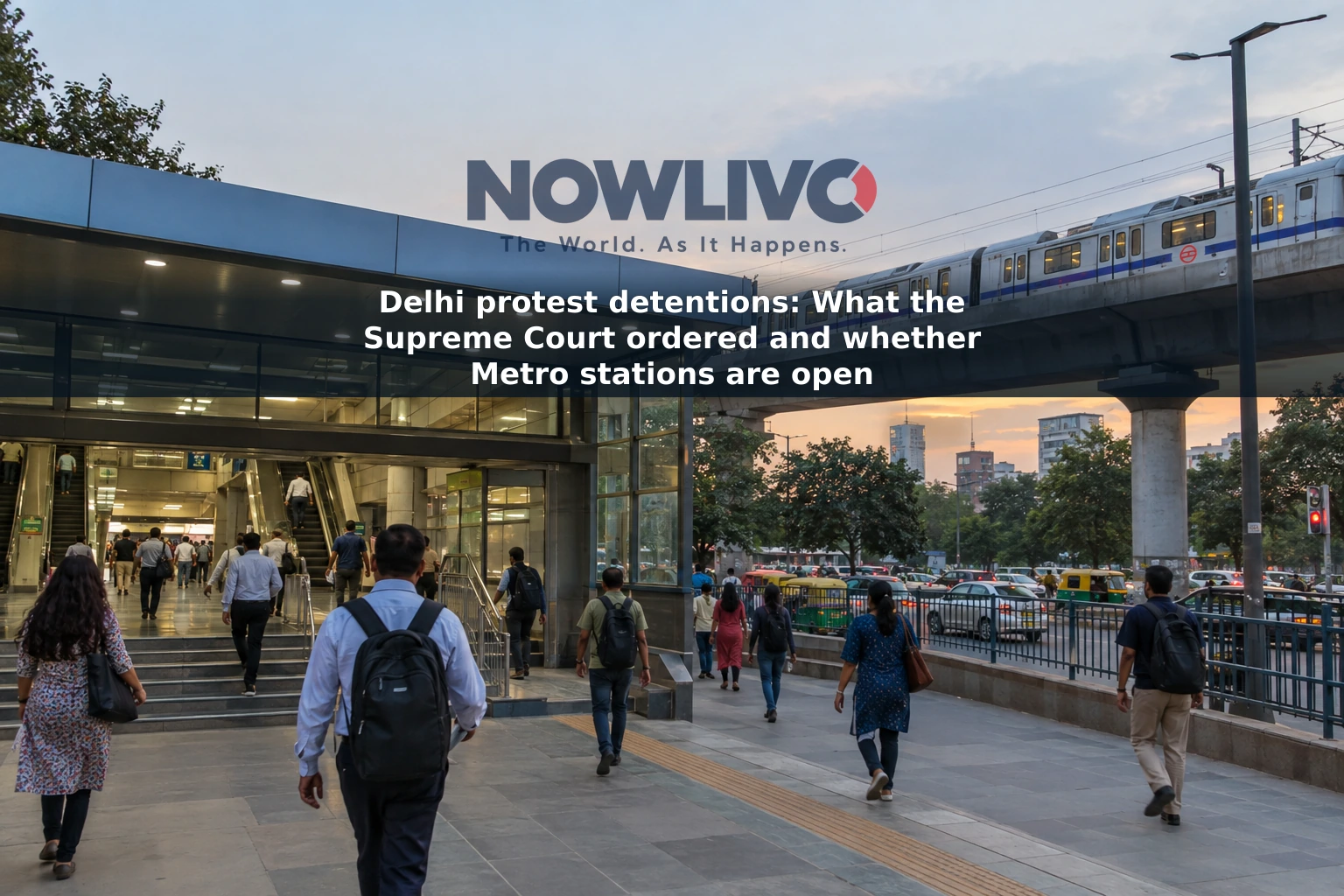
The Supreme Court said on October 11 that there must be no illegal detention of people during the Delhi protests, particularly peaceful, unarmed people assembling outside areas covered by a prohibitory order. It also directed that Metro and railway services function normally unless restrictions are needed for public order. For commuters, the immediate update is that Delhi Metro said entry and exit gates at all its stations were open after six central Delhi stations faced temporary restrictions on Monday, October 12.
What did the Supreme Court say about Delhi protest detentions?
At a special Sunday hearing, a bench of Justices Joymalya Bagchi and V. Mohana considered petitions alleging unlawful detentions and breaches of an earlier order on transport restrictions. Its interim directions said there should be no illegal detention, especially of peaceful, unarmed people outside an area where Section 163 of the Bharatiya Nagarik Suraksha Sanhita is in force. The court also directed that lawyers, journalists and other professionals must not be obstructed while doing their work.
The bench issued notice after finding that petitioners had made out a prima facie case in a contempt plea concerning its October 9 transport order. That is a decision to seek a response, not a final finding that officials committed contempt or that every detention challenged in court was unlawful. The authorities were asked to file a response and a compliance report, with further consideration listed for October 13.
Reports citing police sources said more than 7,000 people were detained across Delhi on Saturday, October 10, as officers moved to prevent a planned protest at Jantar Mantar. Police said most were subsequently released. Detentions were also reported on Sunday. The weekend total should not be read as the number of people still in custody.
What did the court say about traffic restrictions?
The court directed authorities to review road barricades immediately so people could move freely, while allowing measures justified by law-and-order and traffic needs. It said internet facilities should function unhindered. Its October 9 order had distinguished regulating Metro and rail services from stopping essential public transport altogether, and called for transport decisions and traffic advice to be publicised so travellers could plan.
Those directions do not mean every barricade or diversion is automatically prohibited. Delhi Traffic Police issued an October 12 advisory warning of diversions around Connaught Place, Dhaula Kuan, Patel Chowk and other junctions. It advised against non-essential travel through affected areas and urged passengers heading to railway stations or the airport to allow extra time. Road arrangements can change with conditions on the ground.
Are Delhi Metro stations open today?
Yes, according to Delhi Metro’s latest reported service update on Monday evening, October 12: entry and exit gates across the network were open. Earlier that day, entry and exit had been closed at Patel Chowk, Janpath, Rajiv Chowk, Mandi House, Central Secretariat and Barakhamba Road. Delhi Metro initially announced a 6 a.m. to 4 p.m. restriction, then extended it to 5 p.m. before announcing that all station gates had reopened. Interchange remained available at the six affected stations during the entry-and-exit restriction.
A reopened Metro gate does not guarantee an unobstructed trip by road to or from a station. Anyone travelling through central Delhi should check Delhi Metro’s newest service update and Delhi Traffic Police’s current advisory immediately before leaving, particularly if connecting to a train or flight.
The protests concern a revision of electoral rolls and demands for the resignation of Chief Election Commissioner Gyanesh Kumar. Opposition parties and protesters allege the process could wrongly remove eligible voters; the Election Commission and the governing Bharatiya Janata Party deny allegations of manipulation. The dispute over the voter lists is separate from the court’s immediate directions on detentions, transport and public movement.