Delhi’s Barapullah Phase 3 opening remains unconfirmed on inauguration morning
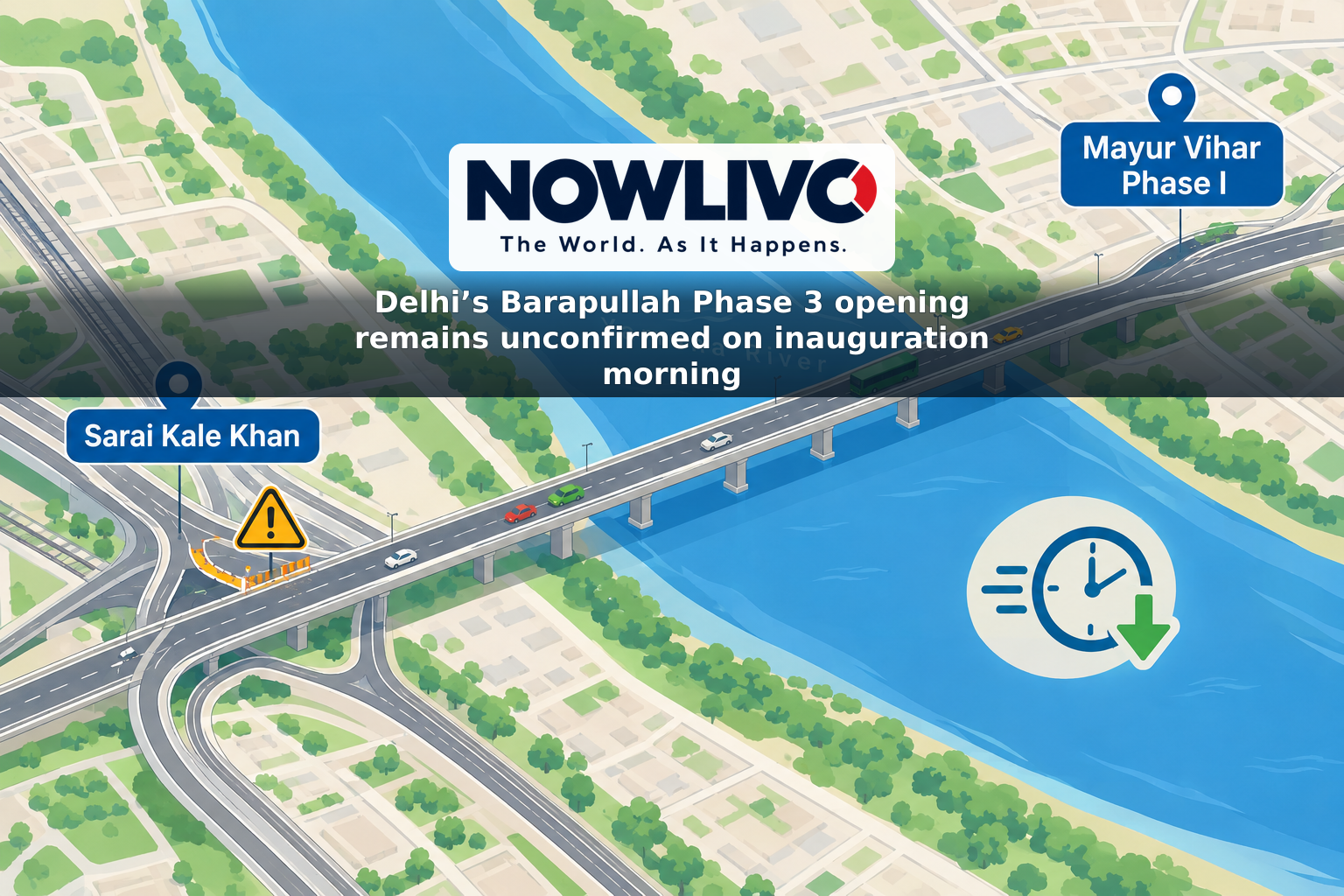
Delhi’s Barapullah Phase 3 corridor is scheduled to be inaugurated on Tuesday, September 29, 2026, promising a more direct journey between Mayur Vihar Phase I and Sarai Kale Khan. As of Tuesday morning in Delhi, however, the scheduled ceremony had not been independently confirmed as complete, and there was no verified confirmation that ordinary traffic could use the new road. Commuters should not treat the announced inauguration date as proof that the corridor is already open.

Where does Phase 3 go?
The roughly 3.5-kilometre elevated section runs from Mayur Vihar Phase I in east Delhi across the Yamuna to Sarai Kale Khan. At its western end, it is designed to join the existing Barapullah road, creating a more continuous route towards parts of central and south Delhi, including the AIIMS area. The new section does not itself run all the way to AIIMS: that onward journey depends on the existing network and its connecting roads.
For drivers travelling between east and south Delhi, the project is intended to offer an alternative to some of the busy approaches around Ring Road, the DND Flyway and Sarai Kale Khan. It could also help some journeys beginning in Noida, although the benefit will depend on where a driver joins the route and where they leave it. The elevated road crosses the Yamuna and includes provision for cyclists and pedestrians; those facilities, like the vehicle lanes, should be used only once access is officially permitted.
Has the inauguration happened?
Delhi Public Works Department Minister Parvesh Sahib Singh announced September 29 as the inauguration date and said Union Home Minister Amit Shah was expected to open the corridor in the presence of Chief Minister Rekha Gupta. The minister has said construction is complete and the road is ready for the public. Those statements establish the government’s plan and assessment of readiness, not that the ceremony has taken place or that traffic has been admitted.
The distinction matters on the day of an opening. A formal ceremony, the removal of barriers and unrestricted access for regular vehicles need not happen at the same moment. As of Tuesday morning, the event’s completion and the start of public use remained unverified. Drivers planning an immediate trip should follow instructions at the approaches rather than assume the flyover is available.
What travel-time saving is expected?
The proposed benefit is a substantially shorter east-to-south Delhi trip. Estimates associated with the project suggest that some journeys from east Delhi or Noida towards AIIMS could fall from about 35–40 minutes to around 15 minutes once the link is operating. That is a projection, not a measured travel time after opening. Conditions at entry and exit points, congestion on the older Barapullah section and traffic near Sarai Kale Khan will determine what drivers actually save.
In particular, a signal-free elevated stretch does not eliminate queues where several routes merge. Sarai Kale Khan already carries traffic from major roads and interchanges, so the effect on surrounding streets will become clearer only after regular traffic begins using Phase 3. Travellers should allow for a period of changing traffic patterns rather than count on the advertised time saving for a time-sensitive journey.
What restrictions should commuters know about?
Delhi Traffic Police has warned that the inauguration gathering is likely to affect movement around the flyover site from 9 a.m. to 2 p.m. on September 29. The affected area includes approaches around Sarai Kale Khan, Maharani Bagh and Ashram Chowk. Police have advised motorists to avoid the Ring Road stretch between Sarai Kale Khan and Ashram Chowk during that window where possible, and to follow signs and officers’ directions. The advisory signals likely delays; it should not be read as a blanket closure of every road in the area.
There is also a separate, temporary restriction for vehicles travelling towards Sarai Kale Khan on the Delhi–Mumbai Expressway. Traffic has been prevented from using that exit and diverted near Madanpur Khadar towards Kalindi Kunj. Vehicles have still been allowed to enter the expressway from the Sarai Kale Khan side. Police have indicated that the exit arrangement may be reassessed after the Barapullah opening, so drivers should not assume it will end when the inauguration ceremony does.
For now, the practical answer is straightforward: Phase 3 has a scheduled September 29 inauguration, but a completed ceremony and an open road were not confirmed as of Tuesday morning. Anyone travelling through the area should account for the stated event window, check current traffic directions and use an established route until public access to the new corridor is clear.