
Delhi’s new pollution control centre: What it tracks and how alerts will be used
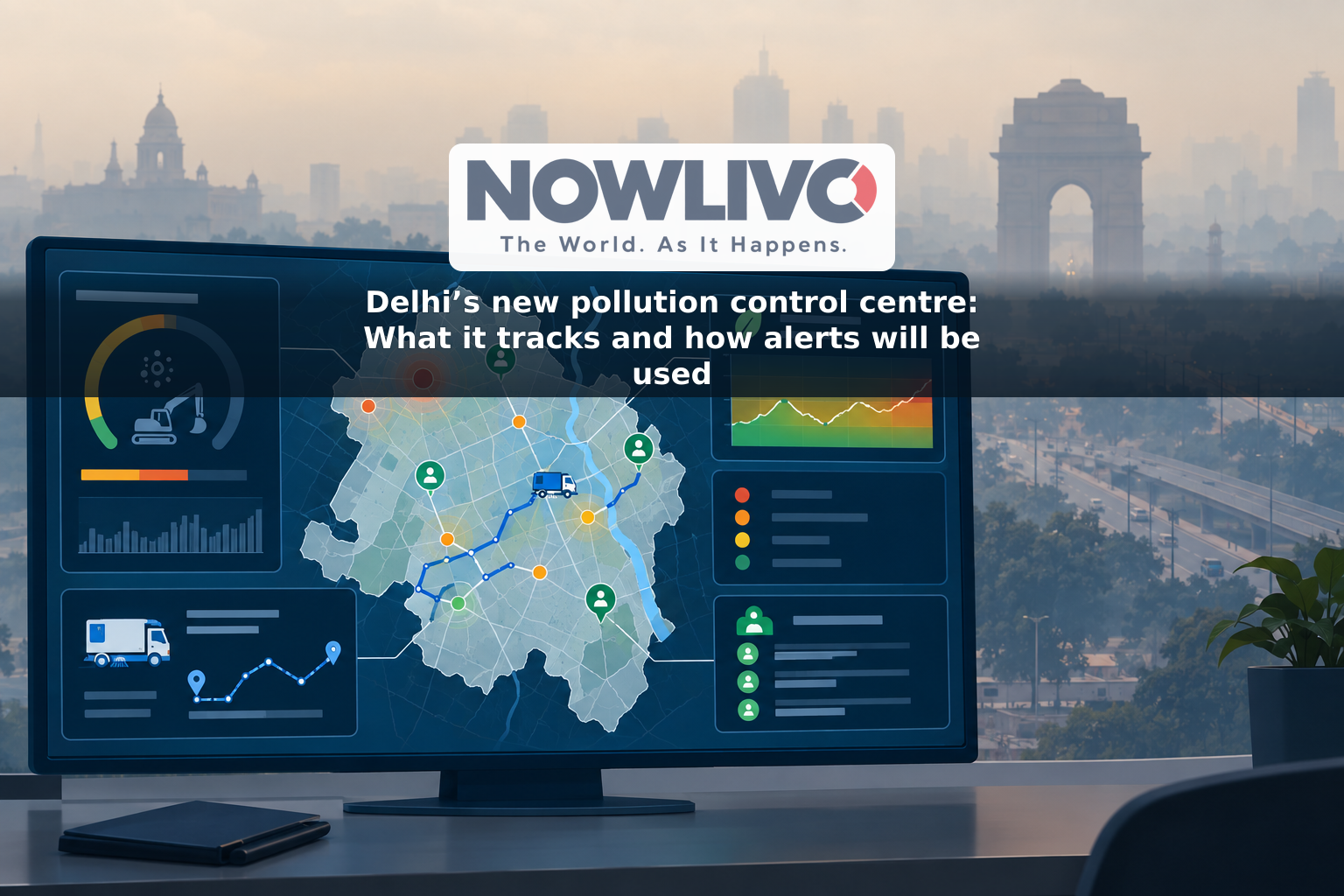
Delhi’s newly launched pollution-monitoring control centre is intended to track air-quality readings, construction-site dust, open burning, road-sweeping operations and enforcement work in real time. Officials say AI-assisted analysis will help identify rising pollution and direct teams to places needing attention. For residents, the practical change is a proposed faster route from a detected problem or submitted complaint to action on the ground—not an immediate improvement in air quality or a new personal pollution-alert service.
Chief Minister Rekha Gupta inaugurated the Delhi Pollution Control Committee’s Integrated Command and Control Centre, or ICCC, on October 1, 2026. It is based at the Delhi Metro Rail Corporation’s IT Park in Shastri Park and is designed to operate around the clock. The centre brings together monitoring data, camera feeds, complaints and inspection information so departments can assess problems from one location rather than treating each stream separately.
What will the centre monitor?
A major focus is construction dust. According to Environment Minister Manjinder Singh Sirsa, more than 700 construction sites larger than 500 square metres are under live monitoring using AI-enabled systems and CCTV. If a monitored site shows a rise in PM10—the measure for airborne particles no larger than 10 micrometres—the system is meant to alert the department concerned and the site owner. An alert identifies a condition for officials to investigate or address; it does not, by itself, establish why the reading rose or whether a rule was broken.
The centre is also intended to watch readings from Delhi’s air-quality monitoring stations and compare current conditions with data from previous years. Officials say that analysis will help them spot local patterns and pollution hotspots. Cameras are to be used to watch for open waste and biomass burning, while reports of road dust and other pollution sources can be brought into the same response system. The announced scope is therefore broader than a display of the citywide Air Quality Index, but it is not a sensor on every street.
Another operational task is tracking mechanical road sweepers by GPS. Staff should be able to check where a machine is, which route it takes, whether it covers its assigned area, how far it travels and how long it operates. That information can help officials distinguish a scheduled cleaning operation from one that has actually been carried out. It does not independently show how much dust the sweeping removed.
How is the analysis meant to lead to action?
The Delhi government describes the centre’s workflow as detecting a problem, analysing it, acting on it and verifying the result. In practice, that means a hotspot or site alert should be passed to the responsible department, which can send personnel to inspect conditions or take corrective steps. Information from field inspections is then meant to return to the centre so officials can follow what happened after the initial alert.
The government says 78 sub-division-level teams will work on monitoring and enforcement through the centre during winter. Their vehicles can be tracked by GPS, and body cameras used by Delhi Pollution Control Committee inspectors will provide a record of work at industrial and other potentially polluting sites. These are oversight tools, not evidence that every alert will result in immediate enforcement. The speed and effectiveness of a response will depend on how departments investigate and act on what the system identifies.
What can residents expect?
Residents may see more targeted attention to a dusty building site, open burning or an uncleaned road if those problems are detected and assigned for follow-up. The government has also launched a separate Jan Suggestion portal for people to submit pollution-related complaints, concerns and suggestions. Officials say those submissions can feed into the wider effort, although the launch announcement does not set out a guaranteed response time for individual complaints.
The distinction is important: the ICCC is principally a government monitoring and coordination facility, not a replacement for the air-quality readings people already use to check local conditions. Its test will be whether alerts lead to documented inspections and remedies—and whether those actions make a measurable difference where pollution is detected.