Form 6 and the SIR declaration: What the Election Commission withdrew
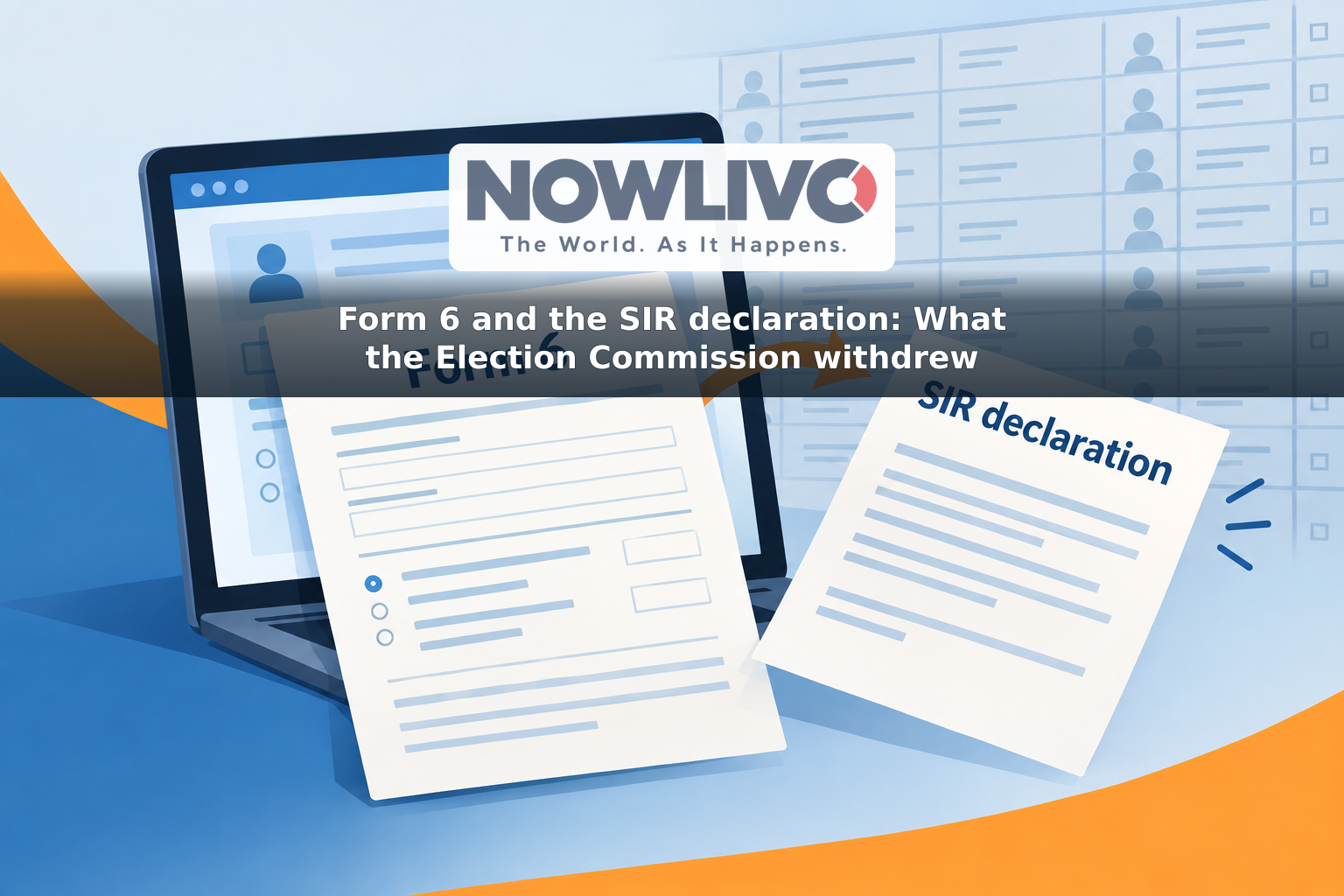
The dispute is over an additional declaration presented alongside online Form 6, the application for a new voter to join India’s electoral roll. The Election Commission of India (ECI) says it has withdrawn that SIR-linked requirement in states and Union territories where the Special Intensive Revision of voter rolls has finished. It says the regular Form 6 applies outside an active SIR exercise. Congress leader Rahul Gandhi, meanwhile, says the online form was changed illegally and wants to know who authorised the change and whether the technology provider was pressured. His assertions and questions should not be mistaken for findings that misconduct occurred.
What was the additional declaration?
Form 6 is used by an eligible Indian citizen seeking inclusion in an electoral roll, including someone registering for the first time. The contested declaration asked applicants for information connecting themselves, a parent or a grandparent to an electoral roll from an earlier intensive revision. That made the online application process during SIR different from simply completing the standard Form 6.
The distinction between an attachment to the application and a change to the prescribed form is central to the row. Form 6 is prescribed under the Registration of Electors Rules, 1960. Critics question whether adding SIR questions within the online Form 6 process effectively altered that statutory form without a change to the rules. The ECI’s position is that the prescribed Form 6 itself was not changed: it describes the SIR declaration as an additional document used during the revision exercise.
What did Rahul Gandhi ask?
In an October 1, 2026, post, Gandhi called the online Form 6 change illegal and referred to objections he said Election Commissioners had recorded. He asked who within the ECI instructed Tata Consultancy Services (TCS) to make the change, who at TCS approved it, and whether the company was pressured to do so.
Those are questions about responsibility for an online-system change, not proof that TCS acted improperly or that anyone coerced it. Nor does Gandhi’s description, by itself, settle whether the declaration was an unlawful amendment to Form 6. The issue he raises is whether an extra SIR requirement could be incorporated into the digital application process without changing the rules that prescribe the form.
What has the ECI said it withdrew?
Following a meeting of the full Commission on September 26, the ECI said the declaration attached to Form 6 was for SIR and that, during non-SIR periods, the forms prescribed by the 1960 rules would be used. The Commission also said the SIR declaration had been upheld by the Supreme Court. The scope of that court ruling in relation to the particular online declaration at issue remains part of the dispute; the ECI’s characterisation should not be read as resolving every objection to the online change.
On September 30, the ECI clarified that the additional declaration was not required where SIR had been completed or had yet to start. It said there had been no change to the statutory Form 6, whether during SIR or outside it, and that the declaration had been sought as an extra document in places conducting the revision. The withdrawal concerns that additional requirement in non-SIR places, not the abolition of Form 6 or an end to voter registration. The declaration remains in use where SIR is underway.
What should an applicant do?
A person applying in a state or Union territory where SIR has concluded should be able to use the ordinary Form 6 process without the extra SIR declaration. The same applies where SIR has not begun, according to the ECI’s clarification. Applicants in a place with an active SIR may still encounter the separate declaration and requests for earlier-roll details. The applicable process therefore depends on where the applicant lives and whether the revision is ongoing there.
Removing the extra declaration does not automatically enrol anyone. Applicants still need to provide the information and supporting material required for Form 6, and the electoral registration officer must process the application. A person who was left off a roll during SIR can apply for inclusion through continuous updating, the ECI says. Such applicants should check their entry on the electoral roll rather than assume that submitting a form, or the withdrawal of the extra declaration, has registered them.
The practical change is narrower than either a nationwide cancellation of the SIR process or a finding that every earlier online application was invalid. The ECI has limited the additional declaration to active SIR areas; Gandhi’s questions about how it was added to the online process remain unanswered by that change alone.