How AI Is Changing India’s Creator Economy: Faster Content, Lower-Rate Concerns and AI-Dubbing Rights
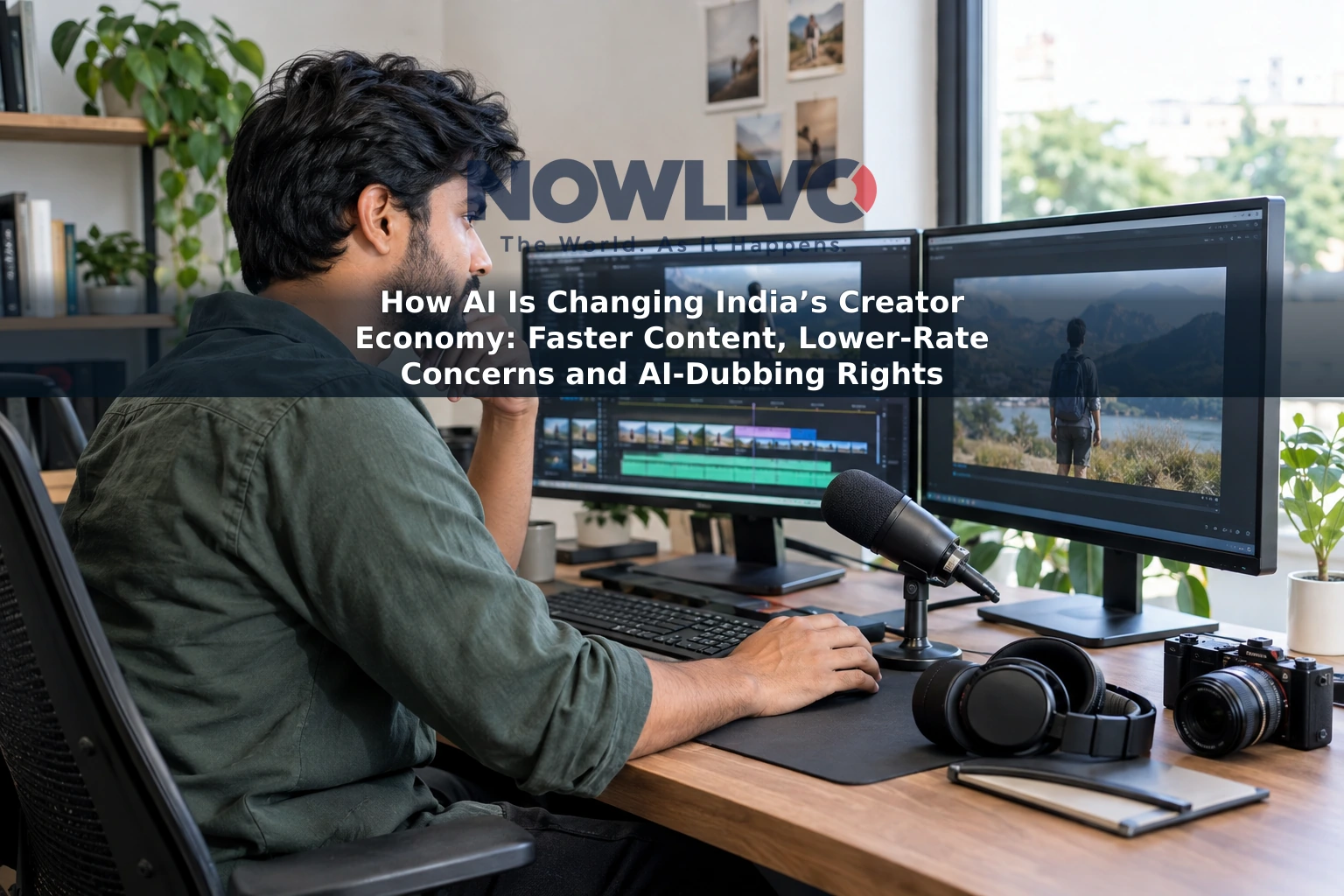
AI is changing India’s creator economy by making content faster and cheaper to produce: creators can use it to research ideas, draft scripts, edit videos and make versions in other languages. That helps smaller teams compete, but it also means more content competing for attention. For creators signing brand deals, a particularly practical question is whether permission to publish one video also allows a brand to AI-dub it or reproduce the creator’s voice.
Moneycontrol reported on October 10, 2026, that creators and influencer-marketing companies are using AI across production and campaign planning. Tech creator Arsh Goyel told the publication that work on a piece of content that once took two days can now take around two hours to half a day with AI-assisted research and other tools. That is his experience, not a measure of how much time every creator saves.
Does AI help content creators?
For routine production work, the benefit is straightforward. AI can help generate a first script, make captions and subtitles, clean up audio, cut a long video into shorter clips and prepare translated versions for different audiences. It can also help a creator test several approaches to a brand brief without producing each one from scratch.
Adobe’s 2026 survey of Indian creators who use or have tried creative AI found that 75% felt better able to compete with larger teams or studios. Yet faster drafting does not eliminate the final edit: 72% said their AI outputs typically needed moderate or extensive editing before they were ready to share. Those are respondents’ assessments, rather than independently measured gains in income or audience size.
Brands and agencies can use AI too, including to shortlist creators against a campaign’s audience and brief. That may speed up planning, but it does not establish whether an endorsement feels credible to the people who follow a particular creator.
Are influencer rates falling?
Moneycontrol reported one warning from the smaller end of the market: a Kofluence executive said nano-creator rates for Instagram work had fallen from around ₹500 to around ₹300 amid oversupply and barter arrangements. The figures are an industry participant’s account, not a verified rate for all Indian nano-creators. Fees can differ by the audience, campaign, deliverables and rights a brand wants to buy.
AI can cut the cost of making extra edits, but it can also make those extras easier for a client to request. A creator assessing a deal should distinguish the fee for producing a post from fees for additional versions, languages, advertising use or extended reuse. More output does not necessarily mean more paid work.
There is an audience trade-off as well. Among creators in Adobe’s survey who said standing out had become harder, 57% cited the volume of content and 44% said AI-generated content was making distinctive voices harder to notice. AI may help polish a video, but it cannot supply the creator’s experience or judgment about what is worth saying.
Who owns an AI-dubbed video or cloned voice?
There is no single answer simply because a version was made with AI. An original video can involve rights in the footage, script, music and recorded performance; a translated script and new audio add further questions. Who may make, publish or reuse a dubbed version depends on the rights in those elements and the permissions granted in the relevant agreements. Paying for a creator’s original post should not be treated as a clear answer to whether a brand may generate new speech in that creator’s voice.
India’s Copyright Act provides for written licences and assignments, and its assignment rules call for the work, rights, duration and territory to be specified. It also recognises rights relating to performers’ recorded performances. These rules make the wording of a campaign agreement important; they do not automatically settle every question about a newly generated voice model or dubbed asset.
Before signing, creators and brands can make the scope explicit: Which video may be translated? Into which languages, and for which platforms and territories? May AI imitate the creator’s voice or appearance, or only add subtitles or a different voiceover? Who approves the translated script and final cut? Can the result be used in paid ads, for how long, and for an additional fee? The agreement can also say whether source recordings may be used to train a voice model and what happens to that model when the campaign ends.
That distinction captures the broader shift. AI gives Indian creators a more capable production toolkit, but a faster way to make content is not, by itself, permission to reuse someone’s identity—or a guarantee that more posts will earn more money.