
Hurricane Isaias power outages: More than 726,000 customers affected in Florida and Alabama
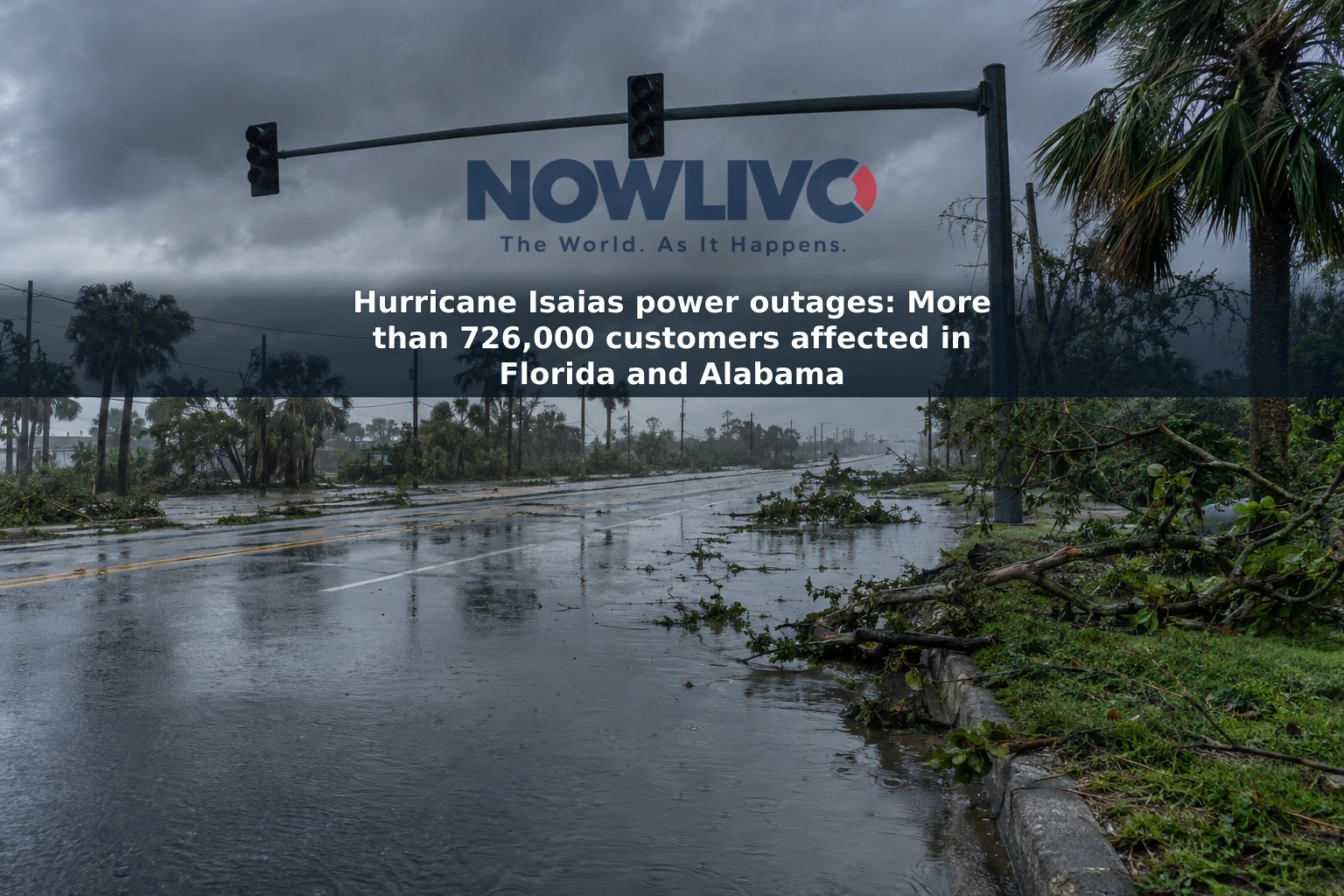
How many people are without power after Hurricane Isaias? More than 726,000 electricity customers in Florida and Alabama were without service early Saturday, October 10, 2026, according to an outage tally reported by the Associated Press. That figure counts homes and businesses, not individual people, and it can change as utilities assess damage and restore service. Residents should check their own utility’s outage updates for the status of their address.
Isaias made landfall near Destin, Florida, on Friday night as a Category 2 hurricane. It moved north into Alabama and weakened rapidly, but the loss of hurricane status does not end the danger. The National Hurricane Center classified Isaias as a post-tropical cyclone in its 1 a.m. Central time Saturday update and warned that flash flooding and strong winds were spreading farther inland.
Where are the Isaias power outages?
The reported outage total covers Florida and Alabama, with extensive disruptions in the western Florida Panhandle and across southern Alabama. A local tally put Alabama’s outages above 300,000 customers at about 2 a.m. Saturday. In Florida, the affected Panhandle includes areas around Pensacola, Fort Walton Beach and Destin.
Outage totals are snapshots, not estimates of how many people will remain without electricity throughout the day. They can rise as crews identify additional damage or fall as service is restored. A statewide number also cannot tell a household when its power will return. For the most useful information, look for updates from the utility named on your electric bill, including its outage map and any restoration notices.
Isaias storm path and flooding risk
At 1 a.m. Central time, the hurricane center placed Isaias over southern Alabama, moving north at about 20 mph with sustained winds near 65 mph. Forecasters expected further weakening, but warned that gusty winds could continue well inland. Heavy rain was still a concern from the Florida Panhandle and southern Alabama into other parts of the Southeast over the weekend.
Flooding can develop or worsen after the strongest coastal winds have passed, particularly where repeated rain falls on the same area. Roads may also remain blocked by water, fallen trees or power lines. People outside the storm’s center should not treat a change in its classification as an all-clear; local warnings and road conditions matter more than the storm’s label.
What to check before going out or using backup power
Check your local National Weather Service alerts and county emergency-management updates for flood warnings, evacuation instructions, shelters and road closures. Check your electricity provider for outage reports and restoration information. If mobile service is limited, use a battery-powered radio or another available way to receive official updates.
Do not drive through floodwater or around a road barrier; water can conceal a washed-out road. Stay away from downed lines and anything touching them, and report them to the utility or emergency services. If using a portable generator, operate it outdoors, at least 20 feet from doors, windows and vents—not in a garage or enclosed porch—because its exhaust can cause deadly carbon monoxide poisoning.
Isaias may be weakening, but the immediate questions remain local: whether your power is out, whether roads are passable and whether a flood or wind warning applies where you are. Utility and emergency officials can provide more current answers for a particular neighborhood than any regionwide outage figure.